
Quick Summary: Yes, it is perfectly safe to freeze milk. Freezing extends milk’s shelf life up to three months, though it may cause slight texture changes due to fat separation. Proper freezing technique—leaving headspace in containers, using airtight packaging, and thawing in the refrigerator—preserves both safety and quality for most uses.
Running out of milk right before breakfast is frustrating. But having too much milk that’s about to expire? That’s just wasteful.
Freezing milk solves both problems. Whether it’s cow’s milk bought in bulk, breast milk for a growing baby, or raw milk from a local farm, the freezer can extend its life significantly. But does freezing affect quality? And how should it be done safely?
Here’s everything to know about freezing milk—the safe methods, the texture changes, and the best practices backed by food safety guidelines from the CDC and USDA.
Why Freeze Milk in the First Place?
Milk doesn’t last forever. Once opened, most types stay fresh in the refrigerator for about a week. Unopened cartons might last until the printed expiration date—but not much longer.
Freezing stops that clock. When milk freezes, bacterial growth halts. According to food safety guidelines from the CDC, proper freezing and refrigeration are critical steps to prevent foodborne illness.
Community discussions reveal common reasons people freeze milk: stocking up during sales, reducing grocery trips, or preserving raw milk bought directly from farms. Some parents freeze breast milk to build a reserve for feeding schedules. Others freeze excess raw milk before it spoils.
The short answer? Freezing milk is practical, safe, and increasingly common.
How Freezing Affects Milk Texture and Quality
Milk doesn’t freeze quite like water. Because milk contains fats and proteins, freezing changes its texture.
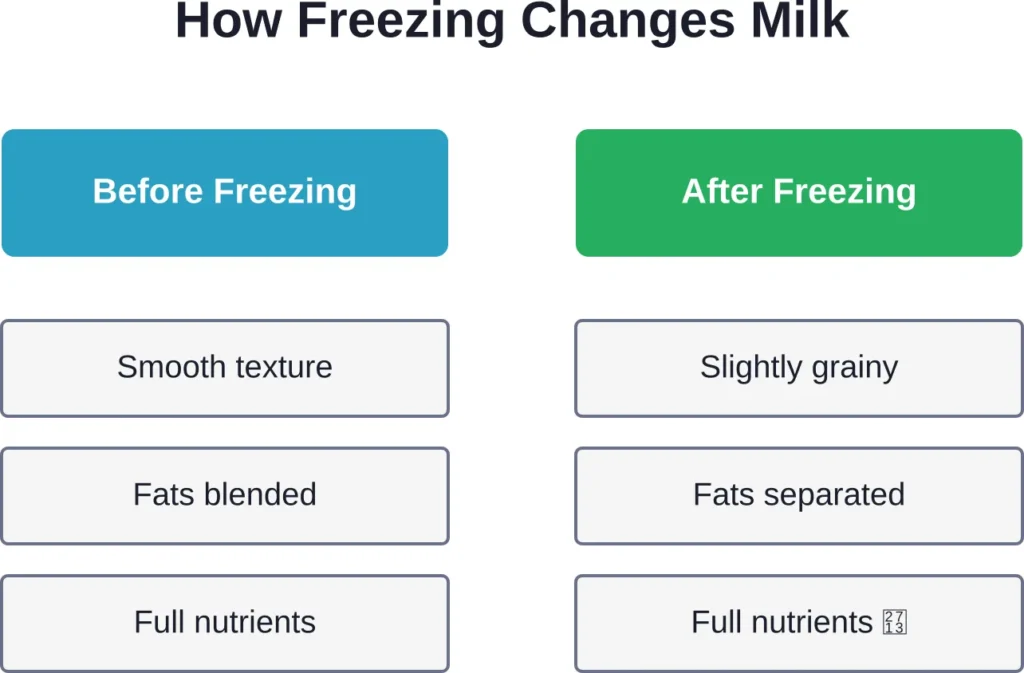
When milk freezes, ice crystals form. Penn State Extension research on freezing processes explains that water in foods expands during freezing, which can alter texture. In milk, this causes fat to separate.
Once thawed, frozen milk often looks grainy or slightly separated. That’s normal. The nutritional content stays intact—vitamins, proteins, and minerals don’t disappear. But the smooth, creamy consistency might change.
For drinking straight from the glass, some people notice the difference. For cooking, baking, smoothies, or cereal? The texture change is barely detectable.
How to Freeze Milk Safely
Proper freezing technique matters. Done right, milk stays safe and usable for months. Done carelessly, containers burst and quality suffers.
Leave Headspace in Containers
Milk expands when it freezes. That expansion can crack glass bottles or pop plastic caps.
Before freezing, pour out a cup or two from full gallon jugs. For smaller containers, leave at least an inch of space at the top. This prevents messy freezer explosions.
Use Airtight Packaging
Exposure to air causes freezer burn, which degrades flavor. Original cartons work fine if sealed tightly. For breast milk, HealthyChildren.org (backed by the American Academy of Pediatrics) recommends special breast milk storage bags designed for freezing.
Glass containers are acceptable but risky—leave extra headspace and avoid thin glass that might crack under pressure.
Label and Date Everything
Frozen milk looks identical to fresh milk once solid. Write the freezing date on every container with a permanent marker. This prevents accidentally keeping milk frozen beyond safe storage limits.
Freeze Quickly
Montana State University Extension advises not overloading freezers with unfrozen food. Generally, 2 to 3 pounds of food per cubic foot of freezer space can freeze within 24 hours. Faster freezing produces smaller ice crystals, which means better texture after thawing.
How Long Does Frozen Milk Last?
Freezer time varies by milk type. Here’s what the guidelines show:
| Milk Type | Freezer Storage Time | Best Uses After Thawing |
|---|---|---|
| Cow’s milk (whole, 2%, skim) | Up to 3 months | Cooking, baking, smoothies |
| Breast milk | Up to 6 months (best within 3) | Feeding infants |
| Raw milk | Up to 3 months | Cooking, smoothies, ice cubes |
| Plant-based milk | 1-2 months | Cooking, baking (texture varies) |
The USDA Cold Storage data shows that dairy products are commonly stored frozen, confirming the practice is widespread in commercial and home settings.
How to Thaw Frozen Milk Properly
Thawing method affects safety and quality. The CDC emphasizes keeping food at safe temperatures to prevent bacterial growth.
Refrigerator Thawing (Best Method)
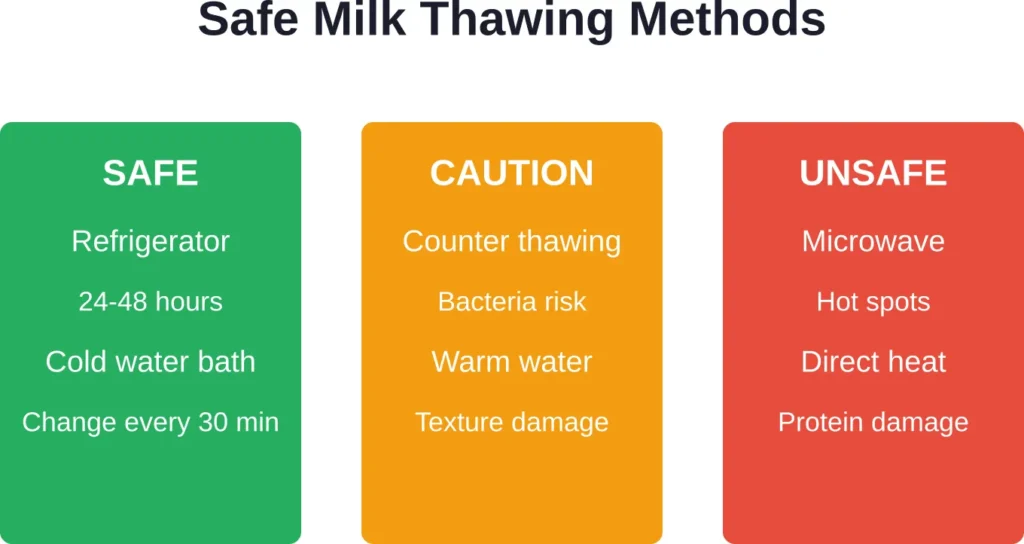
Move frozen milk from the freezer to the refrigerator 38 hours before needed, or 24-48 hours for shorter thawing. Slow thawing in cold temperatures keeps milk safe and preserves texture better than rapid methods.
According to competitor research, moving milk from freezer to refrigerator 38 hours before use provides optimal results.
Cold Water Bath (Faster Option)
Place the sealed, frozen container in a bowl of cold water in the refrigerator. Change the water every 30 minutes. This speeds up thawing without raising the milk to unsafe temperatures.
Never Microwave
According to HealthyChildren.org, microwaving breast milk isn’t safe due to scalding risk. The same applies to regular milk—microwaves heat unevenly, creating hot spots that can burn or degrade milk proteins.
Shake Vigorously Before Using
Once thawed, milk looks separated. Shake the container hard for 30 seconds to recombine fats and liquids. This restores a more uniform consistency.
Creative Ways to Use Frozen Milk
Frozen milk doesn’t have to go straight back into a glass. Some uses actually work better with previously frozen milk.
Frozen Milk Ice Cubes
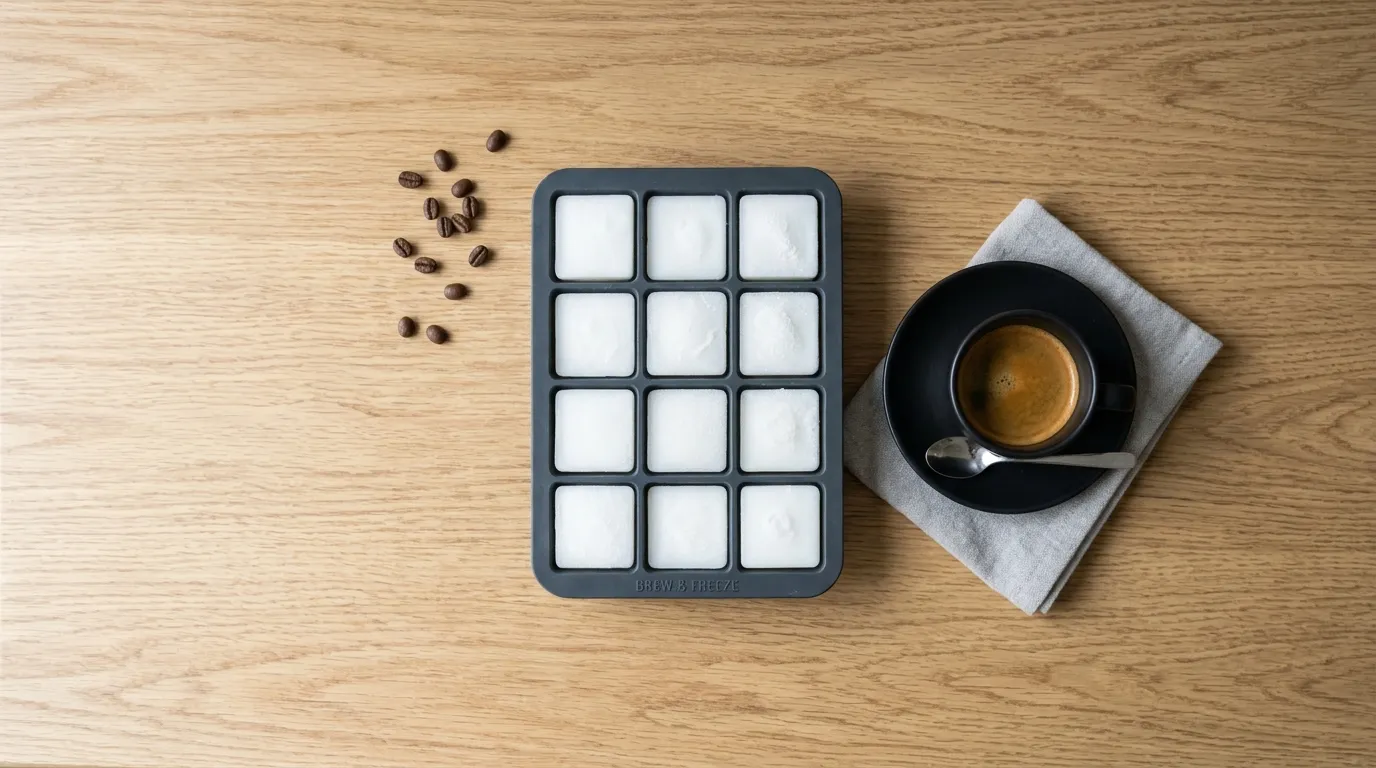
Pour milk into ice cube trays before freezing. Raw Farm suggests this method for using excess raw milk creatively. Milk cubes cool coffee without diluting it, blend into smoothies for extra creaminess, or chill cereal bowls on hot mornings.
Smoothie Bowls and Shakes
Texture changes from freezing become irrelevant when milk gets blended. Frozen milk works perfectly in smoothies, protein shakes, or smoothie bowls where everything gets mixed together anyway.
Cooking and Baking
Recipes calling for milk—soups, sauces, pancakes, muffins, casseroles—won’t show any difference with thawed milk. Heat and mixing eliminate texture concerns entirely.
Special Considerations for Breast Milk
Breast milk freezing follows similar principles but with stricter guidelines. The American Academy of Pediatrics provides specific recommendations through HealthyChildren.org.
Breast milk should be frozen within 48-72 hours of pumping if not used immediately. Don’t fill containers completely—leave space for expansion. Store in clean, food-grade containers or special breast milk bags.
Never refreeze thawed breast milk. Once thawed, use it within 24 hours and discard any leftovers.
Healthcare providers recommend that parents considering donor human milk consult with their provider, as nutritional needs vary by baby.
Is Freezing Raw Milk Different?
Raw milk—unpasteurized milk sold directly from farms—can be frozen just like pasteurized milk. Community discussions on raw milk frequently mention freezing as a strategy for buying in bulk.
Raw Farm confirms that freezing raw milk is an excellent preservation method when there’s excess that might spoil. The same headspace and container rules apply.
Some raw milk proponents suggest freezing may preserve natural enzymes better than extended refrigeration, though scientific verification is limited.
Frequently Asked Questions
Yes. Cow’s milk (whole, 2%, skim), goat milk, breast milk, and raw milk all freeze safely. Plant-based milks like almond or oat milk can freeze too, though texture changes may be more pronounced due to stabilizers and emulsifiers breaking down.
No. Freezing halts bacterial growth but doesn’t kill bacteria. Research on freeze-drying indicates that freezing can preserve foodborne bacteria in some contexts. Always freeze milk that’s still fresh and safe—freezing won’t fix milk that’s already spoiled.
It’s not recommended. Each freeze-thaw cycle degrades texture further and increases food safety risks. Thaw only what will be used within a few days and keep it refrigerated.
Slight odor changes can occur from fat oxidation during freezing. If milk smells sour or truly off, discard it. A mild “freezer” smell that disappears after shaking is usually harmless.
Use thawed milk within 3-4 days, as recommended for leftovers and opened fresh milk. For breast milk, the timeframe is shorter—within 24 hours after thawing.
Yes, but pour out about a cup first to allow for expansion. Cardboard cartons hold up better than fragile plastic bottles during freezing.
No significant nutrient loss occurs from freezing. Proteins, calcium, vitamins, and minerals remain intact. Only texture changes—not nutrition.
Final Thoughts: Freeze With Confidence
So, is it OK to freeze milk? Absolutely.
Freezing milk safely extends its usable life, reduces waste, and makes bulk buying practical. Texture might shift slightly, but nutritional value stays strong. For cooking, baking, smoothies, or coffee, most people won’t notice any difference.
Follow proper technique—leave headspace, use airtight containers, label with dates, and thaw in the refrigerator. These simple steps keep milk safe and maximize quality.
Whether stocking up during a sale, preserving breast milk, or managing raw milk deliveries, the freezer is a reliable tool. Don’t let good milk go to waste when freezing is this straightforward.