
Quick Summary: Benadryl (diphenhydramine) can be safe for dogs when used at proper veterinary dosages, but it requires careful consideration. While veterinarians sometimes recommend it for allergies, anxiety, or insect stings, dosing errors, underlying health conditions, and medication interactions can cause serious complications. Always consult a veterinarian before giving your dog any human medication to ensure safety and appropriate treatment.
When a dog starts scratching relentlessly or develops hives after a bee sting, many pet owners reach for a familiar solution from their own medicine cabinet: Benadryl. But is this over-the-counter antihistamine actually safe for dogs?
The short answer is yes, with important caveats. Diphenhydramine, the active ingredient in Benadryl, is commonly used in veterinary medicine. But proper dosing, awareness of contraindications, and understanding when not to use it matter just as much as knowing when it might help.
What Is Benadryl and How Does It Work in Dogs?
Benadryl is a first-generation H1 antihistamine. According to veterinary research, diphenhydramine is an H1-receptor antagonist that crosses the blood-brain barrier, which explains both its effectiveness and its sedative properties.
When dogs experience allergic reactions, their bodies release histamine. This chemical binds to H1 receptors and triggers inflammation, itching, swelling, and other allergic symptoms. Benadryl blocks these receptors, preventing histamine from causing those uncomfortable reactions.
Here’s the thing though—diphenhydramine doesn’t just work on allergy symptoms. Because it crosses into the central nervous system, it produces sedation and drowsiness and impairs cognitive processing in dogs. This side effect explains why some veterinarians recommend it for mild anxiety or motion sickness.
What Conditions Can Benadryl Treat in Dogs?
Veterinarians may recommend diphenhydramine for several situations:
- Allergic reactions: Mild skin reactions, hives, or facial swelling from insect stings, vaccines, or environmental allergens
- Itching and irritation: Short-term relief from allergic dermatitis, though antihistamines show limited effectiveness for chronic atopic dermatitis in dogs
- Motion sickness: The sedative properties can help dogs who get anxious or nauseated during car rides
- Mild anxiety: Pre-grooming or pre-veterinary visit nervousness in some dogs
- Vaccine reactions: Prevention or treatment of mild allergic responses to vaccinations
But wait. Not every itchy dog needs Benadryl, and antihistamines aren’t always effective.
Research on antihistamine efficacy in dogs with atopic dermatitis shows mixed results. A study published in veterinary records found that while a combination of chlorpheniramine and hydroxyzine reduced pruritus from 7.2±1.4 to 5.4±1.9 at day 14, and dimetinden reduced it from 6.9±1.9 to 5.2±1.8, placebo groups showed no improvement (6.4±1.3 to 6.4±1.8). These modest improvements suggest antihistamines work better for acute allergic events than chronic skin conditions.
Safe Benadryl Dosage for Dogs
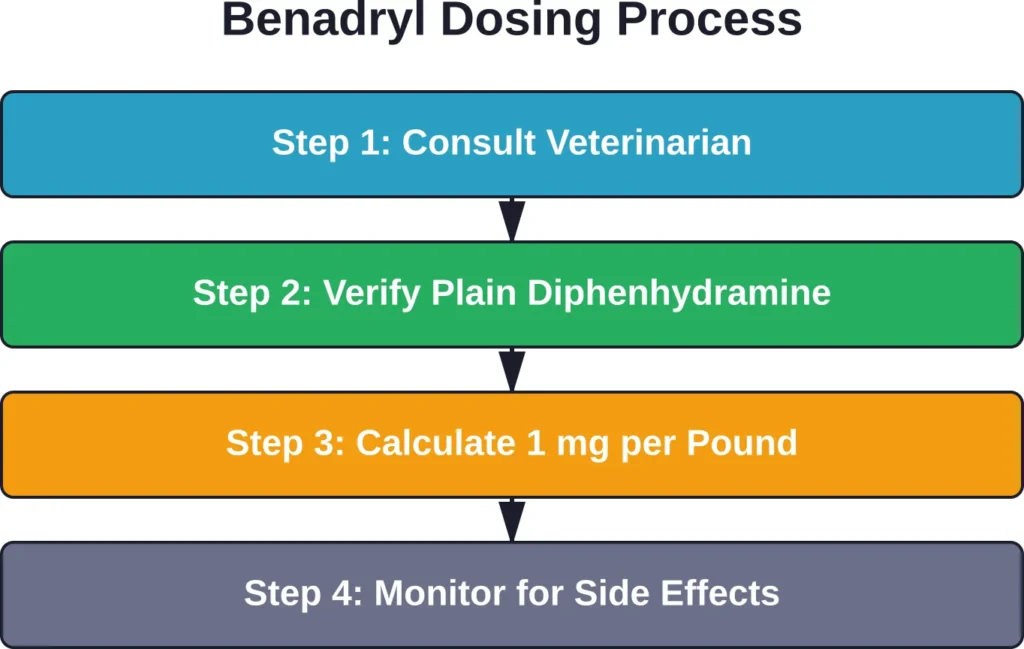
The standard veterinary recommendation is approximately 1 mg of diphenhydramine per pound of body weight, given two to three times daily. This translates to every 8-12 hours.
Sounds simple enough, right? Not quite.
| Dog’s Weight | Benadryl Tablets (25 mg) | Liquid Benadryl (12.5 mg/5 ml) |
|---|---|---|
| 10 pounds | 10 mg | 4 ml |
| 20 pounds | 20 mg | 8 ml |
| 30 pounds | 30 mg | 12 ml |
| 40 pounds | 40 mg | 16 ml |
| 50 pounds | 50 mg | 20 ml |
Children’s liquid Benadryl contains only 2.5 mg/ml and may be easier to administer to small dogs that resist pills. Always check the concentration on the label before dosing.
Real talk: these are general guidelines. Individual dogs metabolize medications differently based on age, health status, and concurrent medications. What works safely for one 30-pound dog might cause problems for another.
Which Dogs Should Never Take Benadryl?
Some dogs should avoid diphenhydramine entirely. Dogs with the following conditions face increased risks:
- Cardiovascular disease
- Lung conditions or respiratory issues
- Liver disease
- Seizure disorders
- Glaucoma
- Difficulties urinating or prostate problems
- Pregnant or nursing dogs
Dogs with certain genetic mutations also face medication risks. According to research from Washington State University, up to 75% of some herding breeds carry the MDR1 genetic mutation. While diphenhydramine isn’t the highest-risk medication for MDR1-positive dogs, the mutation affects how they metabolize various drugs, making veterinary consultation essential.
The Hidden Danger: Benadryl Product Variations
Now, this is where it gets dangerous.
Not all Benadryl products contain only diphenhydramine. Many formulations include additional active ingredients that are toxic to dogs:
- Pseudoephedrine or phenylephrine: Decongestants that cause elevated heart rate, blood pressure spikes, and potential seizures
- Acetaminophen: Extremely toxic to dogs, causing liver failure
- Alcohol: Present in some liquid formulations, toxic to dogs
- Xylitol: An artificial sweetener in some chewable or liquid products, causes life-threatening hypoglycemia and liver failure
Only plain diphenhydramine products are safe. Benadryl Allergy liquids, Benadryl Cold & Sinus, Benadryl-D, and similar combination products should never be given to dogs.
Sound familiar? This exact mistake has led to emergency veterinary visits and, in tragic cases, deaths reported by pet owners who unknowingly used combination products.
Side Effects and Overdose Symptoms
Even at appropriate doses, dogs may experience side effects from diphenhydramine. According to a 2016 study analyzing 621 cases of diphenhydramine exposure in dogs, only 23.5% developed clinical signs of toxicosis.
Common side effects include:
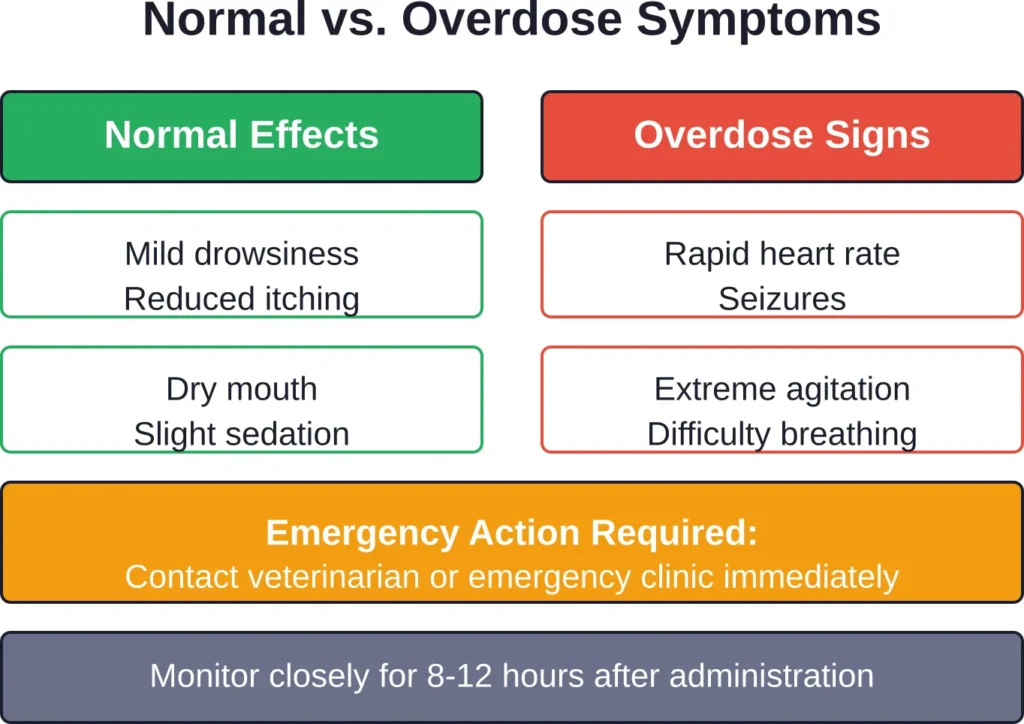
- Drowsiness and sedation
- Dry mouth
- Urinary retention
- Decreased appetite
- Vomiting or diarrhea
- Hypersalivation
The same research found that clinical signs varied greatly among dogs, but exposure dose was positively associated with severity in a dose-dependent manner. The most common toxic signs affected the nervous system (lethargy, hyperactivity, agitation, hyperthermia, ataxia, tremors, fasciculations) and cardiovascular system (tachycardia).
Three dogs in the study died from diphenhydramine toxicosis.
Recognizing an Overdose
Overdose symptoms require immediate veterinary attention:
- Extreme sedation or inability to stand
- Rapid heart rate
- Agitation or hyperactivity
- Seizures
- Difficulty breathing
- Collapse or loss of consciousness
Treatment for diphenhydramine toxicosis should be administered based on clinical signs observed, typically involving supportive care.
When Benadryl Isn’t Enough: Alternative Treatments
For chronic allergic conditions, diphenhydramine often provides insufficient relief. Veterinary medicine has advanced significantly, offering more effective options for dogs with persistent allergies.
Prescription Medications
The FDA approved Zenrelia (ilunocitinib tablets) in September 2024 for controlling pruritus associated with allergic dermatitis and atopic dermatitis in dogs at least 1 year of age. As a non-selective Janus kinase (JAK) inhibitor administered once daily with or without food, it represents the second JAK inhibitor approved for canine allergies.
Oclacitinib, approved 10 years ago, remains a popular selective JAK1 inhibitor for managing atopic dermatitis and allergic skin disease. Published literature on oclacitinib notes that while concerns and confusion have occurred regarding long-term safety, evidence supports its efficacy and safety at labeled doses.
Other Antihistamine Options
Cetirizine, a second-generation antihistamine, shows promise. Research indicates that second-generation antihistamines like cetirizine show promise, though responses to antihistamines vary considerably in dogs.
The therapeutic dose for cetirizine is 1-4 mg/kg once daily in dogs.
Medication Interactions: What You Need to Know
Diphenhydramine interacts with numerous medications. Dogs taking the following should not receive Benadryl without explicit veterinary approval:
- Central nervous system depressants (increases sedation risk)
- Anticholinergic drugs
- Heparin
- Certain antibiotics
- Antifungals like ketoconazole or itraconazole
The FDA Center for Veterinary Medicine works to prevent veterinary drug medication errors, noting that preventable events may cause or lead to inappropriate medication use or patient harm. One reported case involved a dog that received Sinequan (doxepin, a human antidepressant) instead of Zeniquin (marbofloxacin, a veterinary antibiotic). The dog became ill with lethargy, anorexia, and urinary retention within 24 hours but recovered after treatment.
That said, trazodone hydrochloride, when used for post-surgical confinement, was well tolerated even in combination with NSAIDs, antimicrobials, and other medications according to a 2014 study. But trazodone and diphenhydramine serve different purposes and have different interaction profiles.
Making the Right Decision for Your Dog
So is it okay to give dogs Benadryl? The answer depends entirely on the individual dog and situation.
Before reaching for that bottle, ask yourself:
- Has a veterinarian confirmed this is appropriate for my dog’s specific condition?
- Am I certain the product contains only diphenhydramine?
- Do I know my dog’s exact weight and the correct dose?
- Does my dog have any health conditions that make antihistamines risky?
- Is my dog taking other medications that might interact?
If the answer to any of these is “no” or “I’m not sure,” stop. Call a veterinarian first.
For acute allergic reactions with severe symptoms—facial swelling, difficulty breathing, collapse—Benadryl is not sufficient. These require immediate emergency veterinary care, where treatments may include injectable antihistamines, steroids, epinephrine, and supportive care.
Frequently Asked Questions
While Benadryl can be given two to three times daily as needed, long-term daily use should only occur under veterinary supervision. For chronic conditions like atopic dermatitis, prescription medications often work better than antihistamines. Prolonged antihistamine use may also lead to reduced effectiveness over time.
Diphenhydramine typically begins working within 30-60 minutes after oral administration. Peak effects occur around 1-2 hours post-dose. The duration of action generally lasts 8-12 hours, which is why dosing occurs two to three times daily.
Overdose symptoms include rapid heart rate, extreme sedation, agitation, seizures, difficulty breathing, or collapse. Contact a veterinarian or animal poison control center immediately. The ASPCA Animal Poison Control Center (888-426-4435) provides 24/7 assistance. Time matters—early intervention improves outcomes.
Benadryl should generally not be given to puppies without veterinary guidance. Young dogs metabolize medications differently than adults, and dosing can be challenging with small body weights. Additionally, underlying health issues may not yet be diagnosed in puppies. Always consult a veterinarian before medicating puppies.
Children’s liquid Benadryl containing only diphenhydramine (not combination products) can be safer for accurate dosing in small dogs due to its lower concentration (2.5 mg/ml versus 12.5 mg/5ml in adult liquids). However, always verify ingredients—some children’s products contain artificial sweeteners like xylitol, which is extremely toxic to dogs.
The sedative properties of diphenhydramine may reduce mild anxiety or motion sickness in some dogs during car rides. However, effectiveness varies significantly between individuals. For severe travel anxiety, prescription medications like trazodone or gabapentin typically work better. Discuss options with a veterinarian rather than relying solely on over-the-counter solutions.
Benadryl may provide temporary relief for acute allergic itching from insect bites or contact reactions. For chronic itching from atopic dermatitis or food allergies, antihistamines show limited effectiveness. Research indicates only modest improvements in chronic pruritus compared to placebo. Prescription medications like oclacitinib or Zenrelia, along with allergen management, often provide better long-term results.
The Bottom Line on Benadryl for Dogs
Benadryl can be a safe and useful tool for managing certain canine health issues when used correctly. Proper dosing, product selection, and awareness of contraindications make the difference between helpful relief and dangerous complications.
But over-the-counter doesn’t mean risk-free. Every year, emergency veterinary clinics treat dogs suffering from medication errors—wrong products, incorrect doses, dangerous interactions, or use in dogs with contraindicated conditions. Many of these situations were avoidable with a simple phone call to a veterinarian.
The FDA works to improve transparency and communication about animal drug safety, but pet owners bear responsibility for understanding what they’re giving their animals and why.
If your dog is suffering from allergies, anxiety, itching, or other conditions, start with a veterinary consultation rather than your medicine cabinet. Modern veterinary medicine offers effective, targeted treatments that may work better than diphenhydramine with fewer side effects.
Your dog’s health is worth that conversation. When in doubt, pick up the phone before you pick up the pill bottle.