
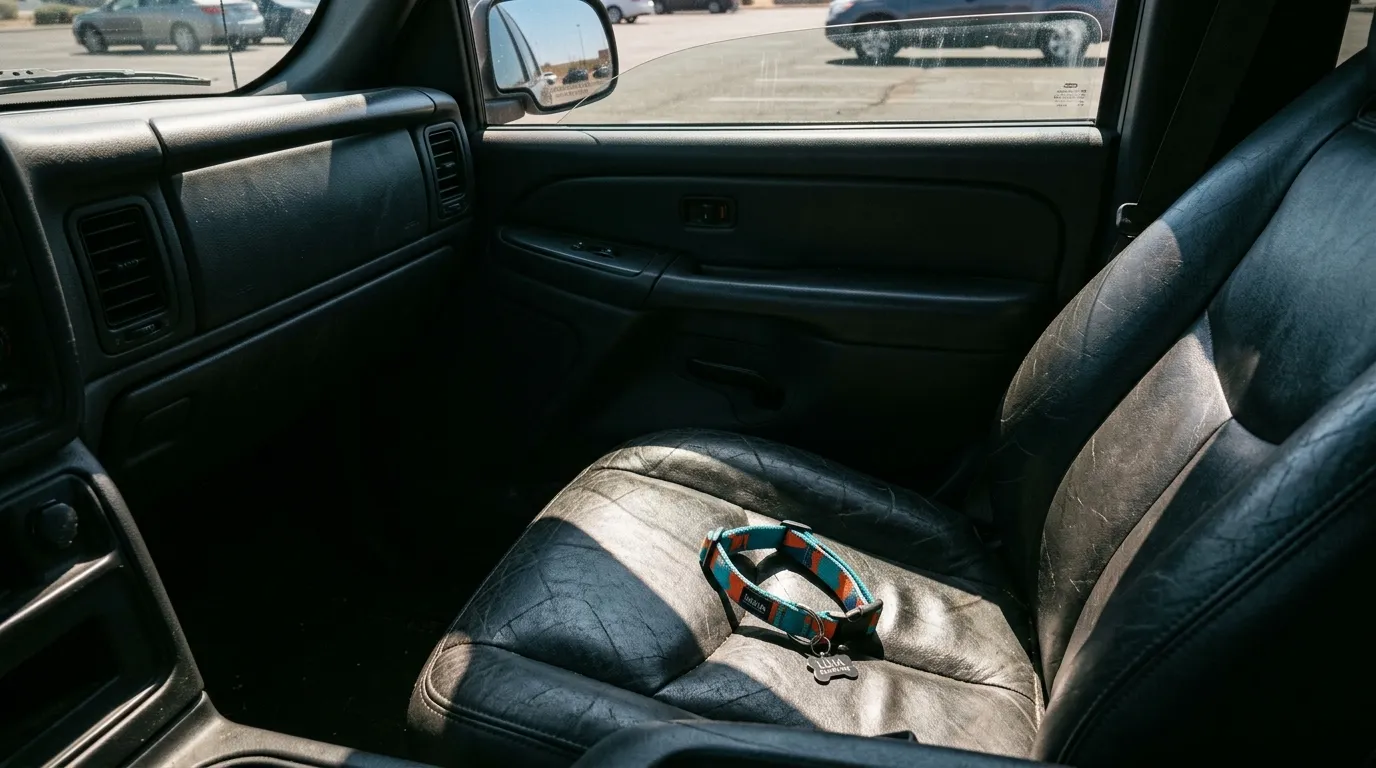
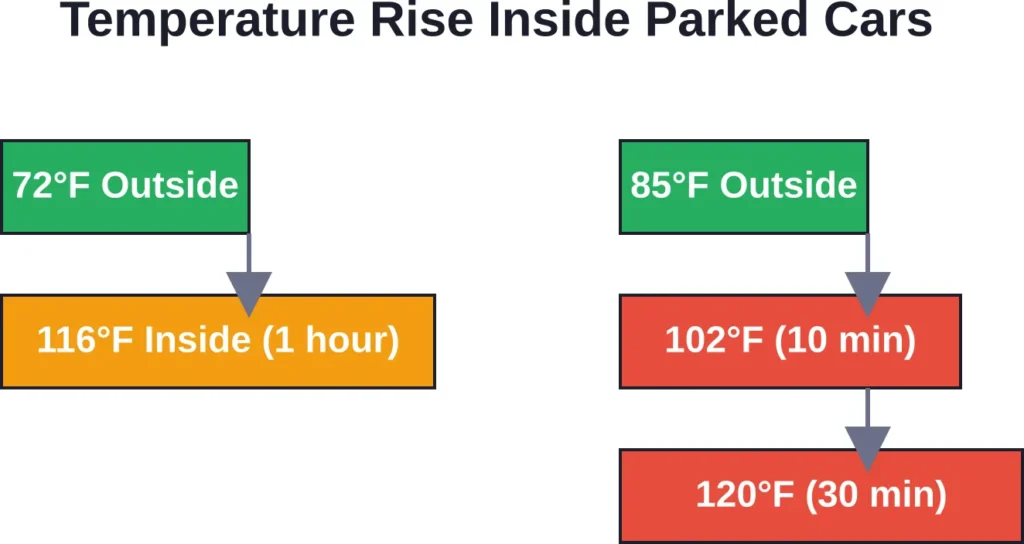
Quick Summary: No, it’s never okay to leave a dog in a hot car, even for a few minutes. Temperatures inside parked vehicles rise rapidly—reaching 102°F in just 10 minutes on an 85°F day—and can cause life-threatening heatstroke. Dogs cannot cool themselves efficiently in confined spaces, and even cracked windows don’t provide adequate ventilation.
The question comes up every summer: can a dog stay in the car while running a quick errand? The answer is straightforward and backed by veterinary science—leaving any dog in a parked vehicle during warm weather is dangerous and potentially fatal.
Here’s the thing though—many pet owners underestimate how fast temperatures climb inside cars. What feels like a mild day outside becomes an oven inside a closed vehicle.
How Fast Do Car Temperatures Rise?
According to the Humane Society, when it’s 72°F outside, the temperature inside a parked car can reach over 110°F in under an hour. On an 85°F day, even with windows slightly open, the interior temperature hits 102°F in just 10 minutes and climbs to 120°F within 30 minutes.
Look, cracking the windows doesn’t solve the problem. Studies show that ventilation barely slows the temperature increase—the greenhouse effect of glass traps heat regardless of airflow.
Why Dogs Are Especially Vulnerable
Dogs dissipate most heat through evaporative cooling via panting. The American Veterinary Medical Association notes that when ambient humidity exceeds 35%, dogs’ ability to decrease core body temperature becomes significantly reduced.
Inside a hot car, the confined space and soaring temperatures overwhelm this cooling mechanism. Dogs can’t sweat through their skin like humans—they rely almost entirely on respiratory evaporation.
Research published in veterinary journals shows that heatstroke in dogs carries approximately a 50% mortality rate, even with early cooling and intensive veterinary treatment. Once organ damage begins, the cascade is difficult to reverse.
Recognizing Heatstroke Symptoms
Knowing the warning signs can save lives. Dogs experiencing heat-related illness display several clear symptoms:
- Excessive panting or difficulty breathing
- Drooling more than usual
- Rapid heart rate
- Lethargy or weakness
- Vomiting or diarrhea
- Disorientation or stumbling
- Bright red, gray, or purple gums
- Collapse or seizures
Real talk: by the time symptoms become obvious, the situation is already critical. Prevention is the only reliable strategy.
What About Cooler Days?
Community discussions often raise this question—what if the weather seems mild? The short answer? Temperature perception is misleading.
On a 75°F day, a parked car reaches 94°F within 10 minutes and 109°F within 30 minutes (per SPCA Northern Nevada data). These temperatures are life-threatening for dogs confined in small spaces.
The BC SPCA emphasizes that cool outside doesn’t mean cool inside the vehicle. The greenhouse effect, dark interiors, and lack of air circulation create hazardous conditions regardless of the season.
Breed and Age Factors
Some dogs face higher risk. Brachycephalic breeds—bulldogs, pugs, Boston terriers—have compromised respiratory systems that make cooling even harder. Medical research indicates that large breed dogs (median body weight around 31 kg) also show heightened susceptibility to heat stress.
Puppies, senior dogs, and those with heart or respiratory conditions are particularly vulnerable. But honestly? No dog is immune to heatstroke in a hot car.
| Dog Category | Risk Level | Key Vulnerability |
|---|---|---|
| Brachycephalic breeds | Very High | Restricted airways limit panting efficiency |
| Large breeds (>30 kg) | High | Greater body mass generates more heat |
| Puppies & seniors | High | Less effective thermoregulation |
| Thick-coated breeds | Moderate-High | Insulation traps body heat |
| Dogs with health issues | Very High | Compromised cardiovascular response |
Safe Alternatives to Leaving Dogs in Cars
Planning ahead prevents tragedy:
- Leave pets at home when running errands
- Shop at pet-friendly stores where dogs can accompany owners inside
- Use curbside pickup or delivery services
- Bring another person who can stay outside with the dog
- Schedule errands for cooler parts of the day
Now, this is where it gets interesting. A 2016–2018 study of UK veterinary practices found that only 21.70% of dogs experiencing heat-related illness were cooled prior to transport, and just 23.97% were cooled using recommended methods. The veterinary consensus is clear: “cool first, transport second.”
What to Do If You See a Dog in a Hot Car
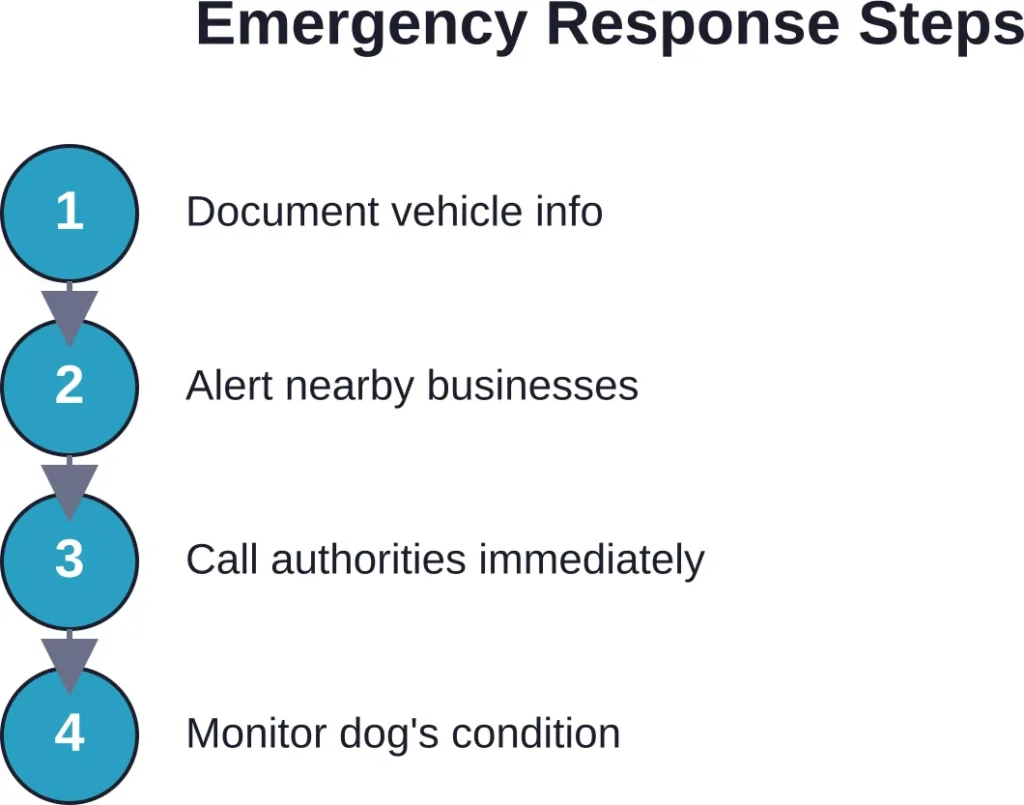
Finding a dog alone in a parked car during warm weather requires immediate action:
- Note the car’s make, model, and license plate number
- Check nearby businesses and ask staff to page the owner
- Call local animal control or police immediately
- Monitor the dog’s condition—if symptoms worsen, emergency intervention may be necessary
- Don’t leave until the situation is resolved
Some jurisdictions have Good Samaritan laws protecting those who break windows to rescue pets in distress. Check local regulations, but prioritize the animal’s life.
Frequently Asked Questions
While running AC is safer than a hot car, it’s still risky. Mechanical failures, accidental shutoff, or someone turning off the engine can quickly create dangerous conditions. Dogs left alone can also panic or accidentally shift controls.
Heatstroke can develop in as little as 10 minutes when interior temperatures reach 102°F or higher. The timeline varies based on outdoor temperature, the dog’s size, breed, and health status—but the risk is always present.
There’s no safe threshold. Even on 70°F days, car interiors become dangerously hot within minutes. The only safe answer is never leaving dogs in parked cars during warm weather, regardless of outdoor temperature.
No. Even early morning or evening hours can be dangerous if temperatures are warm. Cloud cover, direct sunlight, and vehicle color all affect interior heat—making it impossible to predict safety based on time alone.
Begin cooling immediately—veterinary research shows “cool first, transport second” reduces mortality. Move the dog to shade or air conditioning, offer small amounts of cool water to drink, and apply cool (not ice-cold) water to the head and body. Seek veterinary care urgently.
No. Studies demonstrate that slightly open windows have minimal impact on interior temperature rise. The greenhouse effect and lack of air circulation still create life-threatening conditions within minutes.
Many jurisdictions have laws against leaving animals in vehicles under dangerous conditions. Penalties range from fines to animal cruelty charges. Beyond legal consequences, the risk to the dog’s life isn’t worth taking.
The Bottom Line
There’s no scenario where leaving a dog in a hot car is acceptable. Temperatures rise too quickly, dogs cool themselves too slowly, and the consequences are too severe.
The safest choice is always leaving pets at home when they can’t accompany owners inside. That quick errand isn’t worth risking a beloved companion’s life.
If plans change and bringing the dog becomes necessary, either skip the errand or ensure someone stays with the animal outside the vehicle in a shaded area. Preparation and awareness prevent tragedy—every single time.