

Quick Summary: Lying down immediately after eating can trigger acid reflux, heartburn, and indigestion by allowing stomach acid to flow back into the esophagus. Waiting 2-3 hours before reclining helps prevent these symptoms, though certain medical conditions like postprandial hypotension may require different approaches. When you do lie down, sleeping on your left side significantly reduces reflux symptoms compared to other positions.
That post-meal drowsiness is real. After a satisfying lunch or heavy dinner, the couch starts calling your name. But is giving in to that urge actually a problem?
The short answer: it depends on your digestive health and how you position yourself.
For most people, lying flat right after eating invites a cascade of uncomfortable symptoms. But the relationship between eating and reclining isn’t quite as simple as “always wait” or “never lie down.”
Let’s break down what actually happens inside your body when you stretch out after a meal, who needs to be careful, and when lying down might actually help.
What Happens When You Lie Down After Eating
Your digestive system relies on gravity as a silent partner. When you’re upright, stomach acid stays where it belongs—in your stomach. The lower esophageal sphincter (LES), a ring of muscle at the junction between your esophagus and stomach, acts as a one-way valve.
Lie down too soon, and you remove gravity from the equation.
The LES has to work harder to keep stomach contents from flowing backward into the esophagus. For people with weakened or relaxed LES function, this becomes a losing battle. Stomach acid creeps upward, causing that familiar burning sensation in your chest and throat.
Gastroesophageal reflux disease (GERD) affects approximately 10% to 20% of adults in Western countries, with about 6% experiencing severe symptoms. In Asian populations, the prevalence sits around 5%. Among those with GERD, between 52% and 79% report nocturnal reflux symptoms—that’s reflux that occurs specifically when lying down at night.
The Anatomy of Reflux
When you recline, the angle between your stomach and esophagus flattens. This mechanical change makes it easier for gastric contents to slosh backward, particularly if your stomach is full.
The acid that reaches your esophagus doesn’t just cause immediate discomfort. It sits there, bathing esophageal tissue that lacks the protective lining your stomach has. The longer the acid exposure time, the more irritation and potential damage occurs.
Research measuring esophageal pH levels shows clear patterns. Acid clearance time—how long it takes for your esophagus to clear out refluxed acid—increases significantly when lying flat after meals.
Common Symptoms of Lying Down Too Soon
The consequences of premature reclining show up in several ways, and they’re not all obviously digestive.
| Symptom | Description | Timing |
|---|---|---|
| Heartburn | Burning sensation in chest and throat from acid reflux | 15-30 minutes after lying down |
| Regurgitation | Stomach contents flowing back into mouth | Immediate to 1 hour |
| Bloating | Feeling of fullness and abdominal distension | 30 minutes to 2 hours |
| Nausea | Queasiness that may lead to vomiting | Varies, often 30-60 minutes |
| Sleep Disturbances | Difficulty falling or staying asleep due to discomfort | Throughout the night |
| Chest Pain | Sharp or dull pain that can mimic cardiac symptoms | 20 minutes to 1 hour |
Here’s something interesting: GERD is associated with an odds ratio of 1.48 for sleep disturbances. That means people with reflux disease are nearly 50% more likely to experience disrupted sleep compared to those without GERD.
Some people experience less obvious symptoms. A persistent cough, hoarseness, or feeling like something is stuck in your throat can all stem from acid reaching the upper esophagus and throat area.
Community discussions reveal another pattern: symptoms often feel worse after certain meals. High-fat foods, large portions, alcohol, and acidic items like tomato sauce or citrus amplify reflux when combined with lying down.
How Long Should You Wait Before Lying Down
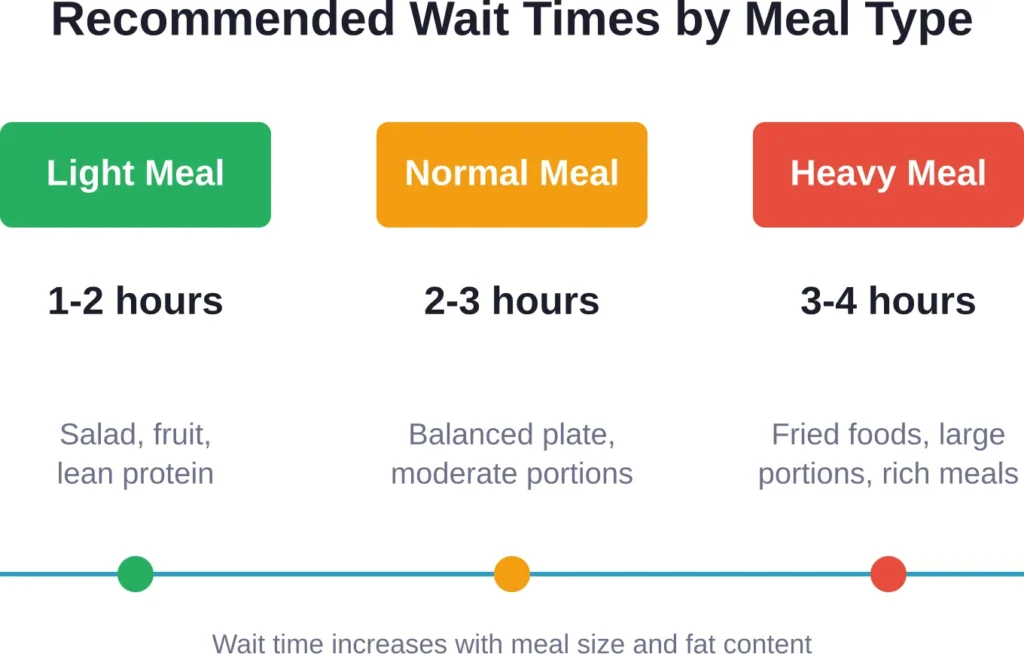
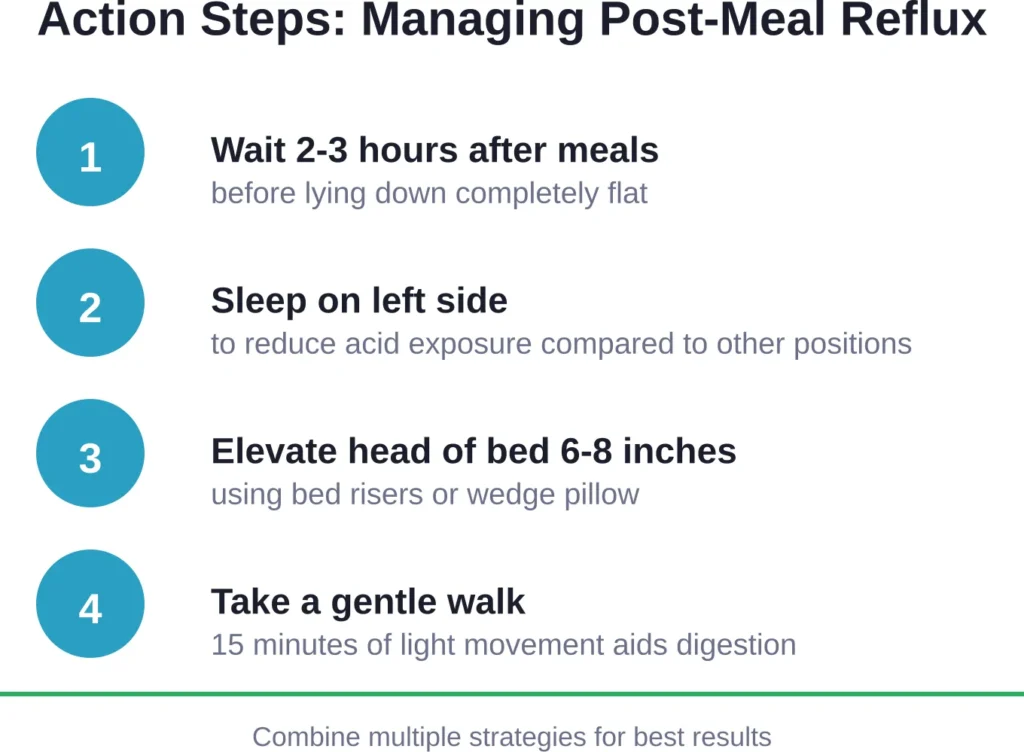
The magic number most healthcare providers recommend: 2 to 3 hours.
This window gives your stomach time to empty a significant portion of its contents into the small intestine. According to MedlinePlus, after a meal, it usually takes around four hours for 90 percent of the food to move out of your stomach and into the small intestine.
But wait times aren’t one-size-fits-all.
The composition of your meal matters enormously. A light salad with grilled chicken moves through your stomach faster than a cheeseburger with fries. Fatty foods slow gastric emptying—sometimes significantly. Protein takes longer to digest than simple carbohydrates.
Age factors in too. Gastric emptying tends to slow as people get older, meaning older adults may benefit from waiting longer before reclining.
The Sleep Position That Actually Helps
When bedtime arrives and you can’t wait any longer, how you lie down matters as much as when.
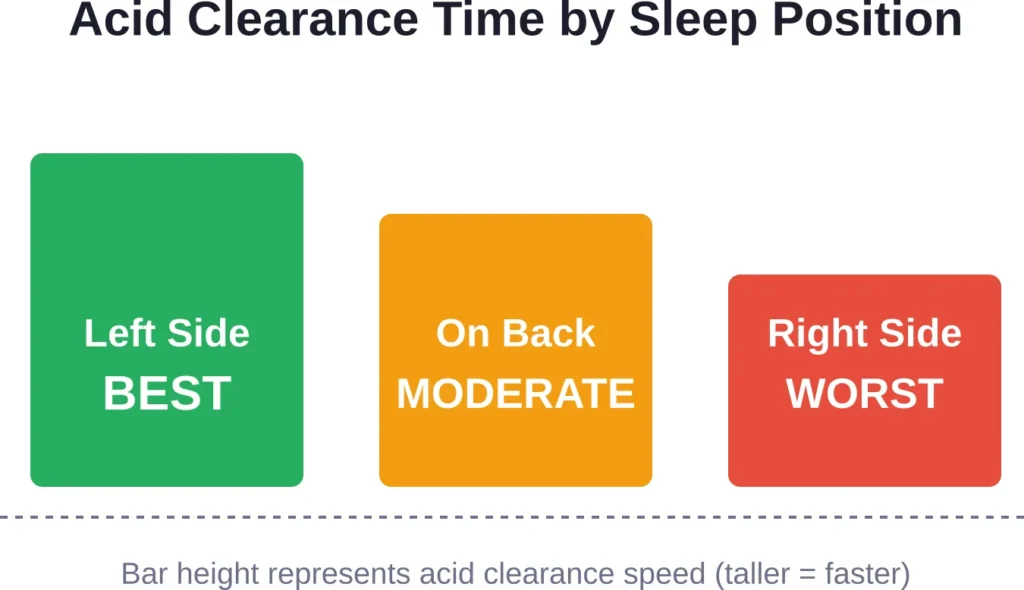
Sleeping on the left side demonstrates measurable benefits for reducing reflux. A systematic review and meta-analysis examining sleep positions found significant differences in acid exposure between positions.
Compared to sleeping on the right side, left lateral sleeping showed reduced acid exposure time and acid clearance time. Against supine (back) sleeping, left side sleeping reduced acid exposure time and acid clearance time.
These improvements are significant when considered over multiple episodes. Over a full night with multiple reflux episodes, the cumulative difference becomes clinically meaningful.
Why Left Side Sleeping Works
The anatomy explains it. Your stomach sits on the left side of your abdomen. When lying on the left, gravity helps keep stomach contents pooled away from the LES. The gastroesophageal junction sits higher than the stomach contents.
Flip to the right side, and the relationship reverses. The junction sits lower, allowing acid to pool right at the gateway to your esophagus.
Back sleeping (supine) removes the lateral advantage entirely and can allow acid to spread across a wider area of the esophageal opening.
When Lying Down After Eating Actually Helps
Here’s where it gets counterintuitive. Some medical conditions flip the standard advice on its head.
Postprandial hypotension—a drop in blood pressure after eating—affects some people, particularly older adults and those with certain autonomic nervous system disorders. Blood rushes to the digestive system to aid digestion, sometimes causing dizziness, lightheadedness, or even fainting when standing.
For these individuals, lying down immediately after eating for an hour or longer actually helps. The horizontal position prevents blood from pooling in the legs and maintains adequate blood flow to the brain.
Dumping syndrome, typically seen after gastric surgery, creates another exception. Early dumping syndrome causes symptoms within 30 minutes of eating when food moves too quickly from the stomach into the small intestine. Late dumping syndrome occurs 1 to 3 hours after meals. Resting after eating can help manage these symptoms.
But these are specific medical conditions requiring personalized guidance. For the general population without these diagnoses, staying upright remains the better default.
Practical Tips to Prevent Discomfort
Beyond timing and position, several strategies help minimize reflux risk when you need to lie down after eating.
Elevating the head of the bed creates a gentle incline that maintains some gravitational advantage even while sleeping. Raising the head by 6 to 8 inches—using bed risers or a wedge pillow under the mattress—makes a measurable difference. Stacking regular pillows doesn’t work as well because it causes the body to bend at the waist.
Meal composition matters enormously. Fatty foods, chocolate, caffeine, alcohol, peppermint, and acidic foods all relax the LES or increase stomach acid production. Late-night snacking extends the digestive timeline and increases overnight reflux risk.
Portion control helps too. A stomach stretched by a large meal creates more pressure against the LES. Eating smaller, more frequent meals throughout the day instead of three large ones reduces this mechanical pressure.
Tight clothing around the waist compresses the stomach and can force contents upward. Loosening belts or changing into comfortable clothes after eating provides relief.
Light Movement Aids Digestion
Instead of lying down or sitting motionless, gentle walking after meals promotes gastric emptying. A 15-minute stroll helps move food through the digestive tract more efficiently without the jarring motion that could trigger reflux.
Community experiences consistently report that easy, upright activity—washing dishes, light housework, casual walking—feels better than either vigorous exercise or complete rest immediately after eating.
When to See a Healthcare Provider
Occasional heartburn after lying down too soon after a big meal usually doesn’t signal anything serious. But persistent symptoms warrant medical attention.
Reflux occurring more than twice weekly for several weeks meets the clinical threshold for GERD. Left untreated, chronic acid exposure damages esophageal tissue and can lead to complications including esophagitis, strictures, Barrett’s esophagus, and in rare cases, esophageal cancer.
Red flag symptoms requiring prompt evaluation include:
- Difficulty or pain when swallowing
- Unintended weight loss
- Persistent nausea or vomiting
- Vomiting blood or material that looks like coffee grounds
- Black, tarry stools indicating digestive tract bleeding
- Chest pain, particularly if it radiates to the arm, neck, or jaw
That last point deserves emphasis. Cardiac chest pain can mimic reflux, and reflux can mimic cardiac symptoms. Severe or new chest pain always requires emergency evaluation to rule out heart problems.
Treatment Options Beyond Lifestyle Changes
When behavioral modifications aren’t enough, medical treatments effectively manage reflux symptoms.
Over-the-counter antacids neutralize existing stomach acid and provide quick but temporary relief. They work within minutes but last only 30 to 60 minutes.
H2 receptor antagonists (like famotidine) reduce acid production and last longer than antacids—typically 6 to 12 hours. These work best when taken before meals or before lying down.
Proton pump inhibitors (PPIs) provide the strongest acid suppression by blocking the enzyme system that produces stomach acid. These require daily dosing and work best when taken 30 minutes before the first meal of the day. Many experts suggest that PPIs should be used at the lowest effective dose for the shortest necessary duration.
Anti-nausea medicines start working 30 to 60 minutes after administration when nausea accompanies reflux symptoms.
More recent options include potassium-competitive acid blockers (PCABs), which some studies suggest may control symptoms better than traditional medications in certain patients.
Frequently Asked Questions
For most people, no. Lying down right after eating significantly increases reflux risk. However, individuals with postprandial hypotension or dumping syndrome may need to lie down immediately after meals as part of their medical management. Always follow guidance from healthcare providers for specific medical conditions.
Typically, about 90% of a meal empties from the stomach into the small intestine within four hours. Light meals may clear faster (1-2 hours), while heavy, fatty meals can take considerably longer. Age, meal composition, and individual digestive health all influence gastric emptying time.
Yes, substantially. Research shows left side sleeping reduces acid clearance time compared to right side sleeping and back sleeping. Over a full night, these differences add up to significantly less acid exposure and better symptom control.
Fatty foods, chocolate, caffeine, alcohol, peppermint, spicy foods, tomato-based products, and citrus all either relax the lower esophageal sphincter or increase stomach acid production. Large portions of any food create mechanical pressure that promotes reflux when lying down.
Not directly. Weight gain comes from consuming more calories than the body burns, regardless of posture after eating. However, lying down may lead to less physical activity overall and could contribute to digestive discomfort that affects eating patterns. The real concern with post-meal reclining is reflux, not weight.
Seek medical attention if heartburn or reflux symptoms occur more than twice weekly for several weeks, if over-the-counter treatments don’t provide relief after two weeks, or if you experience difficulty swallowing, persistent nausea, unintended weight loss, vomiting blood, or black stools. Chest pain always requires prompt evaluation.
Yes, when done correctly. Raising the head of the bed 6 to 8 inches using bed frame risers or a wedge under the mattress creates an incline that maintains gravitational advantage throughout sleep. This differs from simply stacking pillows, which causes the body to bend at the waist and can actually worsen reflux.
The Bottom Line on Post-Meal Reclining
The verdict: for most people, lying down immediately after eating invites uncomfortable reflux symptoms and disrupted sleep. The evidence consistently supports waiting at least 2 to 3 hours before reclining, choosing left side sleeping when possible, and making thoughtful meal choices.
But health isn’t one-size-fits-all. Certain medical conditions require different approaches, and individual tolerance varies.
Pay attention to how your body responds. Track which foods, portion sizes, and timing strategies work best for your digestive comfort. Persistent symptoms deserve professional evaluation rather than endless self-management attempts.
Small adjustments—eating lighter dinners earlier in the evening, taking a short walk after meals, sleeping on the left side with an elevated head—add up to measurable improvements in digestive comfort and sleep quality. Start with one change, see how it goes, and build from there.