

Quick Summary: Masturbation is a normal, healthy sexual behavior with no harmful physical or mental health effects. Research shows it can reduce stress, improve sexual self-awareness, and serve as the safest form of sexual expression with zero risk of pregnancy or STIs. Most adults engage in masturbation regardless of relationship status, and health authorities recognize it as a natural part of sexual development.
The question “is it OK to masturbate” comes up frequently, often wrapped in uncertainty, stigma, or conflicting messages from culture and religion. Here’s the straightforward answer backed by medical research: yes, masturbation is completely OK.
It’s a normal sexual behavior practiced by the majority of adults. And despite persistent myths about negative consequences, authoritative health organizations including Planned Parenthood, the National Institutes of Health, and the World Health Organization recognize masturbation as safe and healthy.
What Medical Research Says About Masturbation
Large-scale studies provide clear data on how common masturbation actually is. According to research published by the NIH, 61% of men and 38% of women in an American sample reported masturbatory behavior over the past year. British data shows similar patterns, with 66% of men and 33% of women reporting masturbation within the preceding four weeks.
These aren’t fringe behaviors. Masturbation represents one of the most common sexual activities across demographics, age groups, and relationship statuses.
The research also dismantles longstanding fears about health consequences. NIH studies examining abstinence from masturbation found no evidence supporting claims of negative physiological or psychological effects from masturbation itself. Historical warnings about masturbation causing illness, infertility, or psychological damage lack scientific foundation.
Health Benefits of Masturbation
Beyond being harmless, masturbation offers several documented benefits.
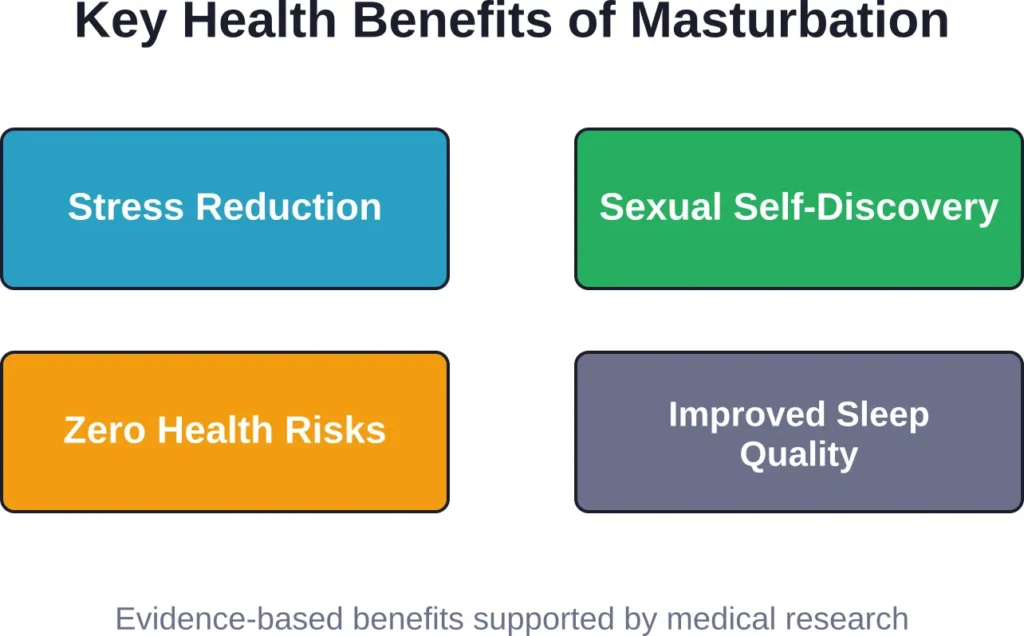
Stress Reduction and Coping
Research examining masturbation as a coping strategy found that individuals tend to masturbate more frequently during periods of elevated psychological stress. Studies on women specifically identified masturbation as an adaptive coping mechanism during stressful life circumstances, including the isolation experienced during the COVID-19 pandemic.
Sexual release triggers neurochemical changes that can temporarily reduce stress and promote relaxation. This makes masturbation a natural, accessible tool for managing everyday tension.
Sexual Self-Knowledge
Masturbation allows people to explore their bodies and understand what feels pleasurable. Research shows that for up to 72% of women, direct clitoral stimulation is essential to achieve or improve orgasm. Discovering this through solo exploration often improves partnered sexual experiences.
Understanding personal responses, preferences, and sensitivities creates a foundation for better sexual communication and satisfaction later.
Zero Risk of Pregnancy or STIs
Planned Parenthood emphasizes this consistently: masturbation represents the safest possible form of sexual expression. There’s absolutely no risk of unintended pregnancy or sexually transmitted infections.
For adolescents and young adults navigating sexuality, masturbation provides a way to experience sexual pleasure without the health risks or emotional complexity of partnered activity.
Masturbation and Relationship Status
One persistent myth suggests that masturbation only happens when people lack sexual partners. Research contradicts this assumption entirely.
Studies show that masturbation frequency often correlates positively with desire for partnered sex rather than replacing it. Among women desiring much more partnered sex, the likelihood of frequent masturbation was 3.89 times higher compared to those satisfied with their current partnered activity.
What does this mean? Masturbation doesn’t substitute for partnered sex. For many people, it complements it. Higher sexual desire manifests in both solo and partnered activity.
The research shows that many female participants who masturbated were in close relationships. Being partnered doesn’t eliminate interest in solo sexual expression.
Can You Masturbate Too Much?
This question worries many people. The short answer? Physical harm from excessive masturbation is rare and usually limited to temporary skin irritation from friction.
Planned Parenthood notes that using adequate lubrication prevents most irritation issues. If discomfort occurs, simply taking a break until the area heals resolves the problem.
The more complex question involves psychological patterns. Research examining abstinence from masturbation and hypersexuality investigated whether frequent masturbation indicates problematic sexual behavior or poor self-regulation.
The findings revealed that abstinence from masturbation is often recommended in religious contexts or when individuals fear loss of control. But these recommendations stem from moral frameworks rather than medical evidence.
Here’s the thing though—frequency alone doesn’t determine whether masturbation is problematic. The important considerations are:
- Does masturbation interfere with daily responsibilities, work, or relationships?
- Do you feel unable to control the behavior despite wanting to?
- Does masturbation cause significant distress or guilt that affects mental health?
- Are you using masturbation to avoid addressing other emotional or psychological issues?
For most people, the answer to all these questions is no. Masturbation remains a manageable, enjoyable part of life without negative consequences.
Masturbation and Sexual Satisfaction
Does masturbation improve or reduce satisfaction with partnered sex? Research yields nuanced answers that differ between men and women.
A systematic review examining the relationship between solitary masturbation and sexual satisfaction found that in men, a negative relation between masturbation and sexual satisfaction was observed in 71.4% of the studies, 21.4% found no such relation, and 7.2% observed a positive association.
For women, 40% reported no relation, 33.3% a negative relation, and the remaining percentage observed a positive association between masturbation and sexual satisfaction.
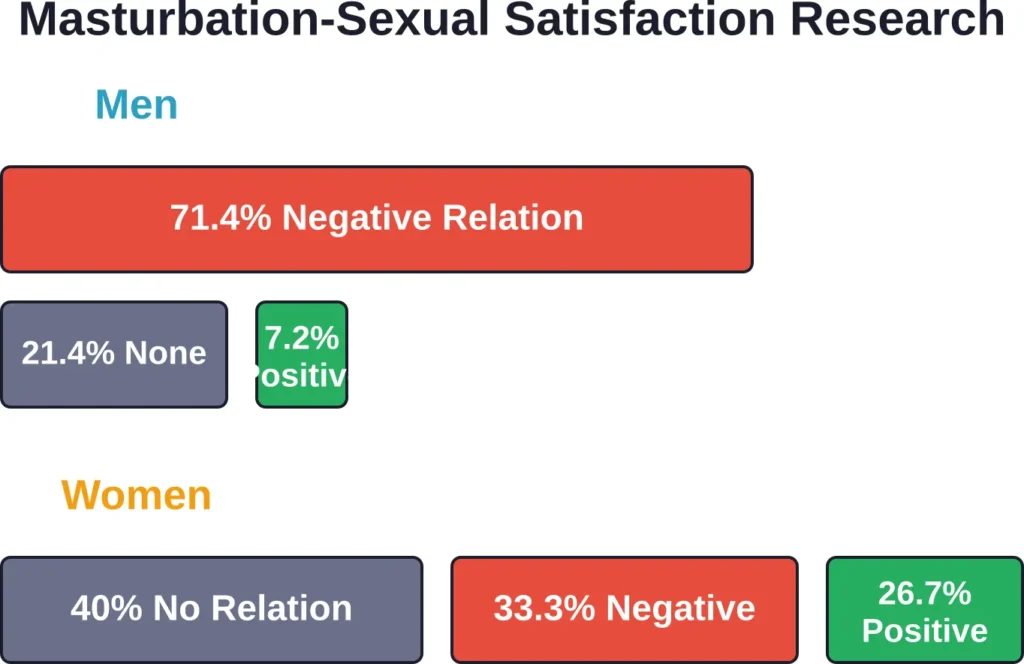
What explains these patterns? Researchers suggest that for some individuals, frequent masturbation may indicate unmet sexual needs in partnered relationships. For others, it reflects healthy sexual appetite that enhances overall satisfaction.
Context matters more than frequency. Someone masturbating because partnered sex feels unsatisfying will report different outcomes than someone who simply enjoys varied sexual expression.
Common Reasons People Don’t Masturbate
Not everyone masturbates, and that’s perfectly normal too. Research identified the most frequently endorsed reasons for not masturbating:
- Lack of interest or desire
- Being in a committed relationship (and feeling satisfied with partnered sex)
- Conflict with personal morals or values
- Religious beliefs that discourage or prohibit masturbation
These reasons highlight how cultural, religious, and personal frameworks shape sexual behavior. There’s no medical imperative to masturbate. People who don’t feel inclined to engage in solo sexual activity aren’t missing out on essential health benefits.
But it’s worth distinguishing between genuine lack of interest and avoidance driven by shame or misinformation. If someone wants to explore masturbation but feels prevented by guilt rooted in debunked health myths, accurate information can help.
Debunking Masturbation Myths
Despite decades of sex education progress, harmful myths persist. Let’s address the most common ones directly.
| Myth | Reality |
|---|---|
| Masturbation causes infertility | No evidence supports this claim. Masturbation doesn’t affect reproductive capacity. |
| Masturbation shrinks genitals | Completely false. Genital size is determined by genetics and hormones, not sexual activity. |
| Masturbation causes erectile dysfunction | Recent research found no causal link. ED typically stems from vascular, hormonal, or psychological factors unrelated to masturbation frequency. |
| Masturbation depletes energy or “vital essence” | This idea comes from outdated pseudoscience. Sexual activity doesn’t drain life force or weaken the body. |
| Only people without partners masturbate | Research shows masturbation is common across relationship statuses. Many partnered individuals maintain solo sexual practices. |
| Masturbation is addictive | For the vast majority, masturbation remains a manageable behavior. True compulsive sexual behavior is rare and involves multiple factors beyond masturbation alone. |
These myths originated in religious and moral frameworks from centuries past, when masturbation was labeled a “sin against nature.” Modern medicine recognizes these claims as unfounded.
Masturbation Across Different Life Stages
Masturbation patterns and meanings shift throughout life. Even before puberty, children sometimes discover that touching their genitals feels good. This represents normal bodily exploration, not sexual behavior in the adult sense.
During adolescence, masturbation typically increases as hormonal changes drive sexual development. For many teenagers, masturbation provides the first experiences with sexual pleasure and orgasm in a safe, private context.
Adult masturbation serves multiple functions: stress relief, sexual satisfaction when partnered sex isn’t available or desired, exploration of fantasies, and simple physical pleasure. Older adults continue masturbating, though cultural silence around senior sexuality often obscures this reality.
The World Health Organization’s comprehensive sexuality education guidance recognizes masturbation as a normal component of healthy sexual development across the lifespan. Accurate information about solo sexual behavior helps people make informed choices without shame or fear.
When to Seek Help
While masturbation is generally healthy, certain situations warrant professional guidance:
- Masturbation frequency genuinely interferes with work, school, relationships, or daily functioning
- Feelings of intense shame or guilt about masturbation cause significant psychological distress
- Masturbation becomes a compulsive response to stress rather than one coping tool among many
- Physical injury from masturbation practices (rare but possible with unsafe objects or excessive force)
Sex therapists, counselors, and healthcare providers can address these concerns without judgment. The goal isn’t eliminating masturbation but ensuring it remains a positive aspect of sexual health.
Frequently Asked Questions
Yes, daily masturbation is normal for many people. Frequency varies widely based on individual sex drive, stress levels, and personal preference. As long as it doesn’t interfere with responsibilities or cause physical discomfort, daily masturbation is perfectly healthy.
No credible research supports claims that masturbation reduces athletic performance, muscle development, or testosterone levels in ways that matter for fitness. This myth persists in athletic culture but lacks scientific foundation.
Many people find that masturbation helps them fall asleep more easily. The relaxation following orgasm, combined with the release of certain neurochemicals, can promote drowsiness. This represents one of the documented benefits of masturbation.
Not necessarily. Research shows that masturbation often complements rather than replaces partnered sex. Many people enjoy both solo and partnered sexual expression. Open communication about sexual needs and preferences matters more than whether a partner masturbates.
No, masturbation is a normal part of adolescent sexual development. Health organizations recognize it as a safe way for teenagers to explore their sexuality without risks of pregnancy or STIs. Providing accurate information helps reduce shame and supports healthy development.
Generally speaking, masturbation during pregnancy is safe unless a healthcare provider has identified specific medical concerns. Many pregnant individuals continue masturbating throughout pregnancy without complications.
Religious teachings about masturbation stem from theological and moral frameworks rather than medical evidence. Different faith traditions maintain varied perspectives on sexual ethics. Individuals navigate these teachings according to their personal beliefs and values.
Conclusion
So, is it OK to masturbate? Absolutely. Medical research, health authorities, and scientific consensus confirm that masturbation is a normal, healthy sexual behavior with documented benefits and no proven harms for the vast majority of people.
The stigma surrounding masturbation persists due to outdated moral frameworks and misinformation, not medical reality. Whether someone chooses to masturbate frequently, occasionally, or not at all, the decision should be based on personal preference and accurate information rather than fear or shame.
Understanding masturbation as a natural aspect of human sexuality supports better sexual health, reduces unnecessary guilt, and promotes honest conversations about sexual wellbeing. If you have specific concerns about your sexual health or behaviors, consulting with a healthcare provider or sex therapist provides personalized guidance in a confidential, judgment-free setting.