
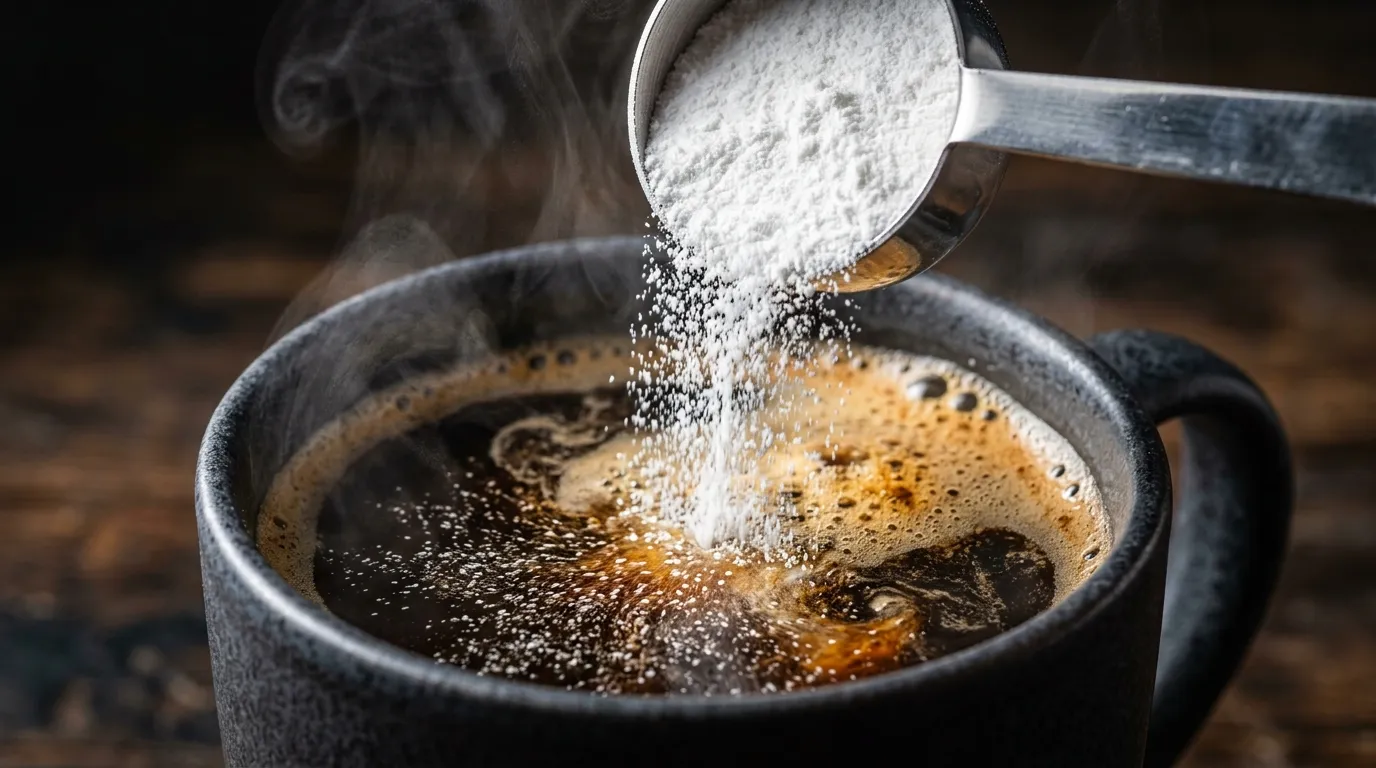
Quick Summary: Yes, it is okay to put creatine in hot coffee. The heat helps creatine dissolve faster, and research shows creatine remains stable in hot liquids when consumed within 15-30 minutes. However, leaving creatine in hot coffee for 1-2+ hours may accelerate its degradation to creatinine, reducing effectiveness.
Drop a scoop of creatine powder into steaming hot coffee, and a question immediately surfaces: does the heat wreck the supplement’s effectiveness? Coffee lovers who take creatine face this dilemma every morning.
The intersection of convenience and science matters here. Mixing creatine into coffee saves time and simplifies daily routines. But heat’s impact on creatine stability determines whether this habit delivers results or wastes money.
This guide examines what happens when creatine meets hot coffee, backed by research on thermal stability, degradation timelines, and practical mixing protocols. The goal? Straightforward answers about whether hot coffee destroys creatine—and how to combine them effectively.
Understanding Creatine and How It Works
Creatine monohydrate remains one of the most researched supplements in sports nutrition. Around 95% of creatine is stored in muscle tissue, with the remaining amount found in the heart, brain, and testes. This compound plays a critical role in rapid energy production during high-intensity exercise.
Inside muscle cells, creatine converts to phosphocreatine, which regenerates ATP—the primary energy currency for muscle contractions. Supplementation increases phosphocreatine stores by 10 to 40%, depending on baseline levels. Higher stores translate to better performance during repeated sprints, heavy lifts, and explosive movements.
Daily, about 1-2% of the intramuscular creatine pool breaks down into creatinine, a metabolic waste product excreted through urine. The body produces some creatine naturally, and meat and fish provide dietary sources. However, achieving saturated muscle stores typically requires supplementation.
Standard dosing protocols include loading with 5 g/day for 5-7 days or taking 3-5 g/day for 30 days to reach saturation. Once stores are saturated, maintenance doses of 3-5 grams daily preserve elevated levels.
Does Hot Coffee Destroy Creatine?
The short answer? Not instantly, but time matters.
Creatine’s chemical structure remains stable under moderate heat exposure for short periods. Research evaluating creatine stability in solution shows that temperature and time both influence degradation rates. Hot liquids accelerate the conversion of creatine to creatinine—a biologically inactive compound—but this process isn’t immediate.
Studies examining creatine degradation in various pH levels and temperatures confirm that creatine breaks down faster in acidic, hot environments. Coffee, with a pH around 4.5-5.5, creates acidic conditions. When combined with heat, degradation accelerates compared to room-temperature or cold liquids.
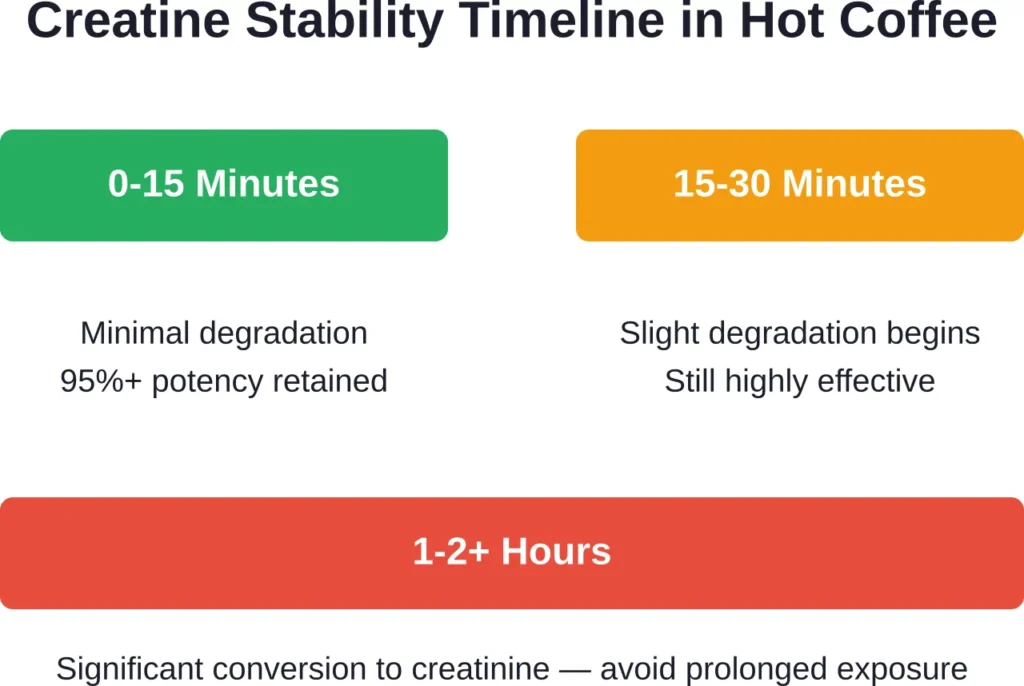
Here’s the critical factor: duration. Creatine mixed into hot coffee and consumed within 15-30 minutes experiences minimal degradation. The compound remains largely intact during this window. However, leaving creatine in hot coffee for 1-2+ hours significantly reduces potency as more creatine converts to creatinine.
Temperature alone isn’t the villain. Dissolution actually improves in hot liquids. Creatine powder dissolves faster and more completely in warm or hot coffee compared to cold beverages, reducing the gritty texture some users dislike.
The practical takeaway: hot coffee doesn’t destroy creatine if consumed promptly. Think of the 15-30 minute window as the safe zone. Beyond that, degradation accelerates, and effectiveness drops.
The Science Behind Heat and Creatine Stability
Creatine’s molecular structure includes an amino acid-like backbone that reacts to environmental stressors. Heat increases molecular activity, speeding up chemical reactions—including the conversion of creatine to creatinine.
Research on creatine stability examined degradation kinetics across temperature ranges and pH levels. Results confirmed that creatine degradation follows first-order kinetics in acidic solutions, meaning the rate of breakdown depends on the concentration of creatine present.
At higher temperatures, this reaction rate increases. Coffee’s acidity (pH 4.5-5.5) further accelerates degradation compared to neutral or alkaline solutions. The combination of heat and acidity creates conditions where creatine breaks down faster than in cold, neutral-pH water.
But here’s what the research also shows: immediate consumption mitigates these effects. When creatine spends minimal time in hot, acidic environments, degradation remains low. The compound doesn’t instantly degrade upon contact with heat—it requires sustained exposure.
Water activity also influences stability. Solutions with lower water activity (more concentrated) slow degradation. However, coffee’s liquid nature means high water activity, so time becomes the primary control variable.
Benefits of Mixing Creatine with Coffee
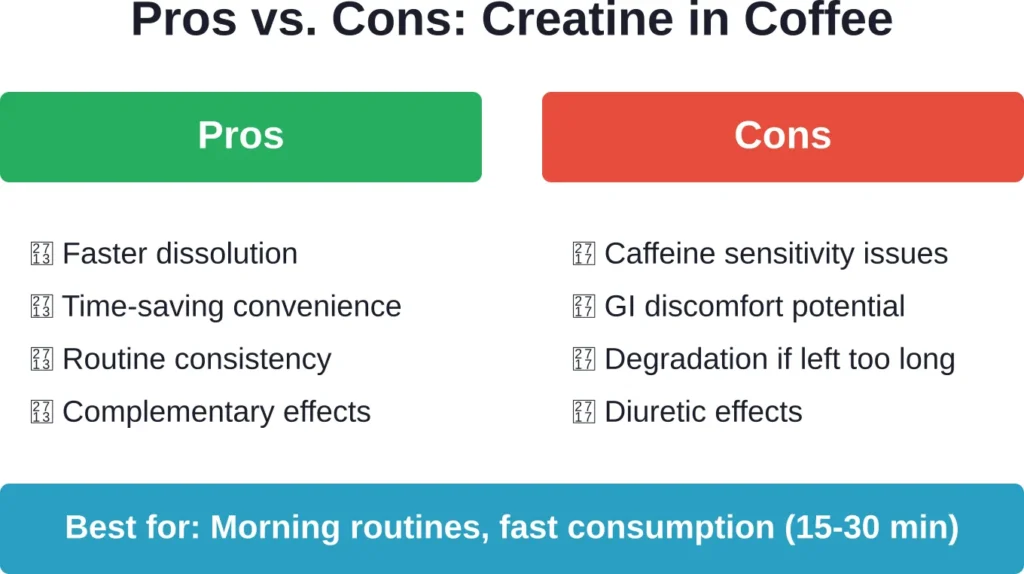
Combining creatine and coffee offers several practical advantages beyond convenience.
Enhanced Dissolution
Hot coffee dissolves creatine powder more effectively than cold water. The heat breaks apart clumps and distributes particles evenly throughout the liquid. This means less gritty residue at the bottom of the cup and smoother consumption.
Better dissolution may also improve absorption, though creatine monohydrate already has high bioavailability. Still, fully dissolved creatine eliminates texture issues that cause some people to abandon supplementation.
Time Efficiency
Morning routines get streamlined when creatine goes directly into coffee. Instead of mixing creatine separately, then drinking coffee, both happen simultaneously. For busy schedules, this efficiency matters.
The combination fits naturally into pre-workout timing for morning exercisers. Coffee provides caffeine for alertness and focus, while creatine supports strength and power output.
Complementary Performance Effects
Caffeine and creatine target different performance mechanisms. Caffeine stimulates the central nervous system, reducing perceived exertion and enhancing endurance. Creatine saturates phosphocreatine stores, improving short-duration, high-intensity efforts.
Early research suggested caffeine might interfere with creatine’s benefits, but more recent studies show no significant interaction. When both are used together, performance benefits from each compound remain intact.
Research examining creatine loading combined with caffeine or coffee found no interference with strength or sprint performance. Participants experienced similar gains whether they took creatine alone or with caffeinated beverages.
Routine Consistency
Linking creatine intake to an established habit—like morning coffee—improves adherence. Consistency drives creatine’s effectiveness; missing doses prevents full muscle saturation. Anchoring supplementation to daily coffee consumption reduces forgotten doses.
Potential Downsides of Creatine in Coffee
Not every combination works for everyone. Several considerations might make coffee a suboptimal vehicle for creatine.
Caffeine Sensitivity
Individuals sensitive to caffeine may experience jitters, anxiety, or sleep disruption. Adding creatine to coffee doesn’t reduce caffeine content. For those who avoid or limit caffeine, mixing creatine into coffee defeats the purpose.
Decaf coffee offers a middle ground, though it still stimulates the urge to poop in around 33% of people due to compounds beyond caffeine. This leads to the next concern.
Gastrointestinal Sensitivity
Coffee stimulates gastric acid secretion and colon activity. Some individuals experience digestive discomfort, bloating, or the urgent need to use the bathroom after coffee consumption. Adding creatine—which can cause mild bloating in some users—may compound these effects.
Undissolved creatine granules in coffee can irritate the stomach lining, especially when coffee’s natural acidity is already present. Pre-dissolving creatine in a small amount of room-temperature water before adding it to coffee minimizes this risk.
Diuretic Concerns
Caffeine acts as a mild diuretic, increasing urine production. Proper hydration matters for creatine effectiveness, as creatine pulls water into muscle cells. Drinking coffee as the primary liquid vehicle for creatine without additional water intake could theoretically reduce hydration status.
In practice, moderate coffee consumption (1-3 cups daily) doesn’t cause dehydration in habitual drinkers. Still, pairing creatine-coffee with adequate water intake throughout the day remains prudent.
Timing Flexibility
Creatine timing doesn’t significantly impact results—saturation matters more than precise workout timing. However, some prefer taking creatine post-workout with carbohydrates to potentially enhance uptake. If coffee is a morning-only habit, this limits timing options.
Best Practices for Mixing Creatine in Hot Coffee
Proper technique maximizes creatine’s effectiveness when combined with coffee. These methods address dissolution, stability, and absorption.
Pre-Dissolve for Best Results
Mix creatine powder with about two tablespoons of room-temperature or lukewarm water in a separate container first. Stir vigorously until fully dissolved—this takes 20-30 seconds. Then add this concentrated solution to hot coffee.
Pre-dissolving eliminates clumping and ensures even distribution. It also reduces the time creatine spends in hot liquid, as the coffee can be slightly cooler by the time the creatine enters.
Time Your Consumption
Finish the creatine-coffee mixture within 15-30 minutes of mixing. Set the cup aside for 1-2+ hours, and degradation accelerates significantly. If coffee is sipped slowly over a long morning, this approach won’t work.
For slow coffee drinkers, consider splitting the routine: take creatine in a small volume of liquid consumed quickly, then enjoy coffee separately without pressure to finish fast.
Stir Before Drinking
Even well-dissolved creatine can settle slightly over 5-10 minutes. Give the cup a quick stir before drinking to redistribute any particles. This ensures consistent intake rather than a concentrated dose at the bottom.
Mind the Temperature
Extremely hot coffee (near-boiling) accelerates degradation more than moderately hot coffee. Letting coffee cool for 1-2 minutes after brewing—before adding creatine—strikes a balance between good dissolution and reduced degradation.
Water temperature around 140-160°F (60-70°C) dissolves creatine effectively without excessive thermal stress. Boiling water (212°F/100°C) isn’t necessary and increases degradation risk.
Standard Dosing Applies
Typical creatine doses remain unchanged: 3-5 grams daily for maintenance, or 5 grams per day during a loading phase. Adding creatine to coffee doesn’t alter optimal dosing.
Measure accurately using a scoop or scale. Guessing doses leads to inconsistent intake, undermining saturation.
Step-by-Step Mixing Guide
- Measure creatine: Use 3-5 grams (about one teaspoon) of creatine monohydrate powder.
- Pre-dissolve: Add creatine to 2-3 tablespoons of room-temperature water in a small glass. Stir thoroughly for 20-30 seconds until dissolved.
- Prepare coffee: Brew coffee as usual. Let it cool for 1-2 minutes if extremely hot.
- Combine: Pour the dissolved creatine solution into the coffee. Stir well.
- Drink promptly: Consume within 15-30 minutes. Stir again before drinking if it’s been sitting for more than 5-10 minutes.
This protocol maximizes dissolution, minimizes degradation, and ensures creatine reaches muscles in its active form.
When Coffee Isn’t the Best Option
Certain situations call for alternative vehicles for creatine.
Afternoon or Evening Training
Coffee consumed late in the day disrupts sleep for many people. Caffeine’s half-life is 3-5 hours, meaning significant amounts remain in the system hours after consumption. Athletes training in the afternoon or evening should mix creatine with non-caffeinated beverages to avoid sleep interference.
Caffeine Avoidance
Individuals avoiding caffeine for health reasons, pregnancy, or medication interactions shouldn’t add creatine to coffee. Room-temperature water, milk, or juice work equally well without caffeine exposure.
Sensitive Digestive Systems
Those prone to acid reflux, IBS, or coffee-induced GI upset benefit from mixing creatine with gentler liquids. Plain water or a protein shake with creatine avoids compounding digestive stress.
Slow Sipping Habits
If morning coffee is a leisurely 1-2 hour ritual, creatine degradation becomes a concern. In this case, take creatine separately in a quickly consumed beverage, then enjoy coffee at a relaxed pace.
Alternative Mixing Options
Creatine dissolves in virtually any liquid. These alternatives offer flexibility based on individual needs and preferences.
| Beverage | Pros | Cons |
|---|---|---|
| Water | Neutral, no added ingredients, fast absorption | Bland taste, slightly gritty texture |
| Protein Shake | Combines supplements, masks creatine texture, post-workout convenience | Adds calories, requires blender for best mixing |
| Fruit Juice | Pleasant taste, carbohydrates may enhance uptake | High sugar content, added calories |
| Milk | Taste improvement, protein and carbs together | Dairy intolerance issues, added calories |
| Sports Drink | Electrolytes included, designed for exercise | Sugar content, cost |
Each option has trade-offs. Water remains the simplest, most neutral choice. Protein shakes and juice offer taste and potential absorption benefits at the cost of added macros.
Debunking Common Myths
Myth: Heat Instantly Destroys Creatine
Real talk: heat accelerates degradation, but doesn’t instantly neutralize creatine. The compound remains stable for 15-30 minutes in hot liquids. Immediate destruction is a misconception.
Myth: Caffeine Cancels Out Creatine
Older research suggested interference, but current evidence shows caffeine and creatine work independently. Performance benefits from both remain when used together. The concern about caffeine blocking creatine has been largely debunked.
Myth: Creatine Must Be Taken with Sugar
Carbohydrates potentially enhance creatine uptake by spiking insulin, which drives nutrients into cells. However, creatine saturates muscles effectively without added sugar. Carbs optimize but aren’t required.
Coffee alone lacks significant carbohydrates, yet creatine still works. Adding sugar to coffee isn’t necessary unless pursuing marginal optimization.
Myth: Timing Creatine Intake Matters Significantly
Muscle saturation drives creatine’s benefits, not precise timing around workouts. Taking creatine consistently matters more than whether it’s pre-workout, post-workout, or with breakfast. Morning coffee is as valid as any other time.
Understanding Creatine Degradation Products
When creatine degrades, it converts primarily to creatinine, a metabolically inert compound. Creatinine offers no performance benefits and is filtered out by the kidneys.
Small amounts of other byproducts may form under specific conditions (extreme heat, very low pH), but creatinine dominates degradation in typical coffee scenarios. The loss of potency comes from reduced active creatine, not harmful byproduct formation.
Creatinine itself isn’t dangerous. It’s a normal metabolic waste product. Elevated creatinine from degraded creatine simply means less active supplement reaching muscles—an effectiveness issue, not a safety concern.
Research Insights on Caffeine and Creatine Interaction
Early studies raised questions about caffeine interfering with creatine’s ergogenic effects. One frequently cited study suggested caffeine blunted creatine’s benefits during dynamic muscle actions.
However, more recent research examining creatine loading combined with caffeine or coffee found no interference with upper and lower body strength or sprint performance. Participants taking creatine with caffeinated beverages experienced similar gains to those taking creatine alone.
The mechanisms behind caffeine and creatine are independent. Caffeine affects adenosine receptors and central nervous system stimulation. Creatine saturates phosphocreatine stores in muscle tissue. The two pathways don’t directly conflict.
Current consensus: combining creatine and caffeine is safe and effective. No need to avoid coffee when supplementing with creatine, provided the hot liquid exposure remains brief.
Practical Scenarios: Who Should Mix, Who Shouldn’t
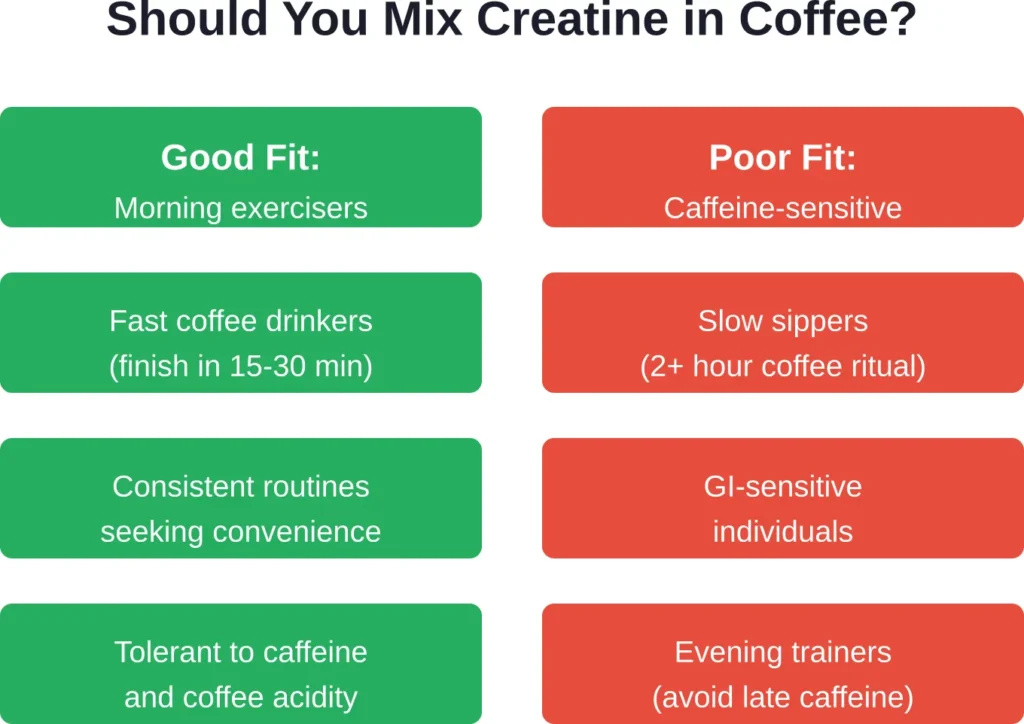
Ideal Candidates
Morning exercisers who drink coffee quickly benefit most. The routine aligns supplementation with an existing habit, and the timing supports pre-workout energy and performance.
Individuals who tolerate caffeine well and experience no GI issues from coffee face minimal downsides. The convenience factor streamlines busy mornings.
Poor Matches
People sensitive to caffeine should avoid this combination. Jitters, anxiety, or sleep disruption outweigh any convenience.
Slow coffee sippers who nurse a cup for hours risk significant creatine degradation. Alternative timing or beverages work better.
Those with sensitive digestive systems prone to acid reflux, bloating, or coffee-induced urgency may find the combination aggravates symptoms.
Storage and Preparation Tips
Dry Storage
Store creatine powder in a cool, dry place away from moisture. Humidity accelerates degradation even before mixing. Airtight containers preserve potency longer than loosely sealed bags.
Batch Preparation
Don’t pre-mix creatine into coffee the night before or hours in advance. Prepare fresh each time to minimize degradation. Creatine in solution degrades faster than dry powder.
Equipment
A small spoon or mini whisk helps dissolve creatine quickly. Shaker bottles work well for pre-dissolving in water before adding to coffee.
Frequently Asked Questions
Creatine retains most of its effectiveness in hot coffee when consumed within 15-30 minutes. Prolonged exposure (1-2+ hours) increases degradation to creatinine, reducing potency. Drink promptly to maximize effectiveness.
Yes, cold brew works well for creatine. The lower temperature slows degradation significantly compared to hot coffee. Dissolution takes longer, so pre-dissolving creatine in a small amount of room-temperature water before adding to cold brew improves mixing.
Standard dosing applies: 3-5 grams daily for maintenance, or 5 grams per day during loading phases. Measure accurately using a scoop or scale. One level teaspoon equals approximately 5 grams of creatine monohydrate.
No, current research shows caffeine doesn’t interfere with creatine’s benefits. Early concerns have been largely debunked. Both compounds work through independent mechanisms and can be combined without reducing effectiveness.
Take creatine after mixing it into coffee, consuming the entire beverage within 15-30 minutes. Pre-dissolving creatine in a small amount of water before adding to coffee improves dissolution and reduces time in hot liquid.
Coffee type (regular, decaf, espresso, drip) doesn’t significantly impact creatine stability. Temperature and time matter most. Decaf eliminates caffeine-related concerns but doesn’t change how heat affects creatine degradation.
Absolutely. Iced coffee poses minimal degradation risk due to low temperature. Dissolution is slower, so pre-dissolving creatine in room-temperature water before adding to iced coffee ensures smooth mixing without gritty texture.
Key Takeaways for Optimal Use
Putting creatine in hot coffee is okay when done correctly. The combination offers convenience, faster dissolution, and complementary performance benefits from caffeine and creatine together.
Timing is critical. Consume the mixture within 15-30 minutes to prevent significant degradation. Letting creatine sit in hot coffee for 1-2+ hours reduces effectiveness as creatine converts to inactive creatinine.
Pre-dissolving creatine in a small amount of room-temperature water before adding to coffee improves mixing and minimizes hot-liquid exposure. Stir well and drink promptly.
Not everyone should mix creatine with coffee. Caffeine-sensitive individuals, slow coffee drinkers, and those with GI issues may prefer alternative beverages like water, protein shakes, or juice.
Research confirms caffeine doesn’t interfere with creatine’s benefits. The two compounds work independently, and combining them is both safe and effective for performance.
| Factor | Recommendation |
|---|---|
| Consumption time | 15-30 minutes maximum |
| Coffee temperature | 140-160°F (60-70°C) ideal; avoid boiling |
| Dosage | 3-5 grams creatine monohydrate |
| Mixing method | Pre-dissolve in 2-3 tbsp water first |
| Best for | Morning exercisers, fast drinkers |
| Avoid if | Caffeine-sensitive, GI issues, slow sipper |
Final Thoughts
Hot coffee won’t destroy creatine when the mixture is consumed quickly. The heat actually helps dissolution, creating a smoother texture. But the clock starts ticking once creatine hits hot liquid.
For busy mornings, this combination saves time and simplifies supplementation routines. The convenience factor alone makes it appealing. Just remember the 15-30 minute window and drink up.
Those who can’t tolerate caffeine or nurse coffee for hours should look elsewhere. Water remains the most neutral, reliable option for creatine delivery. Protein shakes and juice offer middle-ground alternatives with added taste and potential absorption benefits.
The science supports mixing creatine in coffee when done right. Follow the best practices outlined here—pre-dissolve, drink promptly, and monitor how your body responds. Muscle saturation drives results, and consistent daily intake matters far more than whether coffee is the delivery vehicle.
Ready to streamline your morning routine? Mix creatine into coffee using the proper technique, finish within 30 minutes, and get on with training. Convenience meets effectiveness when timing and method align.