

Quick Summary: Yes, it is safe to take Tylenol (acetaminophen) and ibuprofen together for most adults. These medications work differently—acetaminophen reduces pain and fever, while ibuprofen also reduces inflammation. Research shows that combining them provides better pain relief than either drug alone, and they can be taken at the same time or alternated.
Pain relief shouldn’t be guesswork. When over-the-counter options aren’t cutting it, many people wonder whether combining medications might help. The good news? Taking acetaminophen (Tylenol) and ibuprofen (Motrin, Advil) together is not only safe for most adults—it’s often more effective than either drug alone.
Here’s the thing though—safety depends on proper dosing and understanding how these medications work. Let’s break down what the research actually shows.
How Acetaminophen and Ibuprofen Work Differently
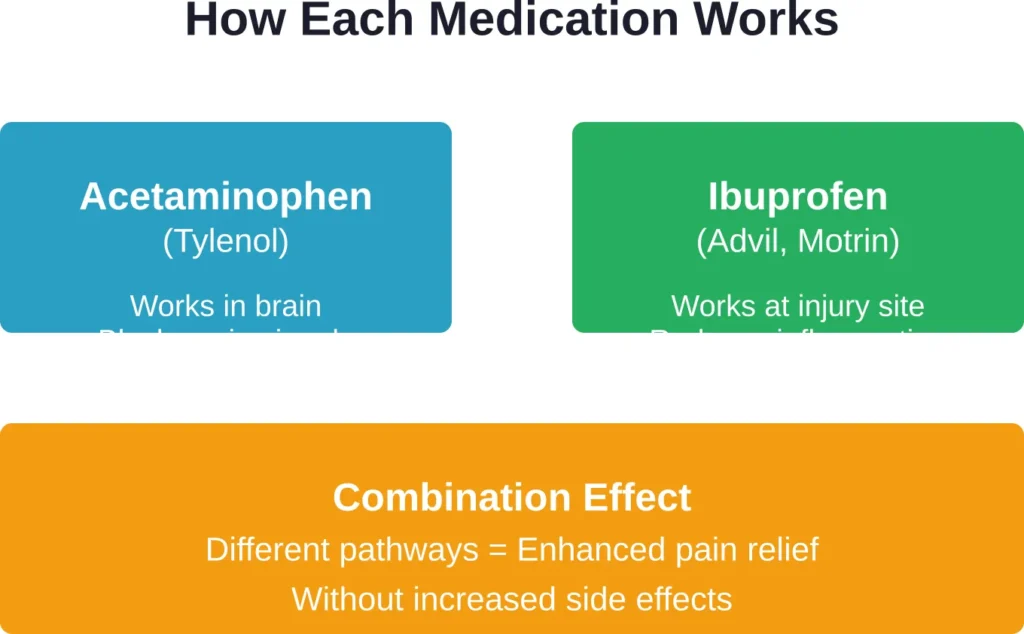
Acetaminophen and ibuprofen tackle pain through completely different mechanisms. That’s precisely why combining them makes sense.
Acetaminophen works primarily in the brain, reducing pain signals and lowering fever. According to the FDA, it’s found in hundreds of over-the-counter and prescription medications. It doesn’t reduce inflammation, which limits its effectiveness for conditions like arthritis or muscle injuries.
Ibuprofen belongs to a class of drugs called nonsteroidal anti-inflammatory drugs (NSAIDs). It blocks enzymes that cause inflammation, swelling, and pain at the injury site. This makes it particularly effective for inflammatory conditions like sprains, dental pain, and menstrual cramps.
Because they work through different pathways, taking both doesn’t increase the side effects associated with doubling up on a single medication.
What the Research Shows About Combining Them
The evidence supporting combination therapy is solid. A comprehensive review published by the National Institutes of Health analyzed multiple studies on nonprescription analgesics for acute pain management.
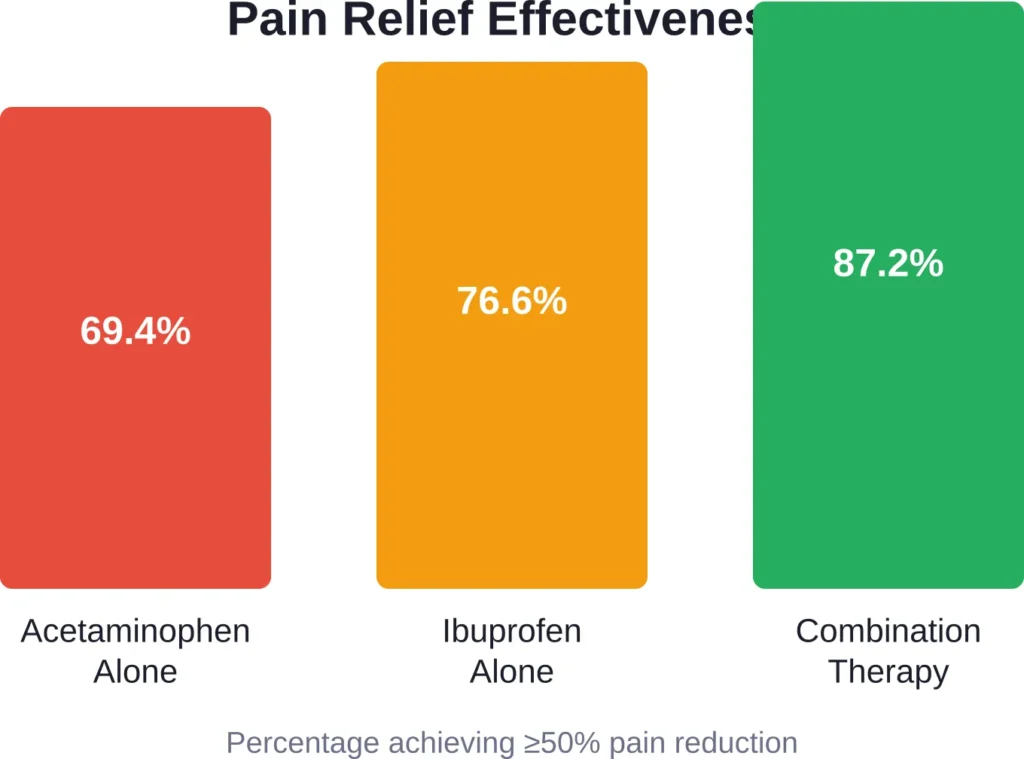
Research on combination nonprescription analgesics demonstrates superior pain relief with combination therapy compared to single agents, though specific efficacy percentages vary by study design and pain type. Combination therapy also produced significantly faster onset of pain relief than either drug individually. For acute pain—think dental procedures, minor injuries, or severe headaches—this faster action matters.
Research confirms that combination acetaminophen and ibuprofen therapy provides significantly greater pain relief than either drug alone. These weren’t marginal improvements; patients reported meaningfully better outcomes.
Safe Dosing Guidelines for Adults
Effectiveness means nothing without safety. Here’s where proper dosing becomes critical.
According to the FDA, the maximum single dose of acetaminophen is 1,000 mg, with a maximum daily limit of 4,000 mg for adults and children 12 years and older. Taking more than 4,000 mg of acetaminophen in 24 hours can risk serious liver damage.
For ibuprofen over-the-counter use, follow label instructions for maximum single and daily doses, which vary by formulation. Prescription-strength ibuprofen allows higher doses under medical supervision, but that’s beyond self-care territory.
| Medication | Single Dose (Max) | Daily Dose (Max) | Frequency |
|---|---|---|---|
| Acetaminophen | 1,000 mg | 4,000 mg | Every 4-6 hours |
| Ibuprofen | 400 mg | 1,200 mg | Every 6-8 hours |
The different dosing schedules actually work in your favor when alternating these medications. More on that in a moment.
Two Ways to Combine: Together or Alternating
There’s no single “right” way to combine these medications. Two approaches work, depending on pain severity and personal preference.
Taking Them at the Same Time
Taking both medications simultaneously is perfectly safe and provides immediate dual-mechanism relief. This approach works well for moderate to severe acute pain—post-procedure discomfort, migraine attacks, or injury-related pain.
Take the recommended dose of each medication together, then wait the full dosing interval before the next dose of either drug.
Alternating Doses
Alternating provides more consistent pain coverage throughout the day. Because acetaminophen works every 4-6 hours and ibuprofen every 6-8 hours, staggering them maintains steadier blood levels.
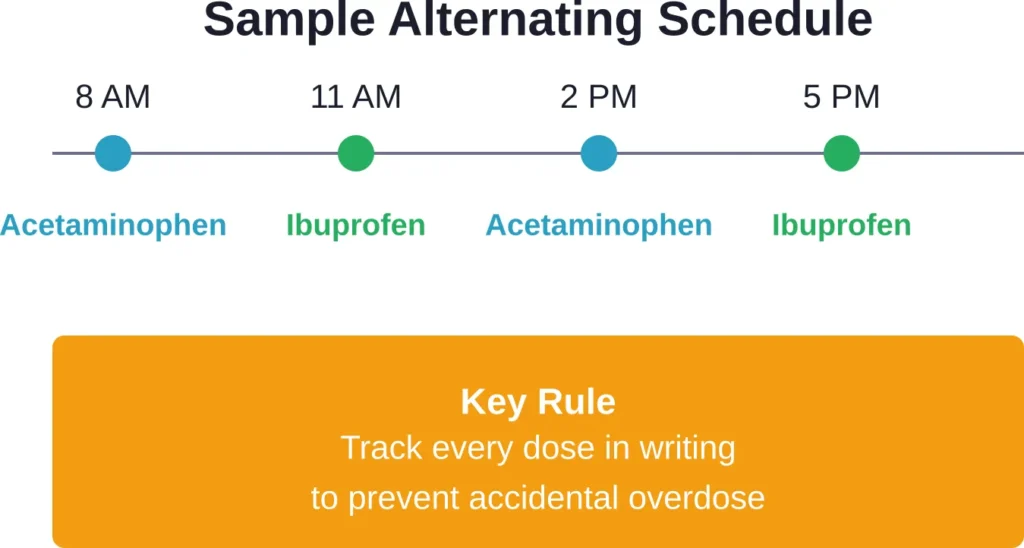
A typical alternating schedule looks like this: acetaminophen at 8 AM, ibuprofen at 11 AM, acetaminophen at 2 PM, ibuprofen at 5 PM, and so on. This approach works well for persistent pain like fever, toothaches, or recovery from minor surgery.
Real talk: alternating requires diligent tracking. Write down each dose and time to avoid accidental doubling.
Important Safety Warnings
While combination therapy is safe for most adults, certain situations require caution or medical supervision.
Liver Health and Acetaminophen
The FDA warns that severe liver damage may occur if consuming three or more alcoholic drinks per day while using acetaminophen. People with existing liver disease should consult a healthcare provider before use.
Side effects of acetaminophen are rare and typically mild, but may include nausea, vomiting, or loss of appetite. Taking more than 4,000 mg in 24 hours can cause liver failure and death.
Stomach and Kidney Concerns With Ibuprofen
NSAIDs like ibuprofen can irritate the stomach lining and increase bleeding risk. Taking ibuprofen with food reduces stomach upset. Long-term use may affect kidney function, especially in people with existing kidney disease.
Different NSAIDs should not be combined with each other. Don’t take ibuprofen alongside naproxen (Aleve) or aspirin for pain relief—that increases side effect risks without added benefit.
Check Other Medications
Carefully check labels of all other medicines being used, because they may also contain acetaminophen. Many cold, flu, and prescription pain medications include it. Unintentional doubling is a common cause of overdose.
When to Contact a Healthcare Provider
Pain that requires regular medication for more than 10 days deserves medical evaluation. Something’s causing that pain, and masking symptoms prevents proper diagnosis.
Seek immediate care if experiencing severe stomach pain, bloody or black stools, yellowing of skin or eyes, unusual bruising, or allergic reactions like rash or difficulty breathing while taking these medications.
For people taking blood thinners, blood pressure medications, or prescription pain relievers, check with a healthcare provider before combining acetaminophen and ibuprofen. Drug interactions can alter effectiveness or increase side effects.
Special Considerations for Children
Combination therapy also works for children, but dosing requires extra care. Pediatric doses are based on weight, not age. Both medications are available in infant drops, children’s liquid, and chewable tablets with different concentrations.
Using the wrong formulation or dosing tool leads to dangerous errors. Always use the measuring device that comes with the specific product, and double-check dosing charts before administering either medication to children.
Never give aspirin to children or teenagers—it’s associated with Reye’s syndrome, a rare but serious condition. Stick with acetaminophen and ibuprofen.
Comparing Combination Benefits
Frequently Asked Questions
Yes, taking both medications simultaneously is safe and effective. They work through different mechanisms and don’t interfere with each other. Take the recommended dose of each, then wait the full interval before the next dose.
When alternating, space doses about 3-4 hours apart. This maintains consistent pain coverage while respecting each medication’s dosing interval. Acetaminophen can be taken every 4-6 hours, and ibuprofen every 6-8 hours.
Short-term use (a few days) is generally safe for most adults. However, pain requiring medication for more than 10 days warrants medical evaluation. Long-term use of either medication carries risks that need professional oversight.
Acetaminophen overdose is a medical emergency that can cause liver failure. If someone takes more than 4,000 mg in 24 hours or shows symptoms like nausea, vomiting, or confusion, seek immediate medical attention. For ibuprofen overdose, symptoms may include stomach pain, drowsiness, or breathing problems.
Acetaminophen is generally considered safe during pregnancy when used as directed. However, ibuprofen and other NSAIDs are not recommended, especially in the third trimester, as they can affect the developing baby. Always consult a healthcare provider before taking any medication during pregnancy.
Ibuprofen can irritate the stomach lining, but acetaminophen doesn’t have this effect. Taking ibuprofen with food helps minimize stomach upset. The combination doesn’t increase stomach risk compared to taking ibuprofen alone.
Don’t combine with other NSAIDs like naproxen or aspirin. Blood thinners, certain blood pressure medications, and some antidepressants may interact with these drugs. Check with a healthcare provider if taking prescription medications regularly.
The Bottom Line
Taking Tylenol and ibuprofen together is safe, effective, and backed by solid research. The combination provides better pain relief than either medication alone, with faster onset and without increased side effects—when used properly.
The key is respecting dosing limits, tracking what’s been taken, and knowing when medical attention is needed. For most adults dealing with acute pain, fever, or inflammation, this combination offers a powerful over-the-counter solution.
But remember: pain is a signal. If regular medication becomes necessary, that’s a conversation worth having with a healthcare provider. Effective pain management starts with understanding the cause, not just masking symptoms.
When in doubt about whether this combination is right for a specific situation—especially with existing health conditions, pregnancy, or other medications—reach out to a healthcare professional for personalized guidance.