
Quick Summary: Using expired sunscreen is not recommended. The FDA requires sunscreen to remain at full strength for at least three years, but once expired or degraded, it loses effectiveness and cannot protect skin from harmful UV rays. While expired sunscreen is technically better than nothing, it provides uncertain protection and may not prevent sunburn or skin damage.
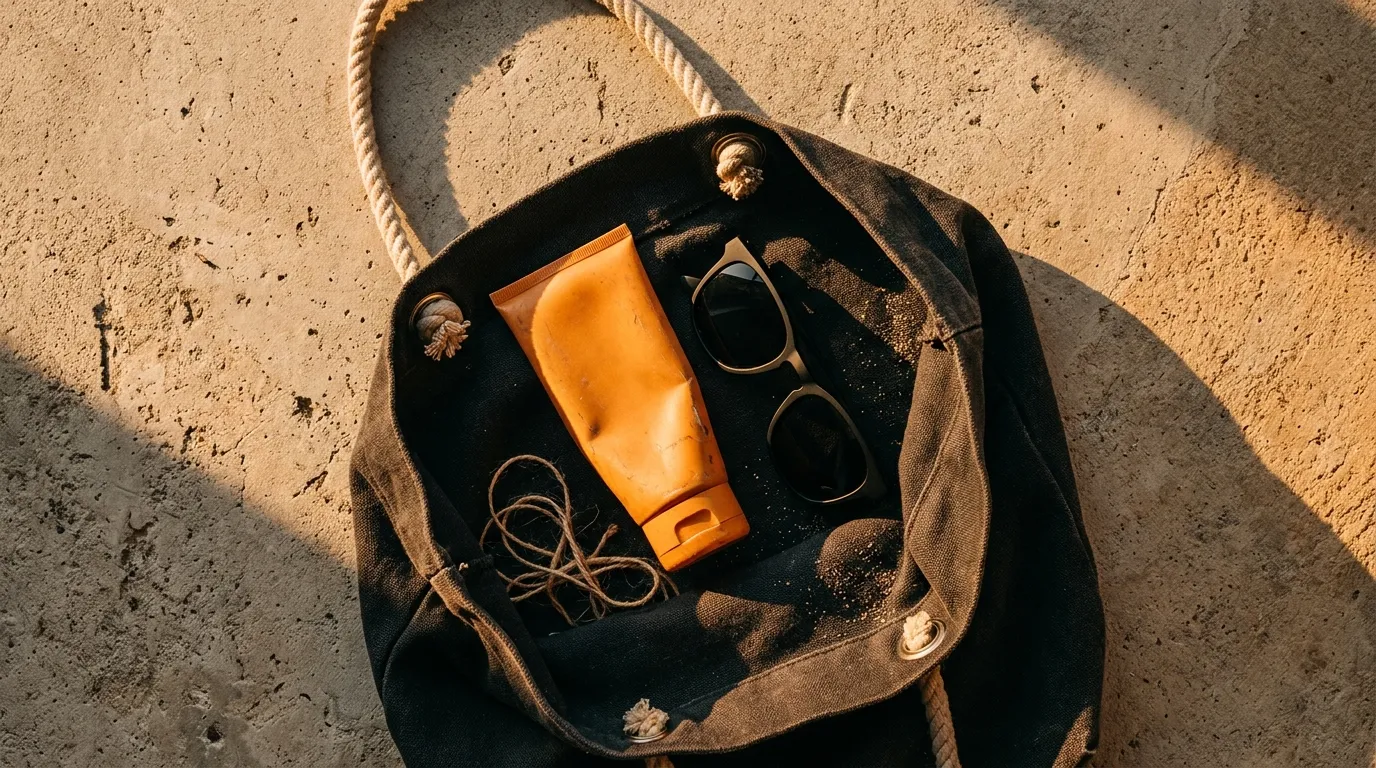
Summer rolls around and you dig through the beach bag from last year. There’s that half-used bottle of sunscreen sitting at the bottom. It looks fine. It smells normal. But is it still good?
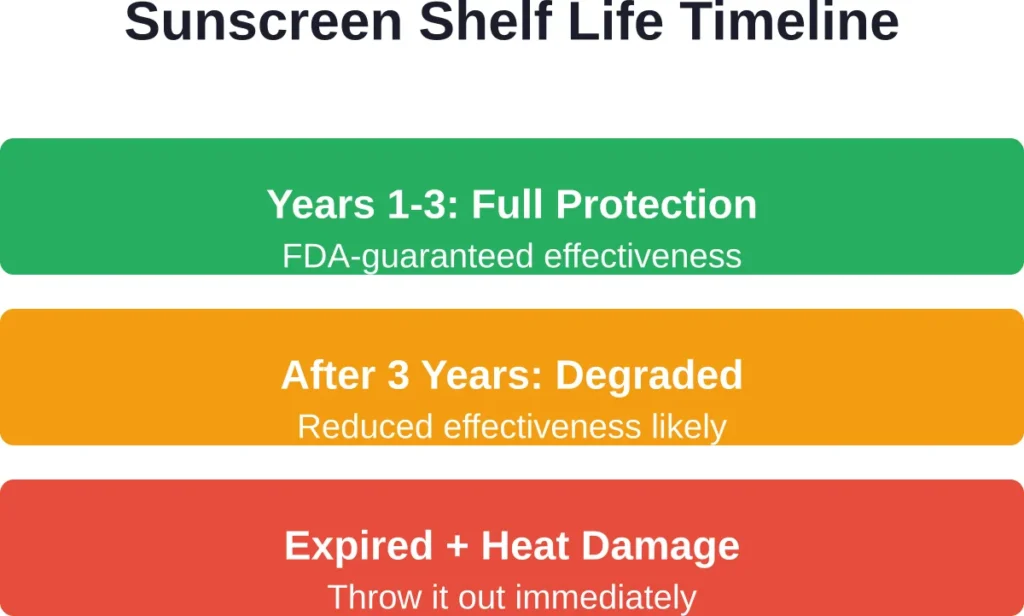
Here’s the thing—sunscreen doesn’t last forever. The FDA requires that sunscreen maintain its original strength for at least three years, which means if you bought it within that window, it should still work. But once that expiration date passes, all bets are off.
The effectiveness of sunscreen depends on active ingredients staying stable. When those ingredients break down, you’re left with what amounts to fancy lotion that won’t protect your skin from UV rays. And given that skin cancer is the most common form of cancer in the United States, that’s not a risk worth taking.
How Long Does Sunscreen Actually Last?
According to FDA regulations, sunscreen must remain effective for at least three years from the manufacturing date. Some bottles include an expiration date printed on the packaging. If yours doesn’t have one, assume it’s good for three years from when you bought it—but only if it’s been stored properly.
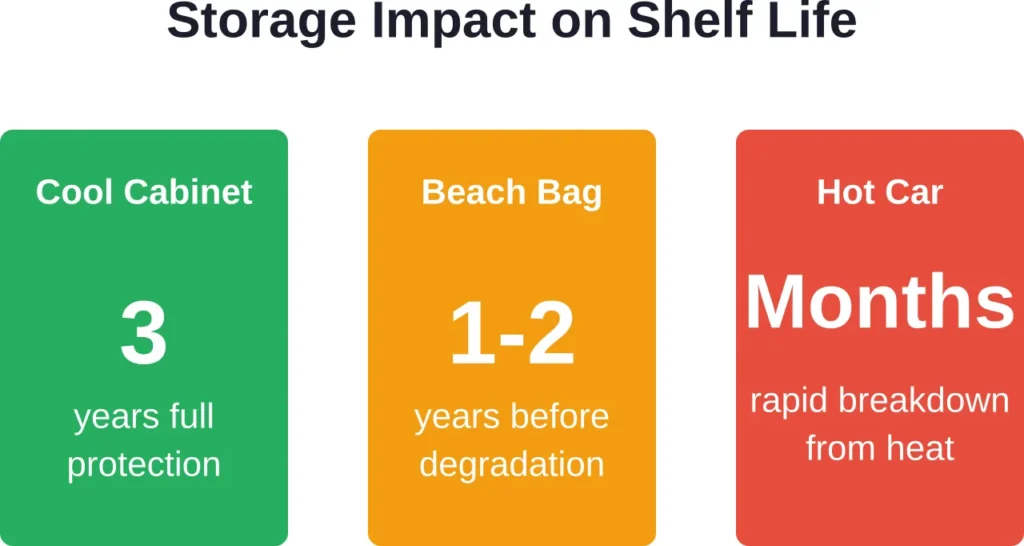
Storage conditions matter tremendously. That bottle that’s been sitting in your hot car trunk all summer? It’s probably degraded faster than one stored in a cool, dark bathroom cabinet. Heat accelerates the breakdown of active ingredients like avobenzone, oxybenzone, zinc oxide, and titanium dioxide.
Signs Your Sunscreen Has Gone Bad
Even within the three-year window, sunscreen can degrade. Look for these warning signs:
- Changes in color or smell
- Separation of ingredients that won’t remix when shaken
- Watery or lumpy texture
- Crystallization or clumping
- Unusual consistency compared to when you bought it
Any of these signs mean it’s time to toss that bottle, regardless of what the date says.
What Happens When You Use Expired Sunscreen?
The short answer? It probably won’t protect you adequately. When sunscreen expires, the active ingredients lose potency. That SPF 30 you’re relying on might now function like SPF 10—or less. Maybe nothing at all.
This matters more than you might think. Most people use far less than this. According to the American Academy of Dermatology, most people apply only 25-50% of the recommended amount. Combine insufficient application with degraded product, and you’re getting a fraction of the protection you need.
UV radiation doesn’t take days off. Even on cloudy days, up to 80% of the sun’s harmful UV rays penetrate the clouds. Without proper protection, you’re exposing your skin to damage that accumulates over time, increasing risks of sunburn, premature aging, and skin cancer.
| Sunscreen Condition | Expected Protection Level | Recommendation |
|---|---|---|
| Within 3 years, stored properly | Full labeled SPF protection | Safe to use |
| Within 3 years, heat exposed | Reduced, unpredictable protection | Replace if possible |
| Past expiration, looks normal | Uncertain, likely reduced | Don’t rely on it |
| Past expiration, shows degradation | Minimal to none | Throw out immediately |
Is Expired Sunscreen Better Than Nothing?
This question comes up constantly in community discussions. Technically, yes—some protection beats zero protection. But that’s missing the bigger picture.
Using expired sunscreen creates false confidence. You think you’re protected when you’re not. That means you might skip other sun protection measures like seeking shade, wearing protective clothing, or limiting time outdoors during peak hours between 10 a.m. and 4 p.m. daylight saving time (9 a.m. to 3 p.m. standard time), when UV rays are strongest.
Real talk: if expired sunscreen is your only option for a quick trip outside, go ahead. But don’t spend hours at the beach or pool relying on a questionable product. The risk isn’t worth it.
How to Store Sunscreen Properly
Proper storage extends sunscreen life and maintains effectiveness throughout the three-year period. Here’s what works:
Keep bottles in cool, dry places away from direct sunlight. Bathroom cabinets work well. Pool bags and car glove compartments don’t. Heat and light accelerate chemical breakdown of active ingredients.
Avoid leaving sunscreen in hot cars. Interior temperatures can exceed 130°F on summer days, essentially cooking your sun protection. If you need sunscreen in your vehicle, bring it inside at the end of each day.
Close lids tightly after each use. Exposure to air can oxidize some ingredients. And keep the bottle clean—sand, dirt, and other contaminants don’t help product stability.
What to Do If Your Sunscreen Doesn’t Have an Expiration Date
Not all sunscreens print expiration dates on the packaging. According to the American Academy of Dermatology, if there’s no date listed, write the purchase date on the bottle with a permanent marker.
From that date, assume a three-year shelf life under proper storage conditions. Mark your calendar or set a phone reminder to replace it before those three years are up.
But honestly? Most people should replace sunscreen annually anyway. If you’re using the proper amount—about 1 ounce to cover all exposed skin for most adults—you’ll empty that bottle long before expiration becomes an issue.
How Much Sunscreen Should You Actually Use?
This connects directly to the expiration question because proper usage means you’ll go through bottles faster. The American Academy of Dermatology recommends at least 1 ounce of sunscreen to cover exposed body areas. That’s roughly a shot glass full for your entire body, or about 1 teaspoon just for your face.
Most people use far less than this. According to the American Academy of Dermatology, most people apply only 25-50% of the recommended amount. Even with fresh, unexpired sunscreen, that dramatically reduces protection.
Reapply at least every 2 hours when outdoors, according to FDA guidelines. Water-resistant formulas last 40 minutes or 80 minutes while swimming or sweating, depending on the product label. After that time, reapplication is essential.
Beyond Sunscreen: Complete Sun Protection
Even fresh sunscreen shouldn’t be your only defense against UV damage. The FDA and dermatology experts recommend combining multiple protective measures:
Seek shade, especially during peak UV hours between 10 a.m. and 4 p.m. daylight saving time (9 a.m. to 3 p.m. standard time). Wear protective clothing including long sleeves, pants, and wide-brimmed hats that shade face, ears, and neck. Choose sunglasses that block both UVA and UVB rays to protect eyes and surrounding skin.
Use broad-spectrum sunscreen with SPF 30 or higher on all exposed skin not covered by clothing. The term “broad-spectrum” means protection against both UVA rays (which cause aging) and UVB rays (which cause burning).
| SPF Rating | UVB Protection | Recommended For |
|---|---|---|
| SPF 15 | 93% of UVB rays blocked | Minimum for daily use (FDA standard) |
| SPF 30 | 97% of UVB rays blocked | Recommended for most outdoor activity (AAD standard) |
| SPF 50 | 98% of UVB rays blocked | Extended sun exposure, fair skin |
| SPF 100 | 99% of UVB rays blocked | Minimal additional benefit over SPF 50 |
When to Replace Your Sunscreen
Don’t wait for expiration. Replace sunscreen when:
- It reaches the printed expiration date
- Three years have passed since purchase if no date is listed
- Texture, color, or smell changes noticeably
- It’s been exposed to extreme heat repeatedly
- The formula separates and won’t remix
And look, if you’re still using the same bottle after a full summer season, you’re probably not applying enough. An active beach-goer applying proper amounts should empty a bottle within a few weeks of regular use.
Frequently Asked Questions
It’s not recommended. While it might provide some reduced protection, the effectiveness is unpredictable after expiration. The FDA only guarantees full strength for three years, and expired sunscreen may not prevent sunburn or UV damage. Buying a new bottle ensures proper protection.
Check the expiration date first. If there isn’t one, calculate three years from purchase. Also inspect the product—if it has separated, changed color, smells off, or has an unusual texture, throw it out regardless of the date. Properly stored sunscreen should look and smell the same as when purchased.
Not significantly. The FDA-required three-year shelf life applies whether the bottle is opened or sealed. However, unopened bottles stored in cool, dark places may maintain effectiveness slightly better than opened ones exposed to air and contaminants. The expiration date remains the key factor.
Water resistance and expiration are separate issues. Water-resistant sunscreen stays effective for 40 minutes or 80 minutes while swimming or sweating, as tested according to FDA procedures. But this only applies within the three-year shelf life—expired water-resistant sunscreen loses both its SPF protection and water-resistance properties.
Cool storage helps, but refrigeration isn’t necessary and won’t extend life beyond the three-year FDA requirement. Storing sunscreen in a cool, dry cabinet away from heat and sunlight is sufficient. Extreme cold might actually alter the consistency of some formulations, though it won’t harm effectiveness.
No. Children’s skin is more vulnerable to UV damage, and using expired sunscreen creates unacceptable risk. The American Academy of Dermatology recommends keeping babies under six months out of direct sunlight entirely. For older children, always use fresh, unexpired broad-spectrum sunscreen with at least SPF 30.
Dispose of it properly—don’t pour it down drains. Most expired sunscreen can go in regular household trash. Check if your local waste management facility has specific disposal guidelines for personal care products. Then replace it with fresh sunscreen before your next sun exposure.
The Bottom Line on Expired Sunscreen
The verdict is clear: don’t rely on expired sunscreen. The FDA guarantees effectiveness for three years, but after that, protection drops off unpredictably. Given that skin cancer affects one in five Americans, why gamble with inadequate protection?
Buy fresh sunscreen, store it properly, and use enough of it. That means 1 ounce for full body coverage, reapplied every 2 hours or immediately after swimming. Combined with shade, protective clothing, and smart timing, you’ll have real protection against UV damage.
Check your beach bag, medicine cabinet, and car today. Toss anything past its expiration date or showing signs of degradation. Then grab a new bottle before your next outdoor adventure. Your skin will thank you for it years down the road.