
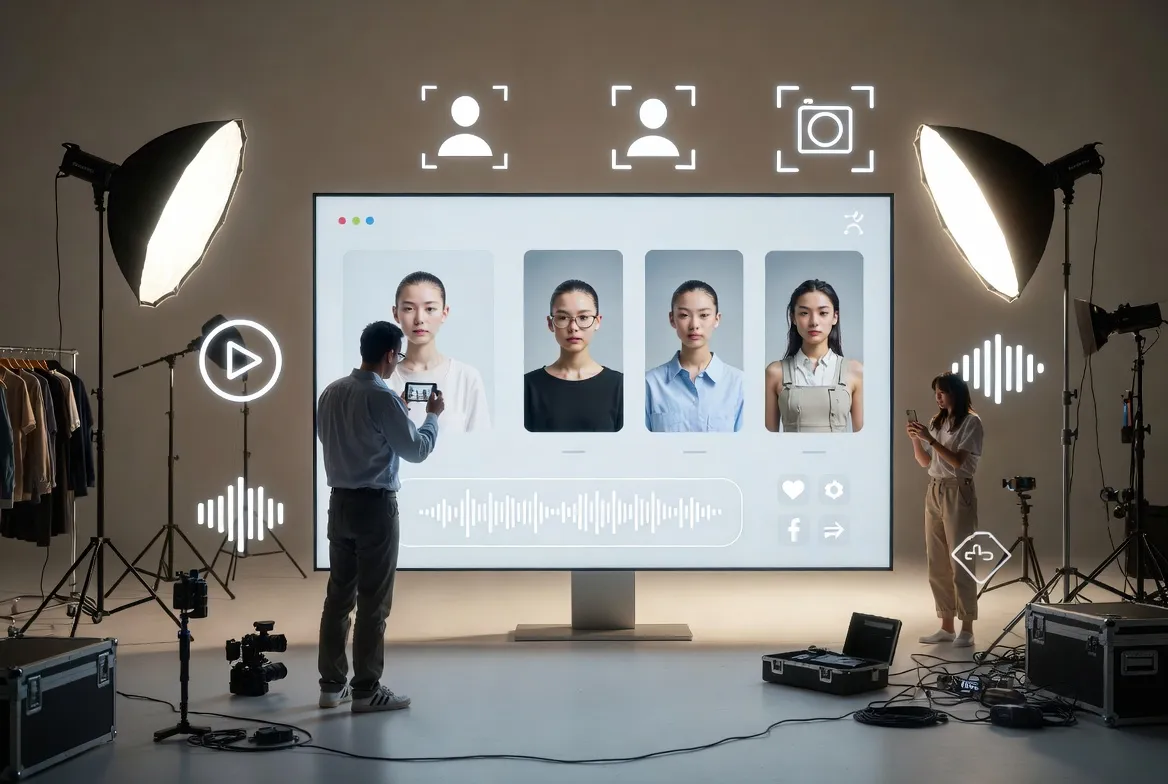
Quick Summary: UGC tools and AI avatars transform video ad creation in 2026, combining authentic creator-style content with scalable AI production. Top platforms like Extuitive, Zeely, HeyGen, and Airpost offer everything from realistic avatars to full campaign workflows, while 61% of Gen Z prefer UGC over other formats. Smart tool selection depends on workflow needs, budget, and whether authenticity or scale matters most.
Video advertising hit a turning point somewhere between late 2024 and now. Traditional studio productions started losing ground to something grittier, more authentic—content that looked like it came from actual people, not marketing departments.
But here’s the thing. Creating authentic-looking user-generated content at scale is expensive and slow. That’s where AI stepped in.
The collision of UGC demand and AI capability created a new category of tools. Some focus on hyper-realistic avatars. Others generate full ad workflows. A few blend real footage with AI-generated elements. And the results? Well, 82% of consumers say video is the most memorable form of content, and 86% say they have learned about a brand through video, according to Animoto’s 2026 State of Video Report cited by Adweek.
This guide breaks down the landscape. Real tools, real pricing, real use cases. No fluff.
What Actually Counts as a UGC Tool or AI Avatar in 2026
Definitions matter because vendors love to blur lines.
A UGC tool creates video ads that mimic user-generated content—the kind of casual, phone-shot, creator-voiced clips that dominate TikTok and Instagram. These platforms typically offer templates, asset libraries, and editing workflows optimized for paid social campaigns.
AI avatar tools generate synthetic humans that speak your script. The avatar looks real (or stylized), lip-syncs to uploaded audio or generated voice, and can present information in dozens of languages. Originally built for training videos and corporate communications, they’ve pivoted hard into advertising.
The best tools in 2026 blend both. They understand that Gen Z audiences—who represent 61% preference for UGC over other content formats, based on InMobi data cited by Adweek—want authenticity, but brands need the efficiency only AI can deliver.
What doesn’t count? Generic video editors with an “AI” sticker. Screen recording tools. Stock footage libraries. Those solve different problems.
Why This Shift Happened (And Why It Matters Now)
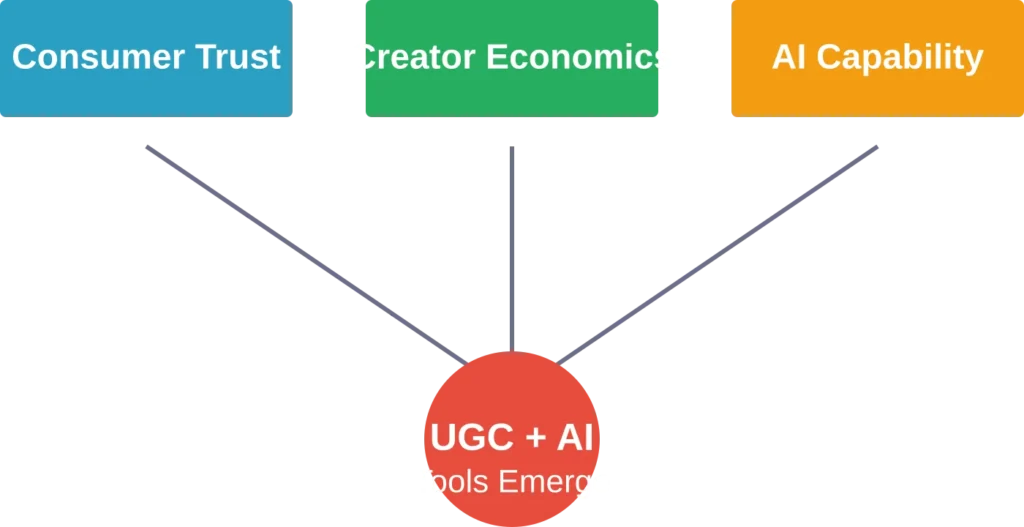
Three forces converged.
First, consumer trust in polished ads collapsed. Research from Animoto’s 2026 State of Video Report reveals that 82% of consumers say video is the most memorable form of content. However, 83% of consumers have watched videos they suspected were AI-generated, and 36% say an AI-generated video would lower their perception of the brand. The gap between those numbers? That’s the authenticity premium.
Second, creator economics scaled. U.S. ad spend in the creator space is projected to reach $37 billion in 2025, a 26% year-over-year increase, according to the Interactive Advertising Bureau data cited by Marketing Dive. Brands realized partnership ads work: research demonstrates that consumers show strong purchase intent following creator content exposure.
Third, AI got good enough to fake it. Not perfectly. But well enough that platforms started shipping avatar tools as core features, not experiments.
The timing explains why tools launched in 2025 look nothing like the ones from 2023. Early avatar platforms focused on corporate training. Now they’re optimizing for Meta’s ad specs and TikTok’s aspect ratios.
Top UGC Tools and AI Avatar Platforms Worth Considering
The landscape is crowded. These are the tools that consistently show up in real advertiser workflows, backed by product documentation and public case studies—not just flashy demo reels.
Extuitive: The Predictive UGC Validator
Extuitive built its entire platform around one question: what if you could know which UGC-style ads will convert before spending a single dollar on production or testing?
The workflow is Shopify-native. Connect your store, let the AI agents analyze your products, then watch as they instantly generate UGC-style hooks, scripts, storylines, visuals, and full creative briefs. Next, 150,000+ AI consumer agents (modeled on real shopper behavior) simulate how real audiences will react, score every variation for predicted CTR and ROAS, and surface only the winners.
What sets it apart? It’s not just another video generator — it’s a full pre-launch prediction engine. While most UGC tools create content and hope for the best, Extuitive runs evolutionary testing with agentic AI to forecast real performance, so you launch only the creatives that actually feel authentic and convert.
Best for: Shopify brands and performance marketers who want UGC video ads that look organic but are data-backed to win in the feed instead of burning budget on guesswork.
Pricing: Starter — $1,000/month (500 ads scored, 200 AI creations); Professional — $2,500/month (2,500 ads scored, 500 creations); Enterprise — custom.
Contact Information:
- Website: extuitive.com
- Email: [email protected]
- LinkedIn: www.linkedin.com/company/extuitive
- Twitter: x.com/Extuitive_Inc
- Instagram: www.instagram.com/extuitiveinc
Zeely: The UGC-First Video Generator

Zeely built its entire platform around one question: what if AI could generate videos that look exactly like organic creator content?
The interface is workflow-driven. Define your product, upload assets or pull from the stock library, set parameters for tone and style. Zeely’s AI generates variations that mimic handheld phone footage, natural lighting, casual delivery—all the visual cues audiences associate with authentic UGC.
What sets it apart? The output doesn’t look AI-generated. That matters when 83% of consumers have watched a video they suspected was AI-generated, according to Animoto research.
Best for: Performance marketers running paid social campaigns where the creative needs to blend into the feed, not interrupt it.
Pricing: Check Zeely’s official website for current plans and credit pricing.
HeyGen: The Avatar Heavyweight
HeyGen dominates the AI avatar conversation for good reason. The platform offers over 100 customizable avatars, supports 40+ languages with lip-sync that actually works, and ships features fast.
Recent updates added motion tracking, so avatars can gesture naturally instead of standing static. The voice cloning quality improved significantly. And the export options cover every ad format you’d actually use.
But here’s the catch: HeyGen avatars still look like avatars. They’re polished, professional, effective for explainer content—but they won’t fool anyone into thinking they’re watching a creator’s iPhone video.
Best for: Brands that want to scale multilingual content, need consistent presenter quality, or target audiences that value information density over raw authenticity.
Pricing: Per HeyGen’s official source data, Creator plan is $29/month (unlimited videos, 1080p, 30-minute video length, custom avatar, voice cloning); Team plan is $39/seat/month (4K exports, fast processing, 2+ seats, collaboration tools).
Airpost: The Hybrid Creative Platform
Airpost took a different approach. Instead of pure AI generation or pure avatar presentation, they blend AI footage with real assets and a creative team.
The platform runs off what they call a “living brief”—your campaign parameters, product info, and brand guidelines. From that, Airpost generates video ads using a mix of its asset library, AI-generated footage produced on-demand for your products, and creative direction.
Real examples of Airpost-created ads are browsable on their site. The output quality is noticeably higher than template-based tools, but so is the price and production time.
Best for: Brands with budget for premium creative who want AI efficiency without sacrificing production value.
Pricing: Contact Airpost directly; pricing varies based on campaign scope and creative support level.
Synthesia: The Enterprise Standard

Synthesia pioneered AI avatars for corporate use and remains the enterprise default. Over 50,000 companies use it for training, internal comms, and product education.
For advertising? It works, but you’re adapting an enterprise tool to a performance marketing workflow. The avatar quality is excellent. The platform is stable. Compliance and security features are thorough. But the creative flexibility and ad-specific features lag tools built for marketers from day one.
Best for: Enterprise advertisers who need tight control, audit trails, and integration with existing corporate video workflows.
Pricing: Synthesia offers tiered plans; check their official site for current enterprise pricing.
Creatify: The Template Speed Machine

Creatify optimizes for one thing: getting from product link to finished ad as fast as possible.
Paste a URL. Creatify scrapes product details, pulls images, generates script variations, applies templates, and exports multiple video ads. The whole process takes minutes.
Quality? It’s template-level. Professional enough for testing, generic enough that winning creatives will probably need a refinement pass. But for rapid iteration on performance campaigns, especially e-commerce, the speed is unmatched.
Best for: E-commerce brands testing multiple products, affiliates running high-volume campaigns, agencies managing large client catalogs.
Pricing: Per available data: Creatify’s starter tier begins around $19/month for 1,200 credits with basic AI tools; Pro tier at $49/month unlocks larger video limits and removes watermarks.
Other Platforms in the Mix
The tools above dominate practitioner conversations. But several others solve specific niches:

Colossyan focuses on localization and compliance-heavy industries. Strong if you need legal review workflows or regulated content.

D-ID pioneered the “talking photo” format—upload a still image, it becomes a speaking avatar. Lightweight, affordable, limited creative range.

Tavus specializes in personalized video at scale. Think AI avatars that address each viewer by name with custom details. Powerful for outbound sales, overkill for most advertising.
Amazon also rolled out a generative AI video generator in mid-2025, now available to all U.S. advertisers. It creates six videos from a product ID. According to Marketing Dive, BTR Media agency called it a “game-changer” for client campaigns. Amazon reports that sponsored brand campaigns featuring video see a 30% higher click-through rate on average versus those without.
The Trade-Off Nobody Talks About: Authenticity vs. Scale
Real talk: every tool makes a choice.
Some prioritize authenticity. They limit avatar customization, restrict effects, push you toward natural motion and lighting. The output looks believably human—but production is slower and you’ve got fewer creative levers to pull.
Others prioritize scale. Upload a product ID, get six video variations in minutes. Perfect for testing, brutal for trust. When asked what supports authenticity, 68% mention featuring real people, per Animoto’s 2026 State of Video Report.
No tool solves both perfectly. The best platforms let you choose where on that spectrum you want to land for each campaign.
Here’s what that looks like in practice:
| Priority | Tool Characteristics | Best For | Risk |
|---|---|---|---|
| Authenticity-First | Fewer templates, realistic motion, limited FX, manual review steps | High-consideration products, trust-sensitive categories, brand storytelling | Slower iteration, higher cost per video |
| Scale-First | Batch generation, product ID input, template library, automated workflows | E-commerce testing, large catalogs, performance campaigns | Generic look, lower engagement, brand perception hit |
| Balanced | Customizable realism controls, human-in-loop option, hybrid workflows | Most advertisers, multi-channel campaigns, iterative testing | Steeper learning curve, requires strategy |
Most advertisers need the balanced approach. But knowing which direction you can shift when a campaign demands it? That’s the real unlock.
How to Actually Choose the Right Tool
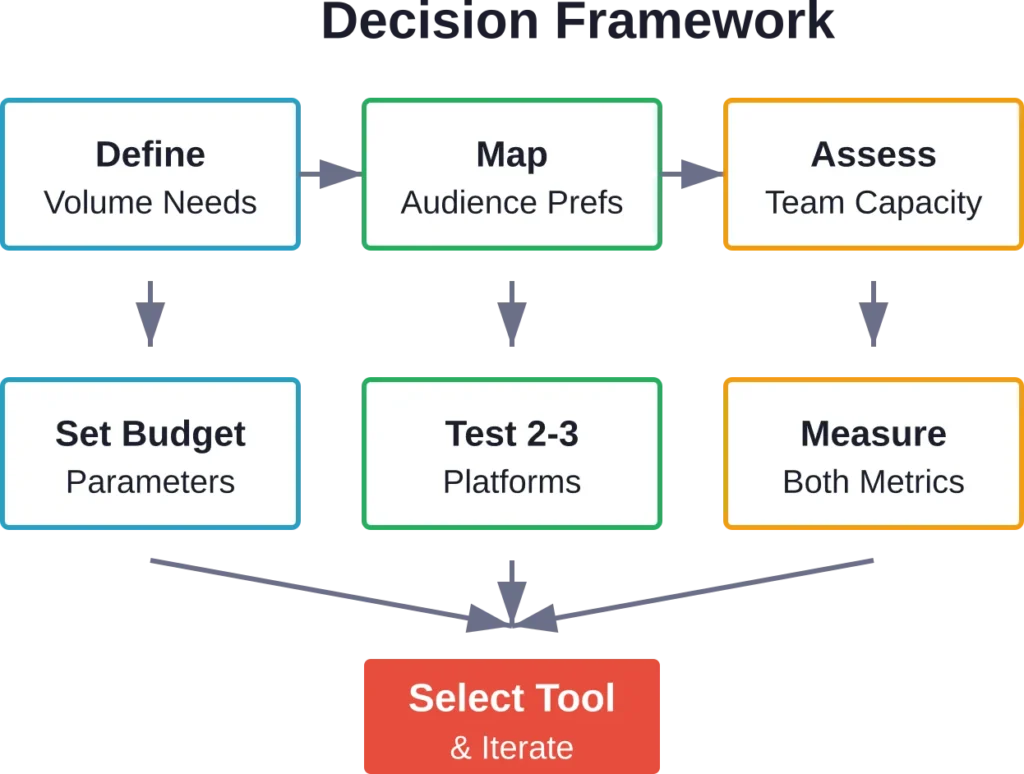
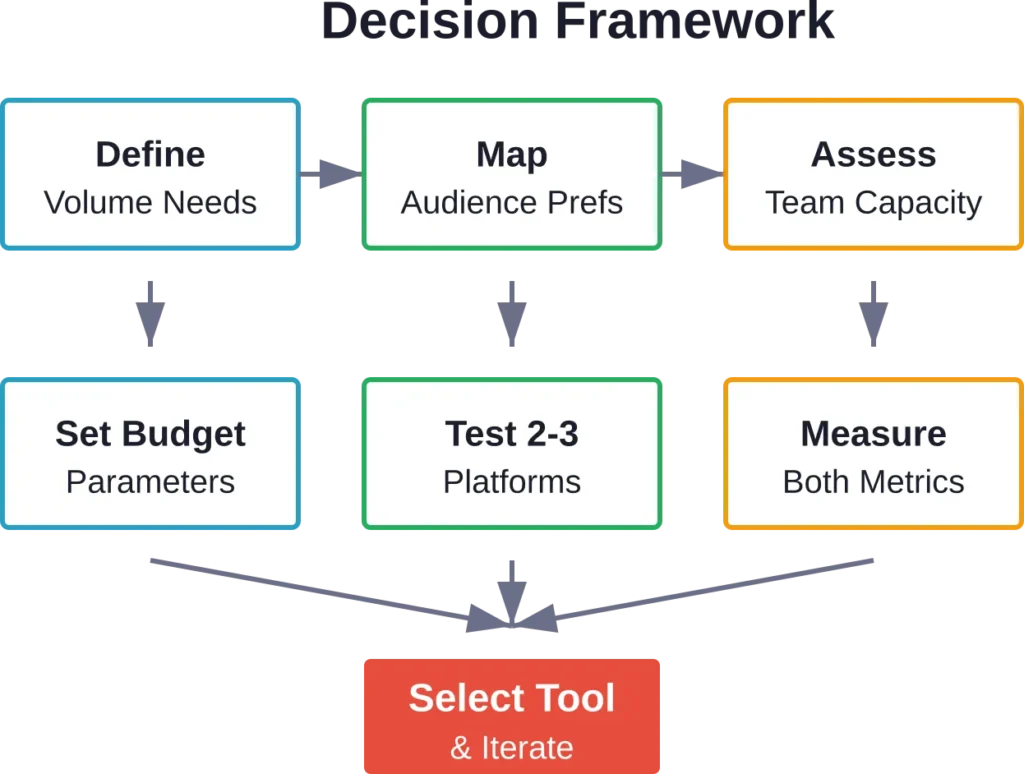
Look, the wrong approach is to ask “which tool is best?” Best for what? A tool that’s perfect for dropshipping product tests will fail miserably at brand storytelling.
Ask better questions.
What’s Your Primary Workflow?
Do you need to generate 50 video variations per week for testing? Or four polished assets per quarter for brand campaigns? Scale requirements eliminate half the field immediately.
Who’s Your Audience?
Gen Z audiences, who show 61% preference for UGC formats, will reject polished avatar presentations. B2B decision-makers might prefer the professional polish of a Synthesia avatar over shaky-cam creator content.
And remember the trust penalty: 36% of consumers say AI-generated videos lower brand perception.
What’s Your Production Reality?
Some tools require creative direction. Others need technical setup. A few are genuinely plug-and-play.
If you’ve got a creative team, hybrid platforms like Airpost let you leverage their expertise while gaining AI efficiency. Solo operators or small teams need self-service tools like Creatify or Zeely that handle creative decisions.
What’s Your Budget Structure?
Pricing models vary wildly. Some charge per video. Others use credit systems. Enterprise platforms bill by seat with annual contracts.
Per available data: Creatify’s starter tier begins around $19/month for 1,200 credits with basic AI tools; Pro tier at $49/month unlocks larger video limits and removes watermarks. Data from multiple sources shows credits-based models typically price at 40-100 credits for $50-100/month ranges. Always verify current pricing on official sites.
The real cost isn’t the subscription—it’s time. A tool that costs half as much but takes twice as long to produce usable creative is more expensive.
What Metrics Actually Matter?
Creative testing reveals that authenticity drives performance, but polish affects perception.
Creator partnership ads demonstrate performance advantages, with data showing significant improvements in cost-per-action and click-through rates, based on Interactive Advertising Bureau data. That’s the UGC premium. But 82% of consumers say video is the most memorable form of content, regardless of production style.
Track both performance (CTR, CVR, CPA) and perception (brand lift, aided awareness, message association). The best tool maximizes the first without destroying the second.
Common Mistakes That Tank Results
Even with the right tool, execution determines outcomes. These mistakes show up constantly:
Ignoring Platform-Specific Optimization
A vertical video optimized for TikTok won’t perform on YouTube. Aspect ratios matter. Caption placement matters. Hook timing matters.
Most AI tools export in multiple formats. Practitioners should avoid simply cropping a 16:9 video to 9:16 and calling it mobile-optimized.
Over-Relying on Templates
Templates give you speed. But when 40 brands in your category use the same three templates, audiences tune out.
The best performers customize by adjusting pacing, music, and script structure. Small variations compound into differentiation.
Forgetting the Trust Tax
AI detection is real. When 83% of consumers have watched a video they suspected was AI-generated, and 36% say it hurts brand trust, you can’t ignore authenticity signals.
Mix AI-generated content with real creator partnerships. Use avatars for information delivery, real people for testimonials. Test perception alongside performance.
Skipping the Human Review
AI generates fast. It also generates weirdly.
Common issues include hands clipping through products, lip sync drifting out of alignment, and script pacing feeling robotic. These aren’t bugs—they’re current limitations that should be caught before content goes live.
Treating All Audiences the Same
Demographic differences in content preference are massive. Gen Z (ages 18-24) with 61% UGC preference contrasts sharply with older Millennials (ages 35-44), where 67% chose TV as their top form of digital entertainment, per InMobi’s 2023 survey.
Segment creative by audience. What works for 22-year-olds on TikTok will bomb with 45-year-olds on LinkedIn.
What the Data Actually Says About Performance
Results vary by platform, product, and creative execution. But patterns emerge.
Video drives action. A full 83% of consumers have watched videos they suspected were AI-generated, according to Animoto’s 2026 report. And 82% say video is the most memorable form of content.
Authenticity amplifies that effect. Research shows 43% of consumers want brand videos to feel personal and authentic. When asked what supports authenticity, 68% mention featuring real people.
But AI doesn’t automatically kill performance. Over a third of consumers trust AI-generated content just as much as human-made videos—provided it’s done well. The dividing line? Transparency and quality.
Partnership ads demonstrate the UGC advantage. Creator partnership ads demonstrate performance advantages, with data showing significant improvements in cost-per-action and click-through rates, based on Interactive Advertising Bureau data. And research demonstrates that consumers show strong purchase intent following creator content exposure.
Meanwhile, Amazon reports that sponsored brand campaigns featuring video see a 30% higher click-through rate on average versus those without.
The takeaway? Video matters. Authenticity matters. AI is a tool, not a strategy.
Emerging Trends and What’s Coming
The space moves fast. Several shifts are already underway.
Platform-Native AI Tools
Meta announced AI-powered creator partnership tools in late 2025, helping brands find and convert organic content into partnership ads. Amazon expanded access to its video generator throughout 2025.
When distribution platforms build generation tools directly into their ad interfaces, third-party tools need to differentiate on quality or workflow, not just existence.
Regulation and Disclosure
Several jurisdictions now require disclosure when AI-generated personas appear in advertising. Expect this to expand.
Tools that build disclosure mechanisms into export workflows have an advantage. Manual compliance is a liability waiting to happen.
Hybrid Workflows Winning
Pure AI generation hits ceiling on quality. Pure human creation hits ceiling on speed.
The winners blend both. AI handles ideation, asset generation, and variation. Humans handle strategy, refinement, and final creative decisions. Research by Professor T. Makana Chock at Syracuse University’s Extended Reality Lab examines why virtual avatars gain millions of followers and the psychological factors that drive trust in AI-generated personas—understanding those factors helps hybrid teams make smarter creative choices.
Vertical-Specific Tools
Generic video generators are commoditizing. Vertical-specific platforms—built for beauty brands, SaaS companies, real estate, etc.—can embed category knowledge into templates, scripts, and workflows.
Expect more specialization, less one-size-fits-all.
FAQ
Sometimes, but not consistently. AI UGC tools excel at scale and testing velocity—you can generate 20 variations in the time it takes to brief one creator. Performance depends on product type, audience segment, and creative execution. Research shows 83% of consumers have watched videos they suspected were AI-generated, and 36% say it lowers brand perception. Best practice? Use AI for rapid testing and volume, real creators for flagship campaigns and trust-building content.
Most platforms offer free trials or starter tiers. Test with real product creative, not demos. Run a small paid campaign comparing AI-generated ads against your current creative. Measure both performance metrics (CTR, CVR, CPA) and perception indicators (brand lift surveys if possible). If the AI creative performs within 20% of your best human-created content at 5x the speed, the ROI is probably there.
AI avatars are synthetic presenters—they look like people (real or stylized) speaking your script, often in a clean studio setting. UGC-style videos mimic organic creator content shot on phones with natural lighting, casual delivery, and authentic feel. Avatars work for explainers and information delivery; UGC-style videos work for social proof and feed-native advertising. Some tools offer both, most specialize in one.
Both, but the use cases differ. E-commerce leans heavily on UGC-style product demos and testimonials. B2B often uses AI avatars for explainer content, thought leadership, and case study presentations. Tools like Synthesia dominate B2B because enterprise buyers value polish and consistency. Tools like Zeely and Creatify skew e-commerce because performance marketers need volume and authenticity.
For now, not critical—but that changes fast if you expand internationally. Platforms like HeyGen with 40+ language support and accurate lip-sync make localization trivial. If international growth is on your roadmap within 12-18 months, choose a tool with strong multilingual capability now rather than migrating later.
Legally, it depends on jurisdiction—some require disclosure, others don’t yet. Ethically and strategically, transparency usually helps. When asked, 36% of consumers say AI-generated videos lower brand perception, but that penalty is smaller when brands are upfront about it. Stealth AI that gets caught feels deceptive; disclosed AI feels innovative. Build disclosure into your workflow now before regulation forces your hand.
Most avatar platforms allow custom avatars created from your footage and voice cloning from audio samples. HeyGen, Synthesia, and others offer this as a premium feature. Quality varies—expect to record 5-10 minutes of footage and audio for training. The result? A digital twin that can present any script you write. Useful for founders, spokespeople, or educators who need to scale their presence without recording every video manually.
The Bottom Line
UGC tools and AI avatars aren’t replacing creative teams. They’re changing what creative teams spend time on.
The tedious parts—batch generating product videos, localizing content, testing 30 script variations—now take minutes instead of weeks. That frees up time for strategy, brand storytelling, and the creative decisions AI can’t make.
But tool choice matters. A platform optimized for e-commerce testing will frustrate a brand marketer who needs custom avatars. An enterprise avatar solution will slow down a performance team that needs speed over compliance features.
The starting point is workflow definition. Teams should understand what they’re optimizing for—authenticity, scale, localization, compliance, speed—then map tools to those priorities.
And remember the data. Video converts: 83% of consumers have watched videos they suspected were AI-generated. Authenticity matters: 68% say featuring real people supports that. But AI isn’t automatic failure: over a third of consumers trust it just as much as human-made content when done well.
The brands winning in 2026 aren’t choosing between human creativity and AI efficiency. They’re combining both, strategically, based on what each campaign actually needs.
Teams should test multiple platforms, measure both performance and perception metrics, and iterate based on real data rather than vendor promises.