

Quick Summary: Amazon SEO tools help sellers research keywords, optimize listings, track rankings, and analyze competitors to improve product visibility in search results. The best tools include WisePPC, Helium 10, Jungle Scout, Viral Launch, MerchantWords, and SellerSprite, with pricing ranging from $29 to $695+ per month. Choosing the right tool depends on your budget, experience level, and specific needs like keyword research, listing optimization, or rank tracking.
Getting noticed on Amazon isn’t luck. It’s strategy.
With millions of products competing for attention, your listing can easily get buried on page five where nobody shops. The harsh reality? According to Amazon SEO tool providers, 75% of shoppers never scroll past page one.
That’s where Amazon SEO tools come in. They help you discover what customers actually search for, optimize your listings with the right keywords, and track how you stack up against competitors. But here’s the thing—dozens of tools promise better rankings, and picking the wrong one wastes money and time.
This guide breaks down the essential Amazon SEO tools that actually move the needle. You’ll learn what each tool does best, how much it costs, and which one fits your specific situation—whether you’re just starting out or scaling an established brand.
What Amazon SEO Actually Means in 2026
Amazon SEO is the process of optimizing product listings to rank higher in Amazon search results. When someone types “stainless steel water bottle” into the search bar, Amazon’s algorithm decides which products appear first.
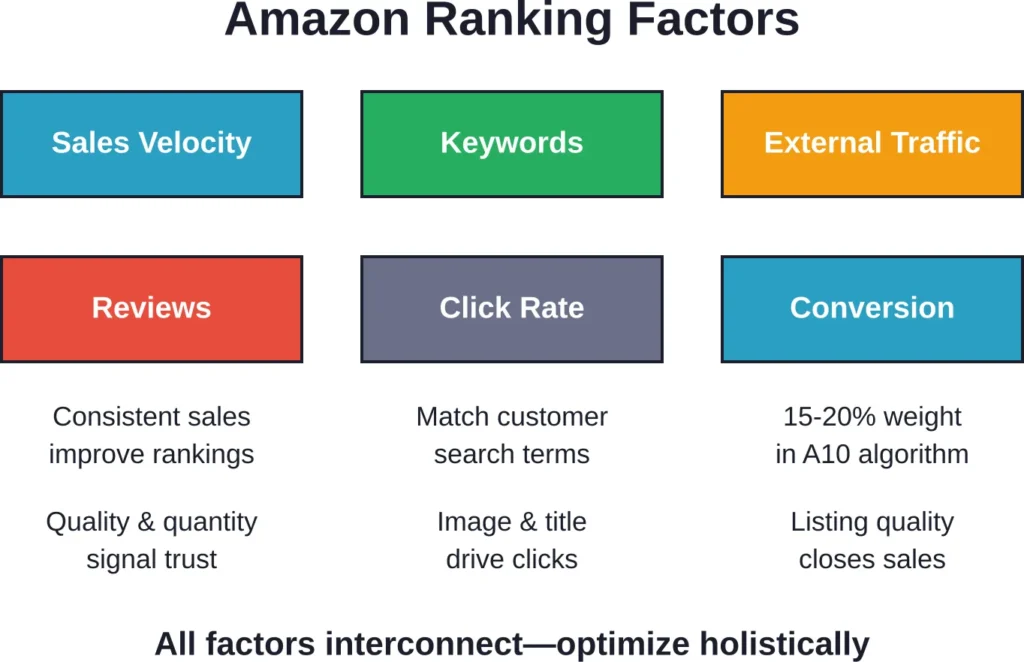
The algorithm considers multiple factors. Keyword relevance matters—your title, bullet points, and backend search terms need to match what customers search for. Sales velocity counts heavily; products that sell more climb rankings faster. Customer satisfaction metrics like reviews, ratings, and return rates signal quality to the algorithm.
Here’s what changed recently. Amazon’s A10 algorithm shifted priorities compared to the older A9 system. External traffic now carries more weight—bringing customers from social media, blogs, or ads outside Amazon can boost your rankings. The new algorithm focuses heavily on customer satisfaction metrics and organic interest.
According to data from Amazon Seller Central, According to data from Amazon Seller Central, external traffic contributes 15-20% of ranking weight, a significant increase from its near-zero impact under the previous A9 algorithm.. Amazon rewards sellers who bring customers from outside the platform.
Search terms work differently than Google keywords. Amazon lets you enter up to 5 generic keyword sections when editing your product listing. These backend terms don’t show up on your listing page but help Amazon match your product to searches.
The platform offers specific guidance on search term optimization. Maintain the text length limit. Use synonyms and spelling variations, but skip common misspellings. Include abbreviations. Use lowercase letters only. Avoid punctuation marks like semicolons, colons, and dashes. Separate words with spaces. Don’t repeat terms. Skip articles, prepositions, and short words like “a,” “an,” “and,” “by,” “for,” “of,” “the,” or “with.”
Most sellers face brutal visibility challenges. If your product doesn’t show up when customers search, they can’t buy it. Manual keyword research takes hours and often misses important search terms. Competitor analysis becomes guesswork without data. Tracking rankings across hundreds of keywords manually? Nearly impossible.
That’s exactly why tools exist.
Four Types of Amazon SEO Tools You Actually Need
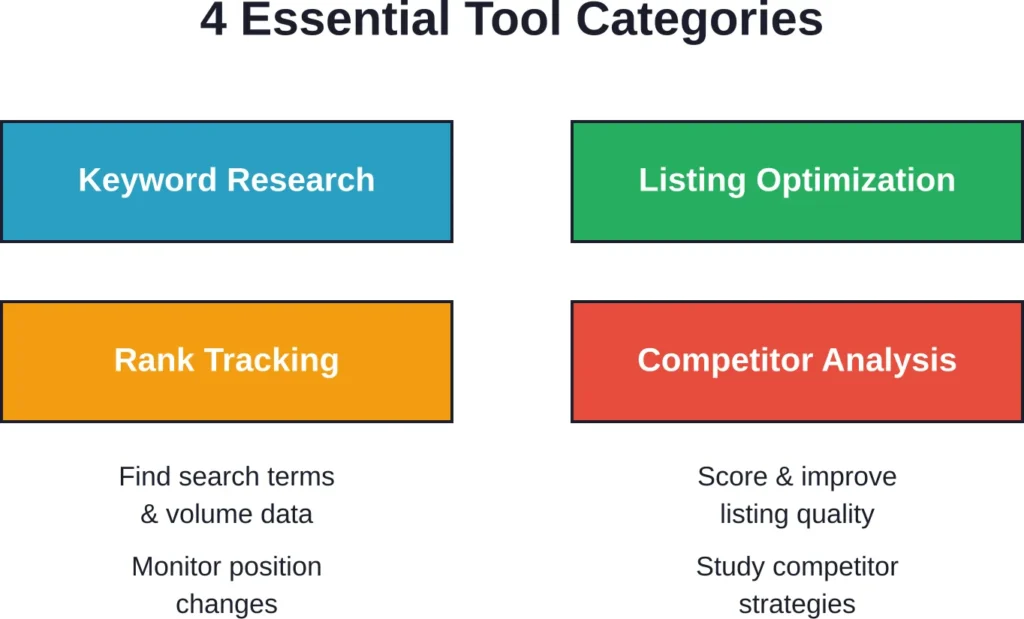
Amazon SEO tools fall into distinct categories. Each solves a specific problem in your optimization workflow.
1. Keyword Research Tools
These tools uncover what customers type into the Amazon search bar. They show search volume, competition levels, and related terms you might miss on your own.
Keyword research tools pull data directly from Amazon’s search suggestions and historical search patterns. The best ones reveal long-tail keywords—specific phrases with lower competition and higher purchase intent.
Look for tools that show actual search volume numbers, not just relative indicators. Relevance scores help you prioritize which keywords matter most for your product category.
2. Listing Optimization Tools
Listing optimization tools analyze your product titles, bullet points, descriptions, and backend keywords. They score your listing quality and suggest improvements.
These tools check if you’re hitting character limits effectively, using high-value keywords in the right places, and following Amazon’s content guidelines. Some provide AI-powered suggestions for more compelling copy.
The value here? They catch mistakes you’d otherwise miss and ensure you’re not leaving easy ranking opportunities on the table.
3. Rank Tracking Tools
Rank trackers monitor where your products appear in search results for specific keywords over time. They show if your optimization efforts actually work.
Daily tracking reveals ranking patterns. Did that title change boost you from position 15 to position 8? Did a competitor’s promotion knock you down temporarily? You’ll know exactly what’s happening.
These tools typically track rankings by marketplace too—useful if you sell in multiple countries.
4. Competitor Analysis Tools
Competitor tools reveal what’s working for other sellers in your category. They show which keywords competitors rank for, their estimated sales, pricing strategies, and review patterns.
The best competitor tools track share of voice—what percentage of top rankings in your category belong to each brand. They monitor advertising activity, helping you spot when competitors launch sponsored campaigns.
This intelligence shapes your strategy. If every top competitor uses certain keywords, you probably should too.
Top Amazon SEO Tools Compared
Here’s the breakdown of tools that actually deliver results. Each excels in specific areas, and understanding those strengths helps you pick the right fit.
1. WisePPC: PPC Analytics & Bulk Optimization Powerhouse

WisePPC is a specialized Amazon PPC tool focused on deep analytics, granular tracking, and powerful bulk management.
It offers 30+ advanced metrics, hourly data, bulk editing of thousands of campaigns in seconds, smart filtering, placement analysis, and long-term historical charts with years of data retention. The platform clearly separates ad-driven and organic sales for accurate ROAS/TACoS insights.
PPC data also supports SEO by helping sellers discover high-performing keywords through advertising, which can then be used to optimize listings and improve organic rankings.
Freemium pricing with usage-based plans. Official Amazon Ads Verified Partner.
Clean interface with a moderate learning curve. Ideal for sellers with medium-to-large ad budgets who want an efficient PPC command center.
Contact Information:
- Website: wiseppc.com
- Facebook: www.facebook.com/people/Wise-PPC/61573154427547
- LinkedIn: www.linkedin.com/company/wiseppc
- Instagram: www.instagram.com/wiseppc
2. Helium 10: The All-In-One Powerhouse

Helium 10 dominates the all-in-one category. It bundles keyword research, listing optimization, rank tracking, and competitor analysis into one platform.
The keyword research module finds high-volume search terms and shows competition levels. The listing analyzer scores your content and suggests improvements. Rank tracking monitors your position for unlimited keywords on higher-tier plans.
Cerebro, their reverse ASIN lookup tool, reveals exactly which keywords competitors rank for. Magnet discovers new keyword opportunities. Frankenstein processes bulk keyword lists.
Pricing starts around $29-$199 per month depending on the plan and features needed. The platform suits sellers who want everything in one place rather than juggling multiple subscriptions.
The learning curve can feel steep at first—there’s a lot of functionality packed in. But once you learn the interface, the efficiency gains are substantial.
3. Jungle Scout: User-Friendly for Beginners

Jungle Scout built its reputation on simplicity. The interface makes sense even if you’ve never used an Amazon tool before.
Keyword Scout monitors approximately 85% of top keyword searches, giving nearly complete Amazon keyword coverage. The tool shows search volume, competition scores, and relevance metrics in an easy-to-scan format.
Product tracking helps you monitor competitors and validate product ideas before investing inventory dollars. The listing builder guides you through optimization with clear recommendations.
Pricing falls in the $29-$199 per month range depending on features. The entry-level plans work well for newer sellers testing the waters.
What Jungle Scout does best is remove intimidation. You don’t need to be a data analyst to understand the insights.
4. Viral Launch: Data-Driven Insights

Viral Launch focuses on actionable data. Their keyword research tool provides detailed metrics on search volume, competition, and opportunity scores.
The listing analyzer evaluates your content against top-performing competitors in your category. It identifies gaps and suggests specific keywords to add.
Kinetic PPC, their advertising tool, optimizes sponsored ad campaigns based on keyword performance data. This integration between organic SEO and paid advertising makes strategic sense—both feed each other.
Pricing ranges from $29-$199 per month. Mid-tier plans unlock the most valuable features for serious sellers.
Viral Launch appeals to sellers who want deep analytics without unnecessary complexity.
5. MerchantWords: Pure Keyword Database

MerchantWords takes a different approach. Instead of bundling multiple tools, they focus exclusively on keyword data.
The platform claims one of the largest Amazon keyword databases available. Search any seed keyword and get hundreds of related terms with search volume estimates.
Pricing sits around $35 per month for the core database access. That’s significantly cheaper than all-in-one platforms, but you only get keyword data—no listing optimization, rank tracking, or competitor analysis.
This tool makes sense if you already have other tools and just need better keyword discovery, or if budget constraints require picking a single focused tool.
6. SellerSprite: Affordable International Coverage

SellerSprite stands out for international marketplace coverage. The platform provides keyword research and competitor analysis across multiple Amazon regions.
Keyword mining finds profitable search terms. Product research identifies trending items and market gaps. The listing optimization checker scores your content quality.
Pricing typically starts lower than Western competitors, making it attractive for budget-conscious sellers or those operating in multiple countries simultaneously.
The interface isn’t as polished as Helium 10 or Jungle Scout, but the functionality delivers solid value for the cost.
7. SellerApp: AI-Powered Recommendations

SellerApp integrates artificial intelligence into optimization suggestions. The platform analyzes your listings and recommends specific changes based on what’s working in your category.
Keyword tracking monitors rankings and alerts you to significant changes. PPC optimization helps manage ad spend more efficiently. The profit dashboard consolidates financial metrics.
Pricing ranges from approximately $44-$695+ per month depending on features and sales volume. Higher-tier plans include managed services where SellerApp’s team handles optimization for you.
This tool fits sellers who want strategic guidance, not just raw data.
8. AMZScout: Chrome Extension Convenience

AMZScout offers a Chrome extension that works directly on Amazon product pages. Hover over any product and see estimated sales, revenue, and ranking data.
The keyword explorer finds search terms and shows difficulty scores. The listing quality checker evaluates your content against best practices.
Pricing varies by plan. The Chrome extension provides quick insights without leaving Amazon’s website—convenient for rapid product research.
AMZScout works well as a supplementary tool alongside a more comprehensive platform.
9. Perpetua and Pacvue: Advertising-Focused SEO

Perpetua and Pacvue specialize in the intersection of SEO and advertising. Both platforms optimize sponsored ad campaigns while providing keyword insights that inform organic optimization.
These tools track share of voice, monitor competitor ad activity, and adjust bids based on performance data. The keyword intelligence feeds back into your listing optimization strategy.
Pricing typically starts higher—often in the $695+ per month range—and scales with ad spend. These platforms target established brands with significant advertising budgets.
If you’re running substantial sponsored campaigns, the ROAS improvements can justify the investment.
How Amazon’s Search Algorithm Shapes Tool Needs
Understanding how Amazon ranks products explains why certain tools matter more now than they did two years ago.
Amazon’s current algorithm prioritizes customer satisfaction signals. Reviews, ratings, and low return rates tell Amazon your product delivers on its promise. Tools that help you monitor review velocity and sentiment become more valuable.
Sales velocity still matters tremendously. Products that sell consistently rank higher than products with sporadic sales. This creates a feedback loop—better rankings drive more sales, which improve rankings further.
External traffic now impacts rankings significantly. Bringing customers from Instagram, YouTube, TikTok, or Google to your Amazon listing signals demand outside Amazon’s ecosystem. The algorithm rewards this with better organic placement.
According to available data, external traffic contributes 15-20% of ranking weight. That’s a substantial shift from previous algorithm versions.
Backend search terms work differently than public-facing content. Amazon indexes these hidden keywords but doesn’t show them to customers. Using all five generic keyword sections available when editing your listing maximizes indexing opportunities.
Click-through rate matters. If your product appears in search results but nobody clicks, Amazon interprets that as irrelevance and lowers your ranking. Compelling main images and titles become critical.
Conversion rate completes the picture. Getting clicks means nothing if visitors don’t buy. Amazon tracks how often people purchase after viewing your listing. Higher conversion rates boost rankings.
This algorithm complexity explains why comprehensive tools outperform single-purpose solutions. Rankings depend on multiple interconnected factors, and optimizing just one element—say, keywords—while ignoring others limits your results.
Building Your Amazon SEO Tool Stack
Most successful sellers don’t rely on a single tool. They build a stack that covers different needs.
The Starter Stack (Under $100/Month)
New sellers should start lean. Pick one all-in-one tool at the entry level—either Helium 10, Jungle Scout, or Viral Launch on their basic plans.
That gives you keyword research, basic rank tracking, and listing optimization guidance. It’s enough to get your first products optimized and ranking.
Add a Chrome extension like AMZScout for quick product research. Total monthly cost stays under $100.
Focus on learning one platform thoroughly rather than spreading across multiple tools you barely understand.
The Growth Stack ($100-$300/Month)
Once you’re generating consistent sales, upgrade to mid-tier plans. This unlocks more keyword tracking, deeper competitor analysis, and historical data.
Consider adding MerchantWords for expanded keyword discovery. The additional $35 per month brings access to a massive database that reveals terms your primary tool might miss.
At this stage, rank tracking becomes more important. You’re monitoring more ASINs and keywords, so the expanded limits on mid-tier plans justify the cost.
The Professional Stack ($300+/Month)
Established sellers with multiple products need comprehensive coverage. Top-tier plans on Helium 10, Jungle Scout, or Viral Launch provide unlimited tracking and advanced features.
Add SellerApp or a similar platform if you want AI-powered optimization suggestions. Layer in Perpetua or Pacvue if you’re running significant ad spend and want integrated advertising optimization.
At this level, tools aren’t expenses—they’re investments that directly impact seven-figure revenue.
The key is ensuring each tool serves a distinct purpose. Redundant subscriptions waste money.
Free Tools Worth Using
Amazon provides free resources that many sellers ignore. Amazon Brand Analytics offers search term data, competitor intelligence, and market basket analysis at no cost—if you’re brand registered.
The data isn’t as detailed as paid tools, but it comes directly from Amazon and costs nothing. Use it to validate insights from paid platforms.
Sonar by Sellics offers free keyword research with decent volume estimates. The data quality doesn’t match premium tools, but it works for quick lookups.
Amazon’s own search bar provides real-time autocomplete suggestions. Type your main keyword and note what Amazon suggests—those are actual customer searches.
Free tools should supplement paid platforms, not replace them. But they can extend your capabilities without increasing costs.
What to Look for When Choosing a Tool
Not all tools fit all sellers. The right choice depends on specific factors.
Match Tool to Business Stage
Brand new sellers benefit most from beginner-friendly interfaces and educational resources. Jungle Scout excels here—the platform teaches you while you work.
Growing sellers need scalability. As you add products, you’ll track more keywords and monitor more competitors. Make sure the tool’s pricing tiers accommodate growth without massive cost jumps.
Established brands require enterprise features. API access, team collaboration tools, and dedicated support become important at scale.
Consider Your Product Category
Some tools perform better in specific categories. Electronics and tech products benefit from detailed specification analysis. Fashion and home goods need strong visual optimization features.
If you sell in a highly competitive category, prioritize tools with deep competitor analysis. Understanding what top sellers do differently matters more in crowded markets.
Niche products need robust keyword discovery. You’re not competing on obvious terms—you need tools that find long-tail keywords with purchase intent.
Evaluate Data Accuracy
Keyword volume estimates vary between tools. Some inflate numbers; others underestimate. Cross-reference critical keywords across multiple platforms before making major decisions.
Rank tracking accuracy matters too. Does the tool check rankings from the correct marketplace and location? Rankings can differ by ZIP code.
Sales estimates are always approximations. Treat them as directional guidance, not precise predictions.
Check Update Frequency
Amazon’s algorithm changes constantly. Tools that update their databases frequently provide more current insights.
Rank tracking should refresh daily at minimum. Keyword data should update weekly or monthly depending on the metric.
Tools that haven’t updated their methodology in years might provide outdated advice that conflicts with current best practices.
Test the Interface
Most tools offer free trials. Use them. The most powerful tool means nothing if you find the interface confusing and abandon it after a week.
Can you find the features you need quickly? Are reports easy to export and share? Does the dashboard surface the most important metrics without excessive clicking?
Efficiency matters when you’re managing optimization across multiple products.
Calculate True Cost
Monthly subscription prices don’t tell the whole story. Some tools charge extra for additional users, ASIN tracking, or marketplace access.
Factor in learning time. Complex platforms require hours of training before you can use them effectively. That time has value.
Consider opportunity cost too. A cheaper tool that provides less accurate data might lead to poor keyword choices that cost you rankings and sales.
Common Mistakes Sellers Make with SEO Tools
Having tools doesn’t guarantee results. Misusing them can actually hurt performance.
Keyword Stuffing
Tools reveal hundreds of relevant keywords. New sellers try cramming all of them into titles and bullet points.
This creates unreadable listings that hurt conversion rates. Amazon’s algorithm notices when click-through and conversion drop—your ranking suffers despite the keyword optimization.
Pick the 15-20 most relevant, high-value keywords. Use them naturally in customer-facing content. Save the rest for backend search terms.
Ignoring the Customer Perspective
SEO tools focus on algorithms, but humans make purchase decisions. A perfectly optimized title that confuses customers fails.
Read your content aloud. Does it sound natural? Would a real person talk this way? If not, revise.
Tools should inform your writing, not replace human judgment.
Chasing Volume Over Relevance
High search volume looks attractive. But ranking for irrelevant keywords brings window shoppers, not buyers.
A keyword with 50,000 monthly searches but low purchase intent underperforms a 2,000-search term where everyone’s ready to buy.
Prioritize keywords that match your product’s actual use case and customer need.
Neglecting Backend Terms
Amazon provides five generic keyword sections totaling hundreds of characters. Many sellers fill only one section or skip them entirely.
According to Amazon’s official guidance, you can enter up to 5 generic keyword sections when editing your listing. These backend terms don’t appear on your page but significantly impact search matching.
Use all available space. Include synonyms, alternate spellings, and related terms that didn’t fit in your title or bullets.
Set-It-and-Forget-It Optimization
Rankings fluctuate. Competitors adjust their strategies. Customer search behavior evolves. What worked last quarter might underperform now.
Check your keyword rankings monthly. Review top competitors quarterly. Test title and bullet point variations periodically.
SEO is ongoing optimization, not a one-time setup.
Copying Competitor Keywords Blindly
Tools make it easy to extract every keyword a competitor ranks for. Copying their entire list seems logical.
But their product might differ from yours in important ways. Their keyword strategy might target different customer segments. Their brand recognition might let them rank for broad terms you can’t compete on yet.
Use competitor data for ideas, then filter through the lens of your specific product and customer.
Free vs. Paid Tools: What’s Actually Worth Paying For
Free tools provide genuine value for certain tasks. But they have clear limitations.
Free keyword tools typically offer limited search volume data. You might see relative indicators—high, medium, low—rather than specific numbers. That makes prioritization harder.
Free rank trackers usually limit how many keywords and ASINs you can monitor. If you’re tracking just one or two products, that works. Scale beyond that and you hit walls quickly.
Amazon Brand Analytics provides excellent free data but only to brand-registered sellers. If you’re selling unbranded products or haven’t completed brand registry, you’re locked out.
The search bar autocomplete method costs nothing and reveals actual customer searches. But it’s manual, time-consuming, and doesn’t provide volume estimates.
Paid tools justify their cost through depth and efficiency. They aggregate data from millions of searches, providing volume estimates you can’t get manually. They automate tracking that would take hours daily to do by hand. They spot patterns and opportunities you’d miss looking at raw data.
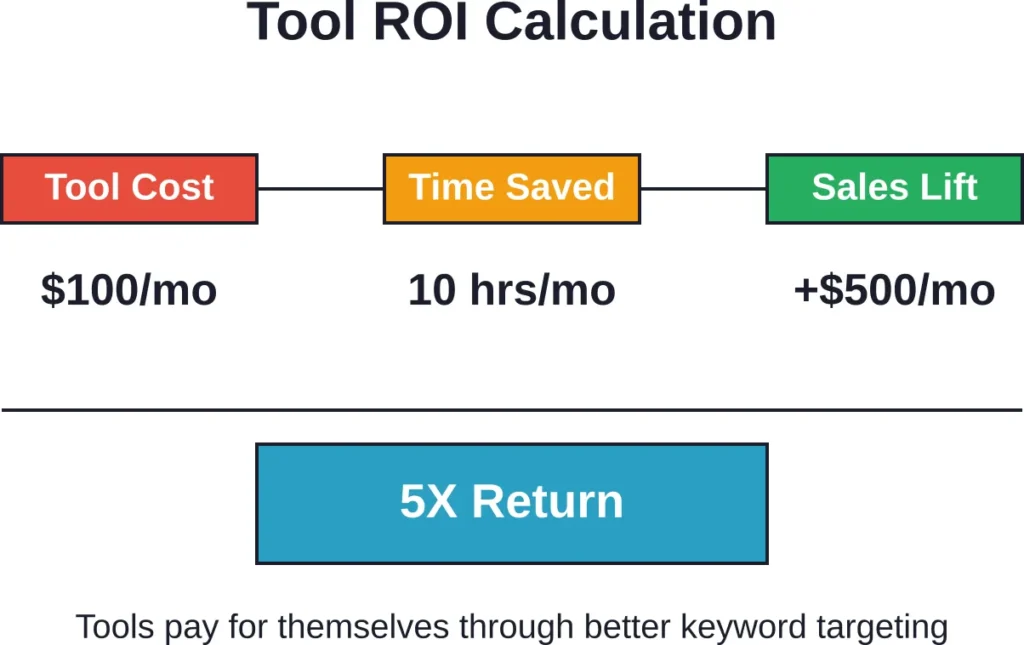
The ROI calculation is straightforward. If a $100/month tool helps you identify better keywords that increase sales by $500/month, it’s paying for itself five times over.
Start with free tools to learn the basics. Once you understand what you’re looking for, paid tools accelerate results dramatically.
How to Maximize Your Tool Investment
Owning tools means nothing if you don’t use them effectively. Here’s how to get full value.
Set a Regular Optimization Schedule
Block time weekly for keyword research and listing reviews. Monthly for rank tracking analysis. Quarterly for comprehensive competitor audits.
Consistency matters more than intensity. Thirty minutes weekly beats a five-hour marathon every three months.
Document Your Changes
When you update titles, bullets, or backend terms, record what you changed and when. Track the impact on rankings over the following weeks.
This creates a feedback loop. You learn what optimization tactics work for your specific products and category.
Without documentation, you’ll forget what you tested and repeat ineffective strategies.
Cross-Reference Data Sources
Don’t rely on a single tool’s numbers for critical decisions. Check keyword volume across two platforms. Verify rank tracking with manual searches periodically.
Discrepancies reveal which tool provides more accurate data for your needs.
Learn the Advanced Features
Most sellers use maybe 30% of their tool’s capabilities. The other 70% sits untouched.
Invest time exploring features beyond basic keyword research. Bulk operations, automated alerts, historical trend analysis, and API integrations often provide the biggest efficiency gains.
Most platforms offer free training webinars. Take them.
Connect SEO to Business Goals
Rankings don’t pay bills—sales do. Define clear objectives for your SEO work.
Are you launching a new product and need initial visibility? Prioritize keyword research and listing optimization. Trying to defend rankings against new competitors? Focus on rank tracking and competitor monitoring. Scaling to new marketplaces? Emphasize international keyword discovery.
Tools should serve specific business outcomes, not just generate reports you glance at and ignore.
The Reality of Amazon SEO Tool Effectiveness
Tools accelerate results—they don’t create miracles. Setting realistic expectations prevents disappointment.
Even with perfect optimization, ranking takes time. Amazon needs to see consistent sales performance before moving you up. Tools help you make the right moves faster, but the algorithm still operates on its timeline.
Competition matters more than optimization sometimes. In extremely crowded categories, even perfectly optimized listings struggle against established brands with thousands of reviews and massive ad budgets.
Tools can’t fix fundamental product-market fit problems. If nobody wants what you’re selling, no amount of keyword optimization generates sales.
Based on seller community reports, initial ranking improvements often appear within two to four weeks of optimization. Significant ranking gains typically require two to three months of consistent sales and positive metrics.
The sellers who succeed with these tools treat them as part of a complete strategy. They combine keyword optimization with compelling images, persuasive copy, competitive pricing, inventory management, and customer service excellence.
SEO tools provide the roadmap. You still have to execute the journey.
Frequently Asked Questions
Free tools work for basic research and learning, but paid tools provide significant advantages as you scale. Free options like Amazon’s autocomplete and Brand Analytics offer limited data without volume estimates or comprehensive tracking. Paid tools aggregate millions of data points, automate time-consuming tasks, and reveal opportunities you’d miss manually. For sellers managing multiple products or targeting competitive keywords, paid tools typically pay for themselves through better keyword targeting and saved time. Start with free tools to understand the basics, then invest in paid platforms when the limitations start costing you sales.
Jungle Scout consistently ranks as the most beginner-friendly option. The interface makes sense without extensive training, tooltips explain features clearly, and the learning curve stays manageable. Pricing starts affordably at entry tiers, and the tool covers essential needs—keyword research, listing optimization, and basic rank tracking—without overwhelming new sellers with advanced features they won’t use yet. Helium 10 offers more functionality but requires more time to master. For absolute beginners, Jungle Scout provides the best balance of capability and usability.
Daily monitoring makes sense during active optimization periods—when you’ve just updated listings or launched new products. Once rankings stabilize, weekly checks suffice for most products. Monthly reviews work for established products in stable categories. The key is responding to significant changes rather than obsessing over minor daily fluctuations. Set up automated alerts in your tracking tool to notify you of major ranking drops, then check the full picture weekly. This approach catches problems quickly without wasting hours on constant monitoring that doesn’t change your actions.
No tool can guarantee rankings. Amazon’s algorithm considers dozens of factors including sales velocity, conversion rate, reviews, and customer satisfaction metrics that tools can’t directly control. Tools help you optimize the elements you control—keywords, titles, bullets, backend terms—but ranking ultimately depends on customer response and competitive dynamics. The best tools increase your probability of ranking well by identifying the right keywords and optimization opportunities. Think of them as skilled advisors, not magic solutions. Consistent optimization combined with strong product-market fit delivers results over time.
Not necessarily. Expensive tools typically offer more features, larger databases, and advanced capabilities that matter for established sellers managing many products. But if you’re selling just a few ASINs, paying for enterprise features you never use wastes money. Cheaper focused tools often provide better value for specific needs—MerchantWords at $35 per month offers excellent keyword data without the cost of full platforms. Match the tool to your actual requirements and business stage. A $50 tool you use effectively beats a $200 tool with features you ignore. Evaluate based on what you’ll actually use, not the longest feature list.
Initial improvements often appear within two to four weeks of implementing better keywords and optimized content. Significant ranking gains typically require two to three months as Amazon’s algorithm accumulates data on sales performance and customer satisfaction. The timeline depends on competition level, starting position, and how well you execute optimization. Products starting on page three might reach page one in 30-45 days with solid optimization and decent sales velocity. Products in extremely competitive categories might take six months or longer to break into top positions. Tools accelerate the process by identifying the right keywords faster, but they can’t bypass the algorithm’s need for performance data over time.
It depends on budget and complexity. Beginners benefit from one all-in-one tool—Helium 10, Jungle Scout, or Viral Launch—that covers keyword research, listing optimization, and rank tracking without juggling multiple subscriptions. This simplifies workflows and reduces costs. As you scale, adding specialized tools makes sense. MerchantWords supplements keyword discovery. Perpetua or Pacvue optimize advertising alongside SEO. Most successful sellers at scale use one comprehensive platform as their foundation, then layer in one or two specialized tools for specific gaps. Avoid redundancy—don’t pay for the same capability twice across different platforms.
Final Thoughts
Amazon SEO tools transform guesswork into strategy. They reveal what customers search for, show where you rank, and identify what competitors do differently.
But tools alone don’t win rankings. Implementation matters more than subscriptions. The seller who uses a $50 tool consistently and acts on the data outperforms the seller who pays $300 monthly and ignores the insights.
Start with clear goals. What specifically do you want to improve—visibility for new products, defending rankings against competitors, or expanding to new keywords? Pick tools that address those goals directly.
Learn one platform thoroughly before adding others. Master keyword research workflows, set up rank tracking correctly, and understand how to interpret competitor data. Depth beats breadth when you’re building SEO skills.
Remember that optimization never ends. Amazon’s algorithm evolves, competitors adjust strategies, and customer search behavior shifts. The sellers who succeed treat SEO as an ongoing process, not a one-time project.
Most importantly, balance optimization with customer experience. Rankings mean nothing if your listing doesn’t convert. Write for humans first, algorithms second. Tools should enhance your customer focus, not replace it.
Ready to improve your Amazon visibility? Pick one tool from this guide, commit to using it consistently for 90 days, and measure what changes. That’s how you transform tools into results.