

Quick Summary: Professional Amazon tools help sellers automate product research, inventory management, keyword optimization, and profit tracking. The best tools for 2026 include WisePPC, Jungle Scout (from $49/month), Helium 10 (from $39/month), SmartScout (from $29/month), and Keepa for price tracking. These platforms leverage AI to analyze demand trends, validate niches, and optimize listings faster than manual methods.
Running a professional Amazon business in 2026 means competing against sellers who’ve automated everything from product discovery to repricing strategies. Manual tracking doesn’t cut it anymore.
The right professional Amazon tools transform how sellers identify opportunities, optimize listings, and manage inventory. But with dozens of platforms claiming to be essential, choosing the wrong stack wastes money and slows growth.
This guide breaks down the 15 best professional Amazon tools for 2026, comparing pricing, features, and real-world use cases. Whether you’re running wholesale operations, private label brands, or arbitrage models, you’ll find tools matched to your business stage and budget.
Why Professional Amazon Sellers Need Specialized Tools
Amazon’s marketplace has grown more competitive and more efficient. Sellers who rely on intuition or basic spreadsheets fall behind those using data-driven platforms.
Professional Amazon tools solve three core challenges. First, they surface profitable product opportunities before markets saturate. Second, they automate repetitive tasks like keyword tracking and inventory alerts. Third, they provide accurate profit calculations that account for FBA fees, advertising costs, and refunds.
Here’s the thing though—not all tools serve the same seller type. Wholesale sellers need bulk analysis features. Private label brands need keyword research depth. Arbitrage sellers need fast profit calculators with mobile scanning.
The tools below cover every major category: product research, keyword optimization, inventory management, price tracking, and profit analytics.
Top 16 Professional Amazon Tools Compared
These platforms represent the most powerful and widely adopted tools among professional Amazon sellers in 2026. Each excels in specific use cases.
1. WisePPC — Advanced Amazon PPC Optimization & Automation

WisePPC is a professional-grade platform built specifically for Amazon PPC campaign management, optimization, and long-term performance analysis. Unlike native Amazon Ads, it offers deep historical data storage, powerful automation, and advanced analytics that professional sellers need at scale.
Key features include bulk campaign management (edit thousands of campaigns, ad groups, and keywords simultaneously), advanced filtering and segmentation, multi-metric dashboards with hourly granularity, placement-level analysis, and smart gradient-based highlighting for quick insights.
The platform stores years of historical data (far beyond Amazon’s 60–90 day limit), provides AI-driven bid automation, rule-based optimization engines, and intelligent keyword harvesting. Additional capabilities include dayparting, budget automation, and unified analytics across Amazon and Shopify stores.
Pricing: Currently in public beta with free access and exclusive lifetime perks for early users. Post-beta plans are expected to start around $126/month. Early beta users receive a 25% lifetime discount.
Best for: Advanced Amazon sellers and PPC managers running large advertising accounts who need maximum control, automation, deep historical insights, and precise optimization of ad spend.
Contact Information:
- Website: wiseppc.com
- Facebook: www.facebook.com/people/Wise-PPC/61573154427547
- LinkedIn: www.linkedin.com/company/wiseppc
- Instagram: www.instagram.com/wiseppc
2. Jungle Scout — Comprehensive Product Research

Jungle Scout remains one of the most popular all-in-one platforms for product research and validation. The platform combines demand forecasting, supplier databases, and sales estimates in a single interface.
Key features include the Product Database (filters millions of products by category, price, and sales velocity), Opportunity Finder (identifies trending niches with low competition), and Supplier Database (connects sellers with verified manufacturers).
Jungle Scout’s AI integration analyzes demand trends and provides predictive insights faster than manual research. The platform tracks competitor performance and alerts users to sudden ranking changes.
Paid plans begin with the Basic plan at $49/month. Annual billing offers significant discounts.
Best for: New sellers launching private label products who need end-to-end research and validation tools.
3. Helium 10 — Advanced Keyword Research and Listing Optimization

Helium 10 offers the deepest keyword research capabilities in the Amazon tool ecosystem. The platform provides over 30 separate tools covering research, listing optimization, operations, and analytics.
Standout features include Cerebro (reverse ASIN lookup showing competitor keywords), Magnet (keyword generator with search volume data), Frankenstein (keyword processor), and Scribbles (listing optimizer that ensures keyword coverage).
The AI Listing Architect generates optimized product titles and bullet points based on search volume and conversion data. Helium 10’s Adtomic tool manages PPC campaigns with AI-powered bid adjustments.
Pricing starts with the Starter plan at $39/month, the popular Platinum plan at $99/month, and the Diamond plan at $229/month, with discounts for annual commitments.
Best for: Established sellers focused on SEO optimization and PPC management who need deep keyword analytics.
4. SmartScout — Market Share Analysis and Traffic Insights

SmartScout specializes in category-level analysis and competitive intelligence. The platform shows market share distribution, traffic estimates, and brand performance across Amazon’s entire catalog.
The TrafficGraph feature visualizes how traffic flows between competing products. The SellerMap tool identifies geographic concentrations of top sellers. Category trends reveal seasonal patterns and emerging subcategories.
SmartScout’s AI Visibility Monitor tracks ranking changes across thousands of keywords simultaneously. The Amazon AI Scorecard evaluates listing quality and suggests optimization priorities.
Plans start at $29/month, making SmartScout one of the most affordable professional tools with enterprise-grade analytics.
Best for: Strategic sellers analyzing category opportunities and tracking market share shifts over time.
5. Keepa — Price History and Tracking

Keepa provides the most comprehensive price tracking database for Amazon products. The browser extension and web dashboard chart historical pricing, sales rank, and stock availability.
Sellers use Keepa to identify arbitrage opportunities (products with recurring price drops), validate consistent demand (through sales rank history), and monitor competitor pricing strategies.
The Data tab shows raw numbers for every tracked metric. The Product Viewer extension adds Keepa charts directly to Amazon product pages for instant analysis.
Keepa offers affordable subscription tiers with extensive tracking capacity, making it essential for arbitrage and wholesale models.
Best for: Arbitrage and wholesale sellers who need historical pricing data to validate purchasing decisions.
6. Analyzer Tools — Bulk Wholesale Analysis
Analyzer Tools specializes in bulk product analysis for wholesale sellers processing large inventory lists. The platform calculates profitability across hundreds of ASINs simultaneously.
Key capabilities include bulk profit calculation (accounting for FBA fees, referral fees, storage costs), restricted product detection, and competitive analysis showing Buy Box ownership and FBA seller counts.
The tool integrates with supplier price lists, automatically matching ASINs and flagging unprofitable items before purchase orders go out.
Pricing is structured for volume users with affordable monthly plans designed for bulk operations.
Best for: Wholesale sellers analyzing large catalogs who need fast bulk profitability screening.
7. Viral Launch — Product Launch and Marketing Suite

Viral Launch focuses on product launches and market entry strategies. The platform combines product discovery with launch optimization tools.
Market Intelligence identifies product opportunities with detailed competition analysis and demand validation. Listing Analyzer evaluates listing quality and suggests improvements. Kinetic PPC automates campaign management with AI-driven bid optimization.
The Viral Launch Chrome extension provides instant data overlays on Amazon search results and product pages.
Plans are priced competitively with feature sets comparable to Jungle Scout, making it a strong alternative for launch-focused sellers.
Best for: Sellers launching new products who need coordinated research, launch, and marketing tools.
8. SellerApp — AI-Powered Automation and Analytics

SellerApp integrates AI-driven insights across product research, PPC management, and listing optimization. The platform emphasizes automation for scaling operations.
Product Intelligence combines search volume, competition analysis, and profit calculators. Amazon PPC Analyzer optimizes campaigns with automated bid adjustments. Listing Quality Checker scores titles, bullets, and descriptions against Amazon’s A9 algorithm.
SellerApp’s sentiment analysis scans customer reviews to identify product improvement opportunities and common complaints.
Pricing varies by feature access, with plans designed for different business sizes and automation needs.
Best for: Data-driven sellers who want AI automation for PPC, listings, and competitive monitoring.
9. Seller Snap — Automated Repricing

Seller Snap specializes in algorithmic repricing for maintaining Buy Box competitiveness. The platform adjusts prices in real-time based on competition, inventory levels, and profitability thresholds.
Advanced rules let sellers set minimum margins, respond to specific competitors, and implement time-based pricing strategies. The dashboard shows repricing activity and profit impacts.
Integration with inventory management systems ensures repricing accounts for stock levels and prevents overselling.
Best for: High-volume sellers competing aggressively for Buy Box placement across large catalogs.
10. Inventory Lab — Inventory and Accounting Management

Inventory Lab streamlines inventory receiving, listing creation, and profit tracking. The platform handles the operational workflow from purchase orders through FBA shipments.
Stratify (the companion tool) provides detailed profit analytics broken down by product, category, and time period. The system tracks landed costs, FBA fees, and advertising expenses for accurate margin calculations.
Mobile apps enable on-the-go inventory management and shipment creation.
Best for: Arbitrage and wholesale sellers managing high SKU counts who need integrated inventory and accounting.
11. FeedbackWhiz — Review Monitoring and Customer Communication

FeedbackWhiz automates customer follow-up emails and monitors product reviews. The platform helps sellers maintain positive feedback and quickly address negative reviews.
Email campaigns trigger based on order status, sending review requests at optimal times. The dashboard consolidates feedback and reviews across all products for quick response.
Automated alerts notify sellers immediately when negative reviews appear, enabling fast customer service responses.
Best for: Brand-focused sellers who prioritize review management and customer communication.
12. Perpetua — Advanced PPC Campaign Management

Perpetua provides enterprise-level Amazon advertising optimization using machine learning algorithms. The platform manages campaigns across Sponsored Products, Sponsored Brands, and Sponsored Display.
AI-driven bid optimization adjusts spending based on performance goals (ACoS targets, profit maximization, growth objectives). Automated reporting shows attribution and incrementality metrics.
The platform handles complex campaign structures and budget allocations across large product catalogs.
Best for: Brands with significant advertising budgets who need sophisticated campaign automation and performance analytics.
13. AMZScout — Budget-Friendly Product Research

AMZScout offers product research and validation tools at accessible price points. The platform includes a Product Database, Niche Hunter, and Chrome extension.
The PRO Extension adds profit calculators and sales estimates directly to Amazon product pages. The Niche Hunter identifies low-competition opportunities with decent demand.
AMZScout’s pricing makes it attractive for new sellers or those testing product research tools before committing to premium platforms.
Best for: Budget-conscious sellers who need solid product research capabilities without premium pricing.
14. SellerAmp SAS — Mobile Arbitrage Scanner

SellerAmp SAS specializes in fast mobile scanning for retail and online arbitrage. The app calculates profitability instantly while sourcing in stores or browsing online inventory.
Features include barcode scanning, profit calculation (with all fees included), restriction checking, and competitive analysis showing FBA seller counts.
The tool integrates with Keepa for historical data and supports batch scanning for processing multiple items quickly.
Best for: Arbitrage sellers who need fast mobile profit calculations during sourcing trips.
15. Two Minute Reports — Amazon Data Integration

Two Minute Reports connects Amazon Seller Central with Google Sheets and Looker Studio, enabling real-time dashboards and custom reporting.
The integration automatically pulls metrics like revenue, profit, ad spend, and orders into spreadsheets for analysis. Sellers build custom dashboards combining Amazon data with external sources.
Automated reporting eliminates manual data exports and enables faster decision-making based on current performance.
Best for: Data analysts and agencies managing multiple accounts who need flexible reporting infrastructure.
16. RevSeller — Multi-Channel Research and Sourcing

RevSeller provides product research and sourcing across Amazon, eBay, and Walmart. The platform identifies arbitrage opportunities by comparing prices across marketplaces.
The Chrome extension adds profitability data to product pages on multiple sites. Bulk analysis tools process supplier catalogs to find cross-platform opportunities.
Integration with multiple marketplaces makes RevSeller valuable for sellers diversifying beyond Amazon.
Best for: Multi-channel sellers sourcing products for Amazon, eBay, and Walmart simultaneously.
How to Choose the Right Professional Amazon Tools
Selecting tools based on hype or popular recommendations wastes budget. The right stack aligns with your business model, stage, and specific operational bottlenecks.
Match Tools to Your Business Model
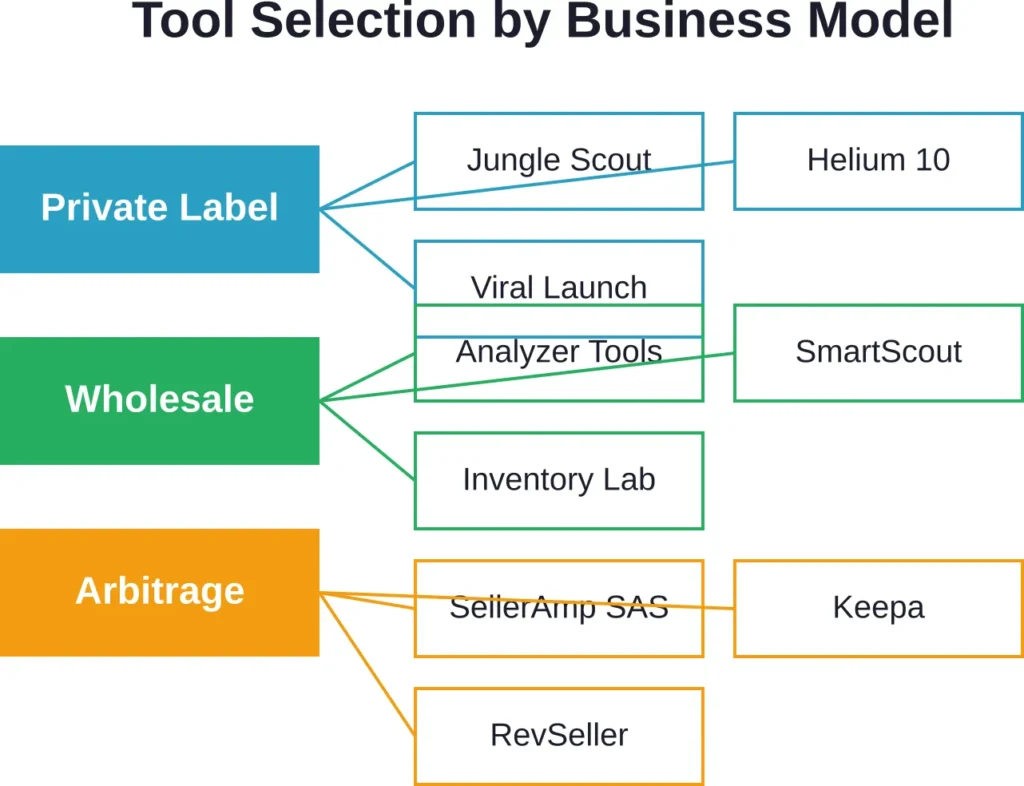
Private label sellers need deep keyword research and launch optimization. Jungle Scout, Helium 10, and Viral Launch provide the strongest feature sets for product discovery and ranking strategies.
Wholesale sellers require bulk analysis and fast profitability screening. Analyzer Tools and Inventory Lab handle large catalogs efficiently. SmartScout adds market share intelligence for strategic sourcing decisions.
Arbitrage sellers prioritize mobile scanning and historical price data. SellerAmp SAS and Keepa form the core stack, with RevSeller adding multi-channel sourcing capabilities.
Consider Your Current Business Stage
New sellers benefit from affordable all-in-one platforms that cover multiple functions. AMZScout and SmartScout offer strong capabilities at lower price points. As revenue grows, upgrading to Jungle Scout or Helium 10 adds advanced features.
Established sellers with proven products should invest in specialized tools. Perpetua optimizes advertising at scale. FeedbackWhiz protects brand reputation through review management. Two Minute Reports provides custom analytics infrastructure.
High-volume operations need automation and bulk processing. Seller Snap handles repricing for thousands of SKUs. Inventory Lab streamlines operations for arbitrage businesses moving hundreds of shipments monthly.
Evaluate Feature Overlap and Integration
Many platforms offer overlapping features. Paying for three tools that all do keyword research wastes money. Build a stack where each tool serves a distinct primary function.
Check integration compatibility. Tools that connect to Seller Central automatically pull accurate data. Platforms that integrate with each other (Keepa + SellerAmp, Helium 10 + Walmart automation) create efficient workflows.
Real talk: most sellers use 2-4 core tools, not 10+. A focused stack with deep expertise in each tool outperforms scattered subscriptions to every new platform.
Test Before Committing to Annual Plans
Most platforms offer free trials or monthly subscriptions. Test tools with your actual inventory and workflows before committing to annual contracts.
Focus trial periods on your biggest operational pain points. If product research takes too long, test Jungle Scout’s Product Database. If PPC costs are high, trial Perpetua or SellerApp’s campaign managers.
Track measurable outcomes. Does the tool actually save time? Does it surface better opportunities? Does it improve margins? If not, cancel before renewal.
Pricing Comparison for Professional Amazon Tools
Tool costs vary significantly based on feature access, data limits, and automation capabilities. Here’s how the major platforms compare at typical subscription tiers.
| Tool | Entry Price | Mid-Tier Price | Primary Use Case |
|---|---|---|---|
| SmartScout | $29/month | $79/month | Market share analysis, category trends |
| Helium 10 | $39/month | $99/month | Keyword research, listing optimization |
| Jungle Scout | $49/month | $69/month | Product research, supplier sourcing |
| AMZScout | Varies | Varies | Budget product research |
| Keepa | Affordable | Affordable | Price history tracking |
| Analyzer Tools | Affordable | Volume-based | Bulk wholesale analysis |
Annual subscriptions typically offer 20-30% discounts compared to monthly billing. For core tools used daily, annual commitments make financial sense once you’ve validated fit during trial periods.
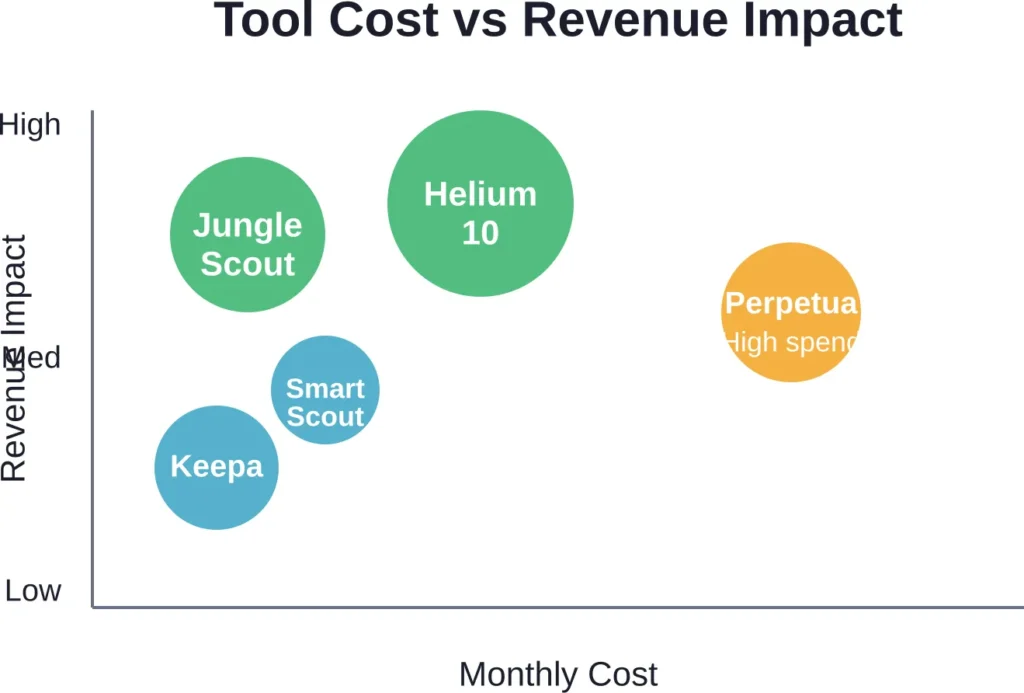
But wait. Tool costs should be evaluated against revenue impact, not just sticker price. A $99/month tool that finds one additional profitable product monthly easily pays for itself.
AI Integration in Professional Amazon Tools
AI capabilities have become standard in professional Amazon tools throughout 2026. The technology impacts product research, listing optimization, and advertising management differently.
AI-Powered Product Research
Modern research platforms use machine learning to identify demand patterns before they appear in traditional metrics. SmartScout’s AI Visibility Monitor tracks ranking changes across thousands of keywords, flagging products gaining momentum.
Predictive algorithms analyze historical sales data to forecast seasonal trends and emerging categories. This helps sellers source inventory ahead of demand spikes rather than reacting after competition increases.
Sentiment analysis tools scan thousands of customer reviews to identify product improvement opportunities and unmet needs within categories.
Automated Listing Optimization
AI listing builders generate optimized titles, bullet points, and descriptions based on search volume and conversion data. Helium 10’s AI Listing Architect analyzes top-performing competitors and recommends keyword placement strategies.
These tools continuously test variations and suggest updates as search trends shift. Rather than manually rewriting listings, sellers approve AI-generated recommendations that maintain keyword density and readability.
Intelligent PPC Management
Advertising platforms now adjust bids in real-time based on performance patterns. Perpetua’s machine learning algorithms optimize toward specific goals (ACoS targets, profit maximization, growth objectives) without constant manual intervention.
AI identifies underperforming keywords faster than manual review and reallocates budget to higher-converting search terms. This maintains campaign efficiency as competitive landscapes shift.
Common Mistakes When Selecting Amazon Tools
Sellers frequently make predictable errors when building their tool stack. Avoiding these saves money and accelerates growth.
Subscribing to Too Many Overlapping Tools
The biggest waste happens when sellers subscribe to multiple platforms with redundant features. Three different product research tools don’t provide three times the value—they create confusion and decision paralysis.
Community discussions reveal sellers paying for Jungle Scout, Helium 10, and Viral Launch simultaneously, using less than 30% of each platform’s capabilities. A focused approach with one primary research tool and complementary specialized tools works better.
Choosing Tools Based on Features Instead of Workflow
Long feature lists look impressive but don’t guarantee practical value. The best tool isn’t the one with the most features—it’s the one that fits your actual daily workflow.
Arbitrage sellers don’t need advanced keyword research. Private label brands don’t need mobile barcode scanners. Match tools to how you actually operate, not to theoretical capabilities you might use someday.
Ignoring Data Accuracy and Update Frequency
Not all tools pull equally accurate data. Some platforms estimate sales using algorithms that drift from reality during rapid market changes. Others update pricing and rank data hourly, while competitors refresh daily.
For time-sensitive decisions (arbitrage buying, competitive repricing), data freshness matters significantly. Test accuracy during trials by comparing tool outputs against Seller Central reports.
Failing to Learn Tools Properly
Powerful platforms require learning curves. Subscribing to Helium 10 and only using two basic features wastes 90% of the subscription value.
Most professional tools offer training resources, video tutorials, and documentation. Investing time upfront to master the platform pays dividends through better decision-making and faster workflows.
Tool Integration Strategies for Maximum Efficiency
Professional sellers build integrated workflows where tools complement each other rather than operating in isolation.
Research to Execution Pipeline
Effective workflows move from broad research to specific validation to execution. Start with category analysis in SmartScout, narrow opportunities in Jungle Scout’s Product Database, validate with Keepa price history, and optimize listings with Helium 10.
Each tool serves a distinct stage. This prevents redundant analysis and creates a systematic approach to product selection.
Operational Automation Stack
Once products are live, operational tools maintain efficiency. Inventory Lab tracks shipments and costs. Seller Snap manages repricing. FeedbackWhiz handles customer communication. Two Minute Reports consolidates performance data.
These tools run continuously with minimal intervention, freeing time for strategic decisions rather than daily operational tasks.
Performance Monitoring and Optimization
Ongoing optimization requires monitoring rank, reviews, and advertising performance. Helium 10’s rank tracking identifies drops requiring attention. Perpetua adjusts PPC spending automatically. SmartScout tracks market share changes.
This layer ensures products maintain visibility and profitability as competitive conditions shift.
2026 Market Trends Affecting Tool Selection
The Amazon seller ecosystem continues evolving, influencing which tool capabilities matter most.
Increased Competition and Lower Margins
Analyses indicate that Amazon selling has become more competitive and less forgiving in 2026. According to industry reports, many sellers aim for margins of 30 or higher for sustainable FBA operations.
This compression makes accurate profit calculation tools essential. Platforms that account for all fees (FBA, referral, storage, advertising) prevent costly mistakes when evaluating product opportunities.
AI Adoption Across the Ecosystem
AI capabilities have moved from premium features to standard offerings. Sellers without AI-assisted research, listing optimization, and advertising management fall behind competitors using these tools effectively.
The shift means budget tools lacking AI integration provide diminishing value. When evaluating platforms, AI depth matters more than it did two years ago.
Multi-Channel Selling Growth
More sellers diversify beyond Amazon into Walmart, eBay, and direct-to-consumer channels. Tools supporting multi-channel operations (RevSeller, integrated inventory systems) gain importance for sellers reducing Amazon dependency.
Look for platforms with roadmaps including multi-marketplace support if expansion beyond Amazon is part of your strategy.
| Tool Category | Essential For | Optional For | Not Needed For |
|---|---|---|---|
| Product Research | Private Label, Wholesale | Arbitrage (limited use) | Established brands only |
| Keyword Research | Private Label | Wholesale | Arbitrage, resellers |
| Price Tracking | Arbitrage, Wholesale | Private Label (competitive intel) | Unique products only |
| Repricing | High-volume resellers | Wholesale | Private Label, low SKU count |
| Inventory Management | Arbitrage, Wholesale | Private Label (if high SKU) | Low-volume sellers |
| Review Monitoring | Private Label brands | Wholesale | Arbitrage |
Getting Started: Building Your First Tool Stack
New sellers should start lean and expand as revenue grows. Here’s a practical approach to building your initial stack.
Month 1-3: Core Research Tools Only
Start with one comprehensive research platform. For private label, choose between Jungle Scout or Helium 10 based on trial experience. For wholesale, add Keepa for price history validation.
This minimal stack covers product discovery and basic validation without overwhelming complexity or cost. Focus on mastering these tools completely before adding others.
Month 4-6: Add Operational Efficiency
Once products are live and generating revenue, add operational tools. Inventory Lab streamlines shipment creation for arbitrage sellers. FeedbackWhiz protects brand reputation for private label.
Evaluate which operational bottleneck slows you down most. If it’s inventory tracking, prioritize Inventory Lab. If it’s customer communication, add FeedbackWhiz. Solve one problem at a time.
Month 7+: Optimization and Scaling
With proven products and systems, invest in optimization tools. Add Perpetua for sophisticated PPC management. Add SmartScout for competitive intelligence. Add Seller Snap for repricing if managing many SKUs.
At this stage, tool ROI should be clearly measurable. Each new subscription should solve a specific growth constraint or improve margins quantifiably.
Professional Amazon Tools: Final Recommendations
The best professional Amazon tool stack depends entirely on business model, stage, and budget. No universal recommendation fits every seller.
For private label sellers, Jungle Scout or Helium 10 forms the foundation, with FeedbackWhiz and Perpetua added as brands scale. Wholesale sellers benefit most from Analyzer Tools and SmartScout for bulk analysis and market intelligence. Arbitrage operations require SellerAmp SAS and Keepa for fast sourcing decisions.
The critical principle: build a focused stack where you master each tool completely. Three tools used expertly outperform ten tools used superficially.
Start with trials. Test workflows with your actual inventory. Measure time saved and opportunities found. Cancel what doesn’t deliver measurable value.
Tool selection isn’t a one-time decision—it evolves as your business grows and priorities shift. Review your stack quarterly, cutting redundancy and adding capabilities that remove current bottlenecks.
Frequently Asked Questions
Jungle Scout offers the most comprehensive feature set at an accessible price point for new sellers. The platform covers product research, supplier sourcing, and basic keyword analysis in one subscription. Starting at $49/month for the Basic plan, it provides enough capability to validate products without requiring multiple subscriptions. The interface is intuitive compared to more complex platforms like Helium 10.
New sellers should budget $50-150/month for essential tools during the research and launch phase. Established sellers typically spend $200-500/month across product research, inventory management, PPC optimization, and review monitoring. High-volume operations with significant advertising budgets may invest $1,000+/month in comprehensive automation platforms. The key is ensuring each tool provides measurable ROI through time savings or increased revenue.
Yes, the business models require different capabilities. Wholesale sellers need bulk analysis tools (Analyzer Tools, Inventory Lab) that process large catalogs quickly and track inventory across many SKUs. Private label sellers need deep keyword research (Helium 10), supplier databases (Jungle Scout), and review management (FeedbackWhiz). While some tools work for both models, optimal stacks differ significantly based on whether you’re sourcing established products or launching branded items.
Free tools provide basic functionality but lack the depth needed for competitive advantage. Amazon’s native Seller Central reports offer foundational data, and Keepa’s free tier shows basic price history. However, professional sellers competing effectively need accurate sales estimates, comprehensive keyword data, and automation capabilities that only paid tools provide. Free versions work for casual sellers but become limiting as revenue scales beyond a few thousand dollars monthly.
Calculate the tool’s ROI by tracking time saved and opportunities identified. If a research tool helps you find one profitable product monthly that you would have missed otherwise, it likely pays for itself. If an automation tool saves 10 hours monthly, multiply your hourly rate by 10—that’s the tool’s value. Run trials and track metrics: products researched, keywords ranked, reviews monitored, repricing actions taken. Drop any tool that doesn’t show measurable impact after 60 days of proper use.
Yes, but integration matters. The most effective stacks use 3-5 complementary tools rather than 10+ overlapping platforms. Successful combinations include one core research platform (Jungle Scout or Helium 10), one operational tool (Inventory Lab or SellerAmp), one price tracker (Keepa), and specialized additions like FeedbackWhiz for reviews or Perpetua for advertising. Tools that integrate with each other or with Seller Central create smoother workflows than isolated platforms requiring manual data transfer.
Based on community discussions and marketplace data, established sellers commonly use Helium 10 or Jungle Scout for research, Keepa for price tracking, and specialized tools matching their model. Private label brands frequently add FeedbackWhiz and Perpetua. Wholesale sellers commonly use Inventory Lab and Analyzer Tools. The pattern among successful sellers is depth over breadth—mastering core tools completely rather than subscribing to every available platform. Seven-figure sellers typically use 4-6 tools maximum, with clear purposes for each.
Conclusion
Professional Amazon tools transform how sellers identify opportunities, optimize listings, and manage operations. The right combination depends on your business model, growth stage, and specific operational bottlenecks.
Jungle Scout and Helium 10 dominate product research for private label sellers. SmartScout and Analyzer Tools excel at wholesale analysis. Keepa and SellerAmp power arbitrage sourcing. Specialized platforms like Perpetua, FeedbackWhiz, and Inventory Lab add focused capabilities as businesses scale.
The critical principle: start focused, add deliberately, and master completely. Three tools used expertly generate better results than ten tools used superficially.
Test platforms during trial periods. Track measurable outcomes. Cut subscriptions that don’t deliver clear ROI. Build an integrated stack where each tool serves a distinct primary function and complements your actual workflow.
Ready to optimize your Amazon business? Start with one core tool matched to your business model, master its capabilities completely, then expand strategically as revenue and complexity grow.