
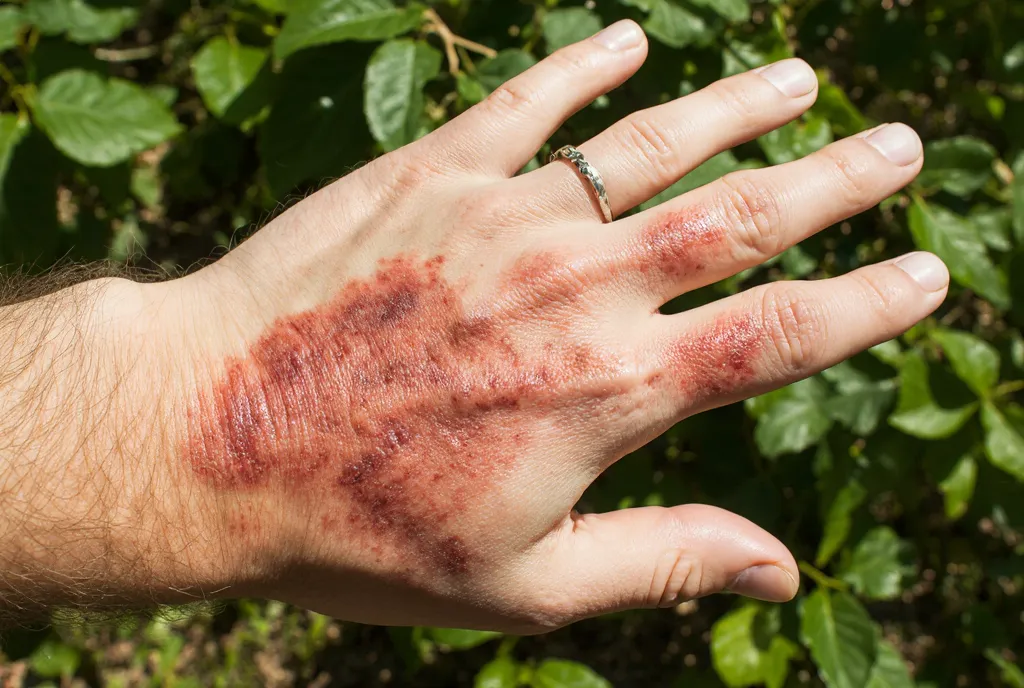
Quick Summary: Eating poison ivy can cause severe allergic reactions in the mouth, throat, and digestive system, including painful blisters, swelling, difficulty breathing, and potentially life-threatening complications. The plant contains urushiol oil, which affects 80-90% of adults and is just as dangerous when ingested as when touched. Medical attention is required immediately if any part of poison ivy is swallowed.
Poison ivy is notorious for causing itchy rashes when it touches skin. But what happens when someone actually eats it?
The consequences are far more serious than a surface rash. Ingesting poison ivy can trigger severe internal reactions that require immediate medical intervention.
Understanding Urushiol: The Toxic Compound
Poison ivy contains urushiol, an oily resin that causes allergic reactions in the majority of people. According to the CDC, exposure to an amount of urushiol less than a grain of salt causes a rash in 80-90 percent of adults.
This chemical doesn’t discriminate between external and internal contact. When ingested, urushiol attacks the sensitive tissues of the mouth, throat, and digestive tract with the same intensity it affects skin.
The scientific name for poison ivy is Toxicodendron radicans, and it’s part of the Anacardiaceae family, which also includes poison oak and poison sumac. All three plants contain urushiol and pose similar dangers when eaten.
Immediate Symptoms of Poison Ivy Ingestion
When someone eats poison ivy leaves, berries, or any part of the plant, symptoms typically begin within minutes to hours. The reaction starts where the plant first makes contact.
The mouth and throat are affected first. Painful blisters form on the lips, tongue, gums, and inside the cheeks. Severe swelling can occur in the throat, which creates a genuine medical emergency.
Here’s what happens in the digestive system:
- Intense burning sensation in the mouth and throat
- Difficulty swallowing as tissues swell
- Nausea and vomiting
- Severe abdominal pain and cramping
- Bloody diarrhea in serious cases
The allergic response doesn’t stop at the initial contact point. As urushiol enters the bloodstream through the digestive tract, systemic reactions can develop.

Life-Threatening Complications
The most dangerous consequence of eating poison ivy is airway obstruction. Swelling in the throat can become severe enough to block breathing entirely.
According to the CDC, burning poisonous plants and inhaling particles containing urushiol can lead to severe lung irritation. Ingestion creates similar internal exposure with potentially catastrophic results.
Other serious complications include:
| Complication | Description | Risk Level |
|---|---|---|
| Anaphylaxis | Severe allergic reaction affecting multiple body systems | Life-threatening |
| Respiratory distress | Throat swelling blocks airways | Critical |
| Gastrointestinal bleeding | Ulceration and bleeding in stomach/intestines | Severe |
| Dehydration | From persistent vomiting and diarrhea | Moderate to severe |
| Secondary infection | Damaged tissues become infected | Moderate |
The Myth of Building Immunity Through Ingestion
Some people believe eating small amounts of poison ivy can build immunity to the plant. This is dangerously false.
Repeated exposure to urushiol typically increases sensitivity rather than decreasing it, contrary to the immunity theory. The allergic response tends to worsen over time, not improve.
According to authoritative sources, it is estimated that 50–75% of people will develop the rash and other symptoms after contact with poison ivy. This susceptibility isn’t guaranteed to change, and deliberately ingesting the plant won’t create immunity—it will only increase sensitivity.
Urushiol triggers allergic reactions that typically worsen with repeated exposure rather than improve, making the immunity theory not just ineffective but potentially deadly.
Why Animals Can Eat It But Humans Can’t
Many animals—deer, birds, and goats—eat poison ivy without apparent harm. This biological difference confuses people into thinking the plant might be safe.
Animals have different digestive enzymes and immune responses than humans. What’s harmless to a goat can be lethal to a person. The same principle applies to many plants and foods across species.
Human digestive systems don’t neutralize urushiol. The compound remains active and reactive throughout the entire digestive tract, causing damage at every point of contact.

Emergency Response and Treatment
If someone eats poison ivy, immediate action is critical. According to Penn State Health dermatology, washing the area immediately with soap and water within 5-10 minutes of exposure is most effective. However, washing may help within one hour after contact.
For ingestion, the response differs from skin contact. Don’t induce vomiting, as this can cause additional damage to the esophagus and throat.
Take these steps immediately:
- Call Poison Control at 1-800-222-1222 or use the webPOISONCONTROL online tool
- Rinse the mouth thoroughly with water
- Don’t give the person anything to eat or drink without medical guidance
- Seek emergency medical care if breathing difficulty, severe swelling, or chest pain develops
- Bring a sample of the plant if possible for identification
Medical treatment typically includes antihistamines, corticosteroids to reduce inflammation, and supportive care for symptoms. Severe cases may require hospitalization, IV fluids, and airway management.
Long-Term Effects and Recovery
Recovery from poison ivy ingestion depends on the amount consumed and how quickly treatment begins. Mild cases may resolve within a few days with medical intervention.
Severe cases can cause lasting damage to the digestive tract, including scarring and chronic inflammation. The mouth and throat may require weeks to heal completely from extensive blistering.
Some individuals develop heightened sensitivity to urushiol after a severe reaction. Future accidental exposures—even skin contact—can trigger more intense responses than before the ingestion incident.
Prevention: Identifying and Avoiding Poison Ivy
The best approach is never taking the risk. Poison ivy grows throughout the United States, appearing as a vine, shrub, or ground cover.
Key identification features include pointed leaflets in groups of three, reddish stems, and clusters of grayish-white berries. The leaves can be green, reddish, or even yellowish depending on the season.
Remember the saying: “Leaves of three, let it be.” This simple rule helps avoid both skin contact and accidental ingestion.
Outdoor workers face particular risk, according to the CDC. An estimated 85% of the population are prone to developing allergies to poison ivy, poison oak, poison sumac, and other poisonous plants. Construction workers, farmers, landscapers, and arborists should learn to identify these plants and use protective equipment when working in areas where they grow.
Frequently Asked Questions
While death is rare, eating even small amounts of poison ivy can cause life-threatening complications, particularly throat swelling that blocks airways. The severity depends on individual sensitivity and the amount ingested, but all cases require immediate medical attention.
Initial symptoms like burning and pain typically begin within minutes to a few hours. Blisters and severe swelling develop within 1-6 hours, while systemic reactions may take 12-24 hours to reach peak severity.
No, drinking milk or any other home remedy won’t neutralize urushiol or stop the allergic reaction. Contact Poison Control immediately and seek emergency medical care rather than attempting home treatments.
Yes, ingestion is significantly more dangerous than skin contact. While skin rashes are uncomfortable and can be severe, eating poison ivy affects sensitive internal tissues and can cause airway obstruction, gastrointestinal bleeding, and systemic reactions that are potentially fatal.
Yes, all parts of the poison ivy plant contain urushiol and are equally dangerous. The berries, leaves, stems, and even roots can cause severe reactions whether touched or ingested.
No, urushiol is not destroyed by heat. Cooking, boiling, or burning poison ivy doesn’t eliminate the toxic oil. In fact, burning the plant creates airborne particles that can cause severe lung irritation when inhaled, adding another layer of danger.
Treatment includes corticosteroids to reduce inflammation, antihistamines for allergic reactions, medications to protect the stomach lining, IV fluids for dehydration, and potentially airway management if throat swelling is severe. Hospitalization is common for moderate to severe cases.
Conclusion
Eating poison ivy causes severe allergic reactions that can become life-threatening emergencies. The urushiol oil affects 80-90% of adults and doesn’t discriminate between skin contact and ingestion.
There’s no safe amount to consume, no immunity to build, and no home remedy that works. The consequences range from painful blistering throughout the digestive tract to airway obstruction requiring emergency intervention.
If someone ingests poison ivy, call Poison Control at 1-800-222-1222 immediately. Quick medical response makes the difference between a manageable situation and a medical crisis. When it comes to this plant, the only safe approach is complete avoidance.