

Quick Summary: Eating chalk is generally not toxic in small amounts, but regular consumption may indicate a condition called pica, often linked to nutritional deficiencies like iron or zinc. While accidental ingestion rarely causes serious harm, habitual chalk eating can lead to digestive complications, constipation, and potential exposure to contaminants. Anyone experiencing persistent cravings for chalk should consult a healthcare provider to address underlying causes.
Chalk isn’t exactly something most people consider edible. Yet some children and adults find themselves craving it. What actually happens when someone eats chalk, and when does it become a medical concern?
The answer depends on how much is consumed and whether it’s a one-time incident or a persistent pattern.
What Is Chalk Made Of?
According to MedlinePlus, chalk is a form of limestone primarily composed of calcium carbonate. Classroom chalk and billiard chalk typically contain calcium sulfate or calcium carbonate, both considered minimally toxic in small quantities.
But here’s the thing—not all chalk is created equal. Some imported insect-killing chalks contain pesticides and are illegal in the United States. The National Pesticide Information Center warns these products, sometimes labeled “Miraculous Chalk” or “Chinese Chalk,” pose serious health risks despite looking like regular chalk.
Immediate Effects of Eating Chalk
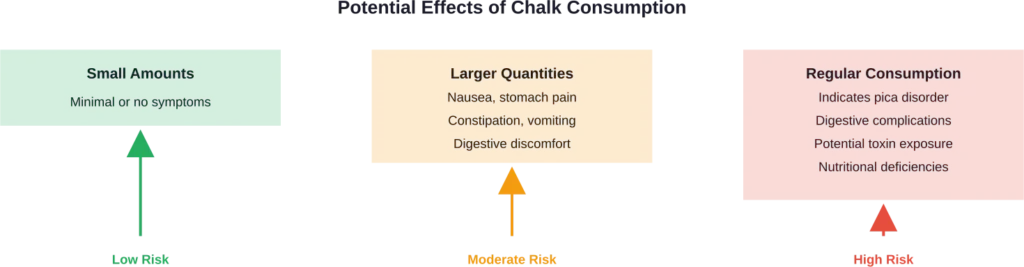
Small amounts of standard chalk typically cause minimal symptoms. The Illinois Poison Center notes that accidental ingestion usually results in minor digestive discomfort at most.
Larger quantities can trigger more noticeable symptoms including nausea, stomach pain, constipation, and vomiting. If chalk gets into the eyes, it causes irritation that requires rinsing with lukewarm water for 15 minutes.
Understanding Pica Disorder
Regular chalk consumption often signals an eating disorder called pica. According to the National Institutes of Health, pica involves repeatedly eating non-nutritive, non-food substances over at least one month. The behavior must persist beyond age two and not be culturally normative.
According to health sources, pica affects a significant proportion of children in early developmental stages, with some research suggesting rates ranging from 10 to 32 percent in children between ages one and six. Among adults, it’s frequently linked to pregnancy and iron deficiency anemia. The Mayo Clinic notes that craving ice, clay, soil, or chalk may indicate underlying anemia.
Why does this happen? Several factors contribute:
- Nutritional deficiencies, particularly iron and zinc
- Chemical imbalances in the brain
- Cultural or environmental influences
- Psychological stress or developmental disorders
Long-Term Health Complications
Habitual chalk eating carries genuine risks. Digestive complications top the list—chalk can cause severe constipation, intestinal blockages, and damage to teeth from constant grinding.
Research on calabash chalk has identified contamination concerns. Studies have detected pathogenic bacteria including Salmonella species in some samples, with documented variations in microbial profiles across different regions.
Research on calabash chalk exposure during pregnancy in animal models showed effects on maternal weight gain and uterine implantations in a significant proportion of exposed subjects. These findings from animal studies have prompted discussion about chalk consumption during pregnancy, despite its traditional use for morning sickness relief.
When to Seek Medical Help
According to Poison Control, most accidental chalk ingestion doesn’t require emergency care. But certain situations demand immediate attention.
Call 911 if someone who ate chalk collapses, has a seizure, has trouble breathing, or can’t be awakened. For non-emergency guidance, contact Poison Control at 1-800-222-1222 anytime, 24 hours a day.
Persistent cravings for chalk warrant a medical evaluation. Healthcare providers can test for nutritional deficiencies, anemia, and other underlying conditions driving the behavior.
Treatment and Outlook
Treatment depends on the underlying cause. When pica stems from nutritional deficiencies, iron or zinc supplementation often reduces cravings. Behavioral therapy helps address psychological factors.
Real talk: the outlook is generally positive when pica is properly diagnosed and treated. Addressing the root cause—whether it’s anemia, stress, or developmental issues—typically resolves the compulsion to eat chalk.
Frequently Asked Questions
Small amounts of standard classroom chalk are minimally toxic and rarely cause serious harm. However, regular consumption can lead to digestive complications, constipation, and potential exposure to contaminants. Illegal insect-killing chalks containing pesticides are genuinely dangerous.
Chalk cravings during pregnancy often indicate iron deficiency anemia, which is common during gestation. Some cultures traditionally consume calabash chalk for morning sickness relief, though research shows potential health risks including bacterial contamination and reduced maternal weight gain.
Standard chalk poisoning is uncommon. MedlinePlus notes that chalk is a form of limestone and generally considered non-toxic. Emergency room treatment focuses on monitoring vital signs and addressing symptoms. Serious complications are rare unless someone consumes large quantities or illegal pesticide-containing chalk.
Consult a healthcare provider to test for nutritional deficiencies, particularly iron and zinc levels. Treatment typically involves supplementation for deficiencies and behavioral therapy to address the pica disorder. Resolving the underlying cause usually eliminates the craving.
Give the child a few sips of water and monitor for symptoms. The Illinois Poison Center advises that small amounts of classroom chalk are usually nontoxic. If symptoms develop or you’re concerned, contact Poison Control at 1-800-222-1222 for free, expert guidance available 24/7.
Not necessarily, but chalk cravings are frequently linked to iron deficiency anemia. Research shows pica behaviors, including eating chalk, often correlate with low iron or zinc levels. A simple blood test can determine if anemia is contributing to the craving.
No chalk is intended for consumption, regardless of composition. While calcium carbonate-based classroom chalk is minimally toxic in small amounts, regular eating isn’t safe or recommended. Cravings for chalk should be addressed medically rather than accommodated.