

Quick Summary: Eating radioactive shrimp contaminated with cesium-137 poses minimal immediate health risks due to low contamination levels, but the FDA advises avoiding recalled products. The body naturally eliminates about 10% of ingested cesium-137 within days, while the remaining 90% has a biological half-life of 110 days. Long-term cancer risk exists with repeated exposure, though single consumption of recalled shrimp is unlikely to cause significant harm.
On August 14, 2025, the Food and Drug Administration issued an unusual warning that caught shoppers off guard: certain frozen shrimp products from Indonesia contained radioactive cesium-137. The announcement sparked immediate concern, with many consumers wondering whether they’d already eaten contaminated shrimp and what that meant for their health.
Certain frozen shrimp products processed by PT. Bahari Makmur Sejati (doing business as BMS Foods), a company located in Indonesia, were involved in the recall. Some products reached consumers before detection, including those sold under the Walmart Great Value brand.
But here’s the thing—despite alarming headlines about “radioactive shrimp,” the actual health risk for most people is considerably lower than sensational news coverage might suggest. That doesn’t mean the contamination wasn’t serious or that the recall wasn’t necessary. It just means understanding what cesium-137 actually does in the human body puts the situation into proper perspective.
Understanding Cesium-137: What It Is and Why It Matters
Cesium-137 is a radioactive isotope created as a byproduct of nuclear fission. It doesn’t occur naturally in the environment—its presence always indicates some form of nuclear activity, whether from weapons testing, nuclear accidents, or improper disposal of radioactive materials.
When cesium-137 enters food products, it represents a contamination event that requires investigation. The radioactive material emits beta particles and gamma radiation as it decays, which can damage cells and DNA when exposure occurs at sufficient levels.
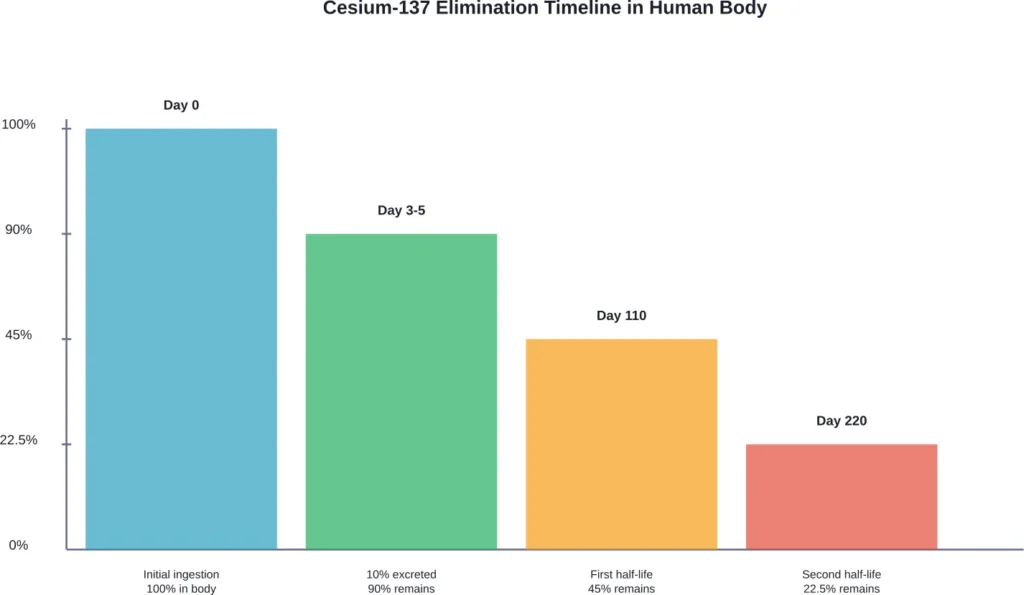
According to Consumer Reports, ingested cesium is typically absorbed into the bloodstream through the intestines. In an adult, about 10 percent of ingested cesium-137 is excreted from the body in a matter of days. The other 90 percent has a biological half-life of 110 days, meaning the human body naturally eliminates half of what remains every 110 days.
This biological clearance is important because it means the body doesn’t accumulate cesium-137 indefinitely. Unlike some heavy metals that can build up over time, cesium-137 gradually leaves the system even without medical intervention.
The 2025 Shrimp Contamination Incident
The contamination traced back to PT. Bahari Makmur Sejati, an Indonesian seafood processor. All recalls related to this incident were posted on the FDA’s official 2025 Recalls of Frozen Shrimp Products Associated with Cesium-137 Contamination page.
Products affected included various frozen shrimp items sold under multiple brand names. The FDA’s guidance was clear: do not eat, sell, or serve the recalled products.
What made this incident particularly noteworthy wasn’t just the radioactive contamination itself. The mystery of how cesium-137 ended up in shrimp processing facilities raised questions about industrial practices, environmental contamination, and food safety oversight in international supply chains.
According to the IAEA, ocean pollutants can make their way into seafood through complex pathways. Using nuclear techniques, scientists can examine how contaminants move through the food chain from marine algae all the way to predator fish. Since the industrial revolution, ocean pollution has increased steadily, with around 80 percent of it originating from land-based sources.
What Actually Happens When You Eat Contaminated Shrimp
So what happens physiologically if someone consumed radioactive shrimp? The answer depends on several factors: the contamination level, the amount consumed, and frequency of exposure.
Immediate Effects
In the case of the recalled shrimp, there would be no immediate symptoms. The radiation levels found in the contaminated products were not high enough to cause acute radiation sickness, which requires much higher doses delivered in short timeframes.
Most people who ate the recalled shrimp before learning about the contamination would notice absolutely nothing different about how they felt.
Short-Term Biological Response
Once ingested, cesium-137 behaves chemically similar to potassium in the body. It gets distributed relatively evenly throughout soft tissues rather than concentrating in specific organs.
Within the first few days, approximately 10 percent exits through normal excretion. The remaining cesium-137 begins its 110-day half-life cycle, gradually decreasing in the body over several months.
During this period, the radioactive material continues emitting radiation inside the body. The key question is whether this internal radiation dose is significant enough to cause measurable health effects.
Long-Term Cancer Risk
The primary health concern with cesium-137 exposure is increased cancer risk. Radiation can damage DNA, and while the body repairs most of this damage, some mutations may persist and potentially lead to cancer years or decades later.
However, risk assessment requires context. According to the FDA’s guidance levels for radionuclides in food, the calculations underlying their Derived Intervention Levels (DILs) assume ten percent contamination of the total diet, not 100 percent.
This means regulatory standards account for the reality that not everything someone eats would be contaminated. A single exposure from one meal of contaminated shrimp represents a tiny fraction of what would constitute ongoing dietary exposure.
How Concerned Should Consumers Actually Be?
Community discussions on platforms like Reddit showed widespread concern among people who may have purchased the recalled products, with questions about detection and health impacts.
The honest answer is that without specialized testing, there’s no way to know from symptoms alone. The contamination levels in the recalled products were not high enough to produce detectable symptoms in most cases.
Real talk: the FDA issued the recall out of an abundance of caution, following standard protocols for any detected radionuclide contamination in food. This doesn’t mean everyone who ate the shrimp will develop health problems.
According to guidance from the FDA’s Center for Food Safety and Applied Nutrition, regulatory limits for radionuclides in food are set with significant safety margins built in. These aren’t thresholds where immediate harm occurs—they’re preventive levels designed to keep lifetime exposure well below concerning ranges.
Comparing Radioactive Shrimp to Other Radiation Exposures
Context matters when evaluating radiation risk. Humans are constantly exposed to background radiation from natural sources—cosmic rays, radon gas, radioactive elements in soil and rock.
The NRC notes that activity is the rate of disintegration or decay of radioactive material, measured in curies (Ci) or becquerels (Bq). Different types of radiation exposure carry different risk profiles based on the dose, duration, and type of radiation involved.
While the recalled shrimp contained measurable cesium-137, the total radiation dose from consuming a single serving would be small compared to many other common exposures. That said, any avoidable radiation exposure is worth preventing, which is why the recall was appropriate.
| Exposure Source | Typical Dose Range | Frequency |
|---|---|---|
| Background radiation (annual) | Variable by location | Continuous |
| Chest X-ray | Standard diagnostic dose | As needed |
| Cross-country flight | Cosmic radiation exposure | Per flight |
| Contaminated food (single meal) | Depends on contamination level | One-time or intermittent |
| CT scan | Higher diagnostic dose | As needed |
What to Do If You Ate Recalled Shrimp
For anyone who consumed the recalled products before learning about the contamination, here are practical steps:
Don’t panic. The likelihood of significant health effects from a single exposure is low. Stress and anxiety about the exposure may actually be more immediately harmful than the radiation itself.
Stop eating the product. If there’s any recalled shrimp still in the freezer, dispose of it or return it to the point of purchase for a refund. Don’t give it to others or feed it to pets.
Monitor for updates. The FDA maintains updated information on recalls. Additional products may be added to the recall list as investigations continue, so checking the official FDA recall page periodically makes sense.
Consult a healthcare provider if concerned. While not medically necessary for most people, those with specific health anxieties can discuss the exposure with a doctor. Medical monitoring or testing is generally not recommended for low-level exposures like this, but individual circumstances vary.
Hydrate normally. Some sources suggest increased hydration might help with cesium excretion, though evidence for this is limited. Maintaining normal healthy hydration practices certainly won’t hurt.
How Food Becomes Radioactively Contaminated
Understanding how cesium-137 ended up in Indonesian shrimp processing facilities requires looking at potential contamination pathways. The IAEA’s work on radioecological tracers to assess coastal and marine ecosystem health shows that radioactive materials can enter food chains through multiple routes.
Possible sources include:
- Industrial equipment containing radioactive materials used inappropriately
- Environmental contamination from historical nuclear testing
- Improper disposal of medical or industrial radioactive sources
- Cross-contamination from other contaminated materials
- Proximity to contaminated water sources
The specific source for the BMS Foods contamination was under investigation as of the recall announcement. Cesium-137 doesn’t spontaneously appear—its presence always points to a specific contamination event or source.
According to research published in PMC on concerns and threats of contamination on aquatic ecosystems, universally, 80% of municipal wastewater is discharged into water bodies untreated, and industry is responsible for dumping millions of tons of heavy metals, solvents, toxic sludge and other wastes into water bodies each year.
FDA Response and Food Safety Oversight
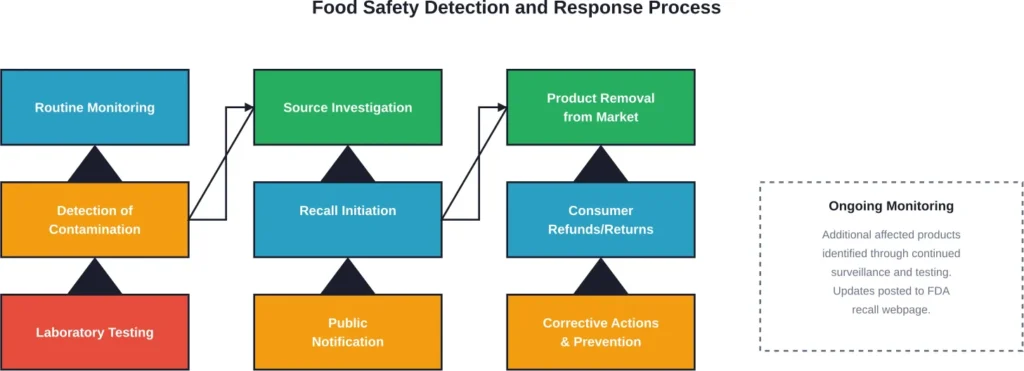
The FDA’s response to the contaminated shrimp incident followed established protocols for radionuclide contamination in imported foods. Detection occurred through routine monitoring, demonstrating that surveillance systems can catch contamination before widespread distribution.
However, the incident also raised questions about the robustness of international food safety oversight. With complex global supply chains, contamination in one facility can affect products distributed across multiple countries and sold under various brand names.
The NRC notes that commercial irradiators expose products to gamma radiation to kill germs and insects. This process—which is intentional and controlled—does not leave radioactivity in the food. The shrimp contamination was entirely different: unintended radioactive material in or on the food product itself.
Broader Context: Radiation in the Food Supply
The radioactive shrimp recall was unusual but not unprecedented. Radionuclides can enter the food supply through various pathways, and regulatory agencies worldwide maintain surveillance programs specifically to detect such contamination.
Natural radioactivity exists in many foods at trace levels. Bananas contain potassium-40, a naturally occurring radioactive isotope. Brazil nuts accumulate radium from soil. These natural sources are different from industrial contamination like cesium-137, but they illustrate that radiation in food isn’t inherently unusual.
What matters is the type of radionuclide, the activity level, and the exposure pathway. Natural background radiation is unavoidable. Industrial contamination is preventable and should be eliminated from food products.
Frequently Asked Questions
No. The contamination levels in the recalled shrimp were far too low to cause acute radiation sickness, which requires massive doses delivered in a short time. Most people who ate the recalled products would experience no immediate symptoms at all.
About 10% of ingested cesium-137 is excreted within a few days. The remaining 90% has a biological half-life of 110 days, meaning half of what remains is eliminated every 110 days through natural processes. Most cesium-137 clears from the body within several months to a year.
Medical testing is generally not recommended for single low-level exposures like this. The FDA and health authorities have not advised testing for people who may have consumed the recalled products. Consult a healthcare provider if there are specific concerns about individual circumstances.
No. The cesium-137 contamination in the shrimp doesn’t transfer to other foods through proximity. Radioactive contamination doesn’t spread like bacteria or viruses. Simply remove and dispose of the recalled product; other foods in the freezer are safe.
The increased cancer risk from a single exposure to low-level radioactive contamination is extremely small and likely not measurable above background risk. Long-term health effects from radiation exposure are dose-dependent, and repeated exposures carry more risk than isolated incidents.
The exact source was under investigation as of the recall announcement. Possible sources include industrial equipment containing radioactive materials, environmental contamination, or improper disposal of radioactive sources. Cesium-137 doesn’t occur naturally, so its presence indicates a specific contamination event.
The recall was specific to products processed by PT. Bahari Makmur Sejati. Other Indonesian seafood processors were not implicated in the contamination. The FDA continues routine monitoring of imported foods, and products not listed on the recall are considered safe to consume.
Moving Forward: Food Safety and Consumer Awareness
The radioactive shrimp incident highlights both the effectiveness and limitations of food safety systems. Detection occurred through routine monitoring, preventing wider distribution of contaminated products. However, some contaminated shrimp did reach consumers before the recall, demonstrating gaps in prevention.
For consumers, the key takeaways are practical. Stay informed about recalls through official FDA channels. When recalls are announced, check purchased products against the recall list and follow disposal or return instructions.
But avoid catastrophizing low-level exposures. The language around radiation can be alarming, but actual health risk depends on dose, duration, and exposure pathway. Single exposures to low-level contamination, while undesirable, rarely cause measurable health effects.
The body has remarkable repair mechanisms for radiation damage at low doses. DNA repair enzymes fix most damage before it becomes permanent. Cellular quality control systems eliminate many cells with mutations before they can cause problems.
None of this means radiation exposure is harmless or that contaminated food is acceptable. It simply means proportional concern matched to actual risk produces better outcomes than panic.
Conclusion: Putting Radioactive Shrimp in Perspective
Eating radioactive shrimp contaminated with cesium-137 is certainly not ideal, but for most people who consumed the recalled products, the health impact will be minimal. The body naturally eliminates cesium-137 over several months, and the contamination levels detected were low enough that single exposures are unlikely to cause detectable health problems.
The FDA’s recall was appropriate and necessary, following standard protocols for any radionuclide contamination in food. The response demonstrates that monitoring systems can catch contamination, though the incident also reveals vulnerabilities in global food supply chains.
If any recalled products remain in the freezer, dispose of them or return them for a refund. Check the FDA’s official recall page for updates, as additional products may be added as investigations continue. For most people, no medical testing or treatment is necessary.
The radioactive shrimp incident serves as a reminder that food safety requires constant vigilance, robust testing, and transparent communication when problems arise. Stay informed, follow official guidance, and maintain perspective on actual risk levels rather than reacting to alarming headlines.