

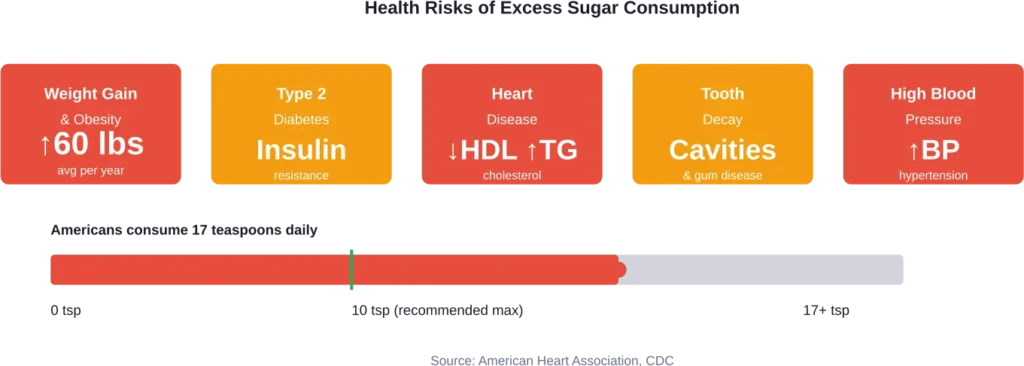
Quick Summary: Eating too much sugar can lead to weight gain, type 2 diabetes, heart disease, tooth decay, and increased inflammation throughout the body. According to the CDC, consuming more than 10% of daily calories from added sugars significantly raises these health risks. Most Americans consume 2-3 times the recommended amount, averaging 17 teaspoons daily.
Sugar tastes good. That’s not news to anyone.
But here’s what many people don’t realize: Americans consume an average of 17 teaspoons of added sugar every day. That adds up to roughly 60 pounds annually—the equivalent of six 10-pound bowling balls, according to the American Heart Association.
The problem isn’t the natural sugars found in fruit or milk. It’s the added sugars pumped into processed foods, sugary drinks, and seemingly innocent items like yogurt and salad dressing. And the health consequences? They’re far more serious than most people think.
The Immediate Effects on Your Body
When sugar enters the bloodstream, the body responds immediately. Blood glucose levels spike, triggering an insulin release from the pancreas.
According to the CDC, the brain is the most energy-demanding organ in the body, requiring half of all the sugar energy in the body to function properly. It’s sensitive to both high and low blood sugar levels. Both extremes can damage blood vessels in the brain over time.
But the effects don’t stop there. Here’s what happens in the hours after consuming excess sugar:
- Energy crashes as blood sugar drops rapidly following the initial spike
- Increased inflammation throughout the body
- Stress on the pancreas to produce more insulin
- Potential mood swings and irritability
Sugar-sweetened beverages create particularly sharp spikes because liquid sugar enters the bloodstream faster than sugar from solid food.
Long-Term Health Consequences
The real damage happens over years of excessive consumption. According to the CDC, consuming too many added sugars contributes to several serious health problems.
Weight Gain and Obesity
Added sugars contribute zero nutritional benefit but pack in extra calories that can lead to weight gain. The body converts excess sugar into fat for storage.
Research from the American Heart Association shows that sugar-sweetened beverages account for 24% of added sugar intake in the American diet—the single largest source. A single can of sugar-sweetened soda contains up to 40 grams of free sugars, roughly 10 teaspoons.
Type 2 Diabetes
Consistently high sugar intake forces the pancreas to work overtime producing insulin. Eventually, cells can become insulin-resistant, leading to type 2 diabetes.
The CDC identifies excessive sugar consumption as a significant contributor to type 2 diabetes development. This creates a dangerous cycle—diabetes itself makes blood sugar regulation even more challenging.
Heart Disease Risk
Too much sugar damages cardiovascular health in multiple ways. According to research published by the American Heart Association, drinking sugar-sweetened beverages daily is linked to lower HDL cholesterol (the “good” cholesterol) and higher triglyceride levels.
Both conditions increase cardiovascular disease risk. An estimated 40-50% of U.S. adults are affected by dyslipidemia, a condition often worsened by high sugar consumption.
Dental Problems
Sugar feeds harmful bacteria in the mouth. These bacteria produce acid that erodes tooth enamel, leading to cavities.
Research indicates that frequent consumption of carbohydrates in the form of simple sugars increases the risk of dental caries. The damage extends beyond cavities—excess sugar consumption is also linked to periodontal inflammation and gum disease.
How Much Sugar Is Too Much?
The Dietary Guidelines for Americans 2020-2025 provides clear recommendations. People aged 2 years or older should limit added sugars to less than 10% of total daily calories.
Here’s what that means in practical terms:
| Daily Calorie Intake | Maximum Added Sugar (10%) | Teaspoons Equivalent |
|---|---|---|
| 1,600 calories | 160 calories (40g) | 10 teaspoons |
| 2,000 calories | 200 calories (50g) | 12.5 teaspoons |
| 2,400 calories | 240 calories (60g) | 15 teaspoons |
The World Health Organization recommends even stricter limits. They suggest reducing free sugar intake to below 5% of total calories—roughly 25 grams or 6 teaspoons per day—would provide additional health benefits.
For children younger than 2 years, the Dietary Guidelines recommend no added sugars at all.
Where Added Sugars Hide
Sugar-sweetened beverages dominate the added sugar landscape. According to American Heart Association data, here’s the breakdown of where added sugars come from:
- Sugar-sweetened beverages: 24% (soft drinks 16%, fruit drinks 5%, sports/energy drinks 2%)
- Desserts and sweet snacks: Multiple smaller sources
- Coffee and tea (with added sweeteners)
- Candy and chocolate
- Breakfast cereals and bars
But sugar hides in unexpected places too. Salad dressings, pasta sauces, bread, and “healthy” yogurts often contain significant added sugars.

Cutting Back on Sugar: Practical Steps
Reducing sugar intake doesn’t require perfection. Small changes add up.
Start by reading nutrition labels. The FDA requires manufacturers to list “Added Sugars” separately from total sugars. This makes it easier to spot products with excessive amounts.
According to CDC research, one meal should contain no more than 10 grams of added sugars. That’s a helpful guideline when evaluating packaged foods.
Other strategies include:
- Replace sugar-sweetened beverages with water, unsweetened tea, or sparkling water
- Choose whole fruits instead of fruit juice (juice removes beneficial fiber)
- Reduce sugar gradually in coffee and tea rather than quitting cold turkey
- Check condiments and sauces for hidden sugars
- Opt for plain yogurt and add fresh fruit instead of buying flavored varieties
CDC research found about 30% of Americans 2 and older eat and drink high amounts of added sugar (more than 15% of daily calories from added sugar) each day. That’s well above recommended limits.
Frequently Asked Questions
Initial signs include frequent energy crashes, increased thirst, mood swings, and difficulty concentrating. Sugar cravings that intensify over time also signal excessive consumption. Many people also experience skin issues and weight gain around the midsection.
Natural sugars in whole fruit come packaged with fiber, vitamins, and minerals that slow absorption and provide nutritional benefits. The health concerns focus specifically on added sugars and free sugars found in processed foods and beverages. Whole fruit consumption is not associated with the same health risks.
Some improvements happen quickly—blood sugar levels can stabilize within days of reducing intake. Weight loss and improved cholesterol levels typically show progress within weeks to months. Long-term damage like type 2 diabetes may be partially reversible with sustained dietary changes, but this varies by individual and disease severity.
According to the CDC, no amount of added sugars or non-nutritive sweeteners is considered part of a healthy or nutritious diet. Research on long-term effects of artificial sweeteners remains ongoing. The safest approach is reducing overall preference for sweet tastes rather than substituting one sweetener for another.
Total sugars include both naturally occurring sugars (like those in milk or fruit) and added sugars. Added sugars are those put in during processing or preparation—these are the ones to limit. The FDA requires both to be listed separately on nutrition labels.
Data from the National Survey of Children’s Health found that 57.1% of children aged 1 to 5 years consumed at least one sugar-sweetened beverage in the past week. Children are starting sugar consumption at increasingly young ages, establishing unhealthy patterns early in life.
Excessive sugar consumption contributes to weight gain and obesity, which are major risk factors for type 2 diabetes. While sugar alone doesn’t directly cause diabetes, consistently high intake strains insulin production and can lead to insulin resistance over time, significantly increasing diabetes risk.
The Bottom Line
Excessive sugar consumption creates a cascade of health problems—from immediate blood sugar spikes to long-term risks like heart disease, type 2 diabetes, and obesity.
Most Americans consume 2 to 3 times the recommended amount. That’s not a small overage—it’s a significant health risk supported by data from the CDC, American Heart Association, and World Health Organization.
But here’s the good news: cutting back doesn’t require eliminating all sweetness from life. It requires awareness of where added sugars hide and making gradual, sustainable changes.
Start by tracking sugar intake for one week. Read labels. Swap one sugary drink for water daily. The improvements to energy levels, weight, and long-term health make it worth the effort