
Quick Summary: When you stop using tretinoin, your skin gradually returns to its pre-treatment state. Benefits like reduced acne, smoother texture, and fewer fine lines typically fade within several months as cell turnover slows back down. There’s no rebound effect, but the underlying skin conditions tretinoin was treating will likely resurface over time.
Tretinoin has earned its reputation as one of dermatology’s gold standard ingredients. With years of research backing its effects on acne, fine lines, and skin texture, it’s become a skincare staple for millions.
But here’s the thing—many people wonder what happens when they stop using it. Will all that progress vanish overnight? Does skin get worse than before? And can you actually quit tretinoin without consequences?
The answers might surprise you. Tretinoin doesn’t cure the underlying conditions it treats. It manages them while you’re using it.
This guide breaks down exactly what happens when you discontinue tretinoin, backed by dermatology research and real-world experiences.
How Tretinoin Actually Works on Your Skin
Before understanding what happens when you stop, you need to know what tretinoin does while you’re using it.
Tretinoin is a topical retinoid—a vitamin A derivative that binds to specific receptors in skin cells. This binding triggers a cascade of cellular changes that affect how your skin functions.
According to research from the National Center for Biotechnology Information, topical retinoids increase cell turnover, reduce the formation of clogged pores, and stimulate collagen production. They also affect sebaceous gland activity and help reduce post-inflammatory hyperpigmentation, which is particularly common in patients with skin of color.
Here’s what tretinoin influences:
- Cell turnover rate—pushing newer cells to the surface faster
- Sebum production in oil glands
- Collagen synthesis in deeper skin layers
- Comedone formation (the technical term for clogged pores)
- Melanin distribution and pigmentation
The key point? Tretinoin modifies how your skin behaves while you’re actively using it. It doesn’t permanently reprogram your skin cells.
That’s why discontinuing it leads to predictable changes.
What Happens to Your Skin After Stopping Tretinoin
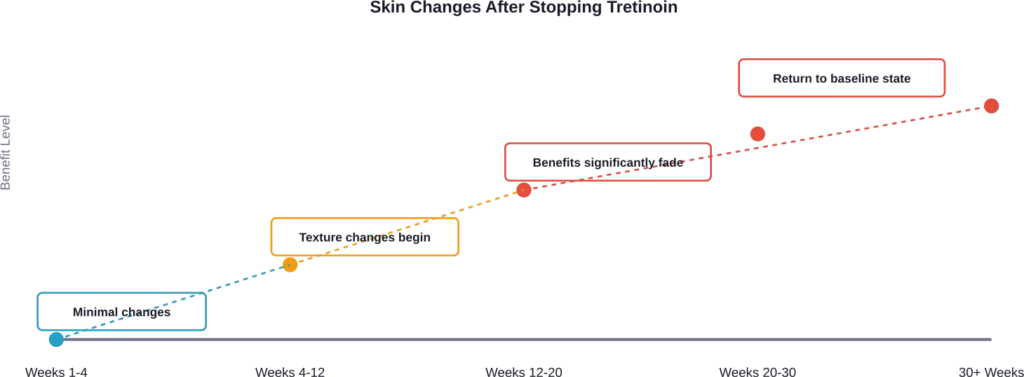
When you stop using tretinoin, your skin doesn’t immediately revert. The changes happen gradually as the medication clears from your system and cellular processes return to baseline.
The Timeline of Changes
Most people notice changes within weeks to months after stopping. The exact timeline depends on how long you used tretinoin and what concentration you were applying.
Research on isotretinoin (the oral version of tretinoin) from the National Center for Biotechnology Information indicates variable timelines for sebum production normalization after discontinuation, with some patients experiencing gradual return to baseline levels over extended periods. For topical tretinoin, the reversal tends to follow a similar pattern but affects primarily the epidermis rather than deep sebaceous structures.
Acne Returns Gradually
Tretinoin can treat acne effectively, but it can’t cure it. That’s an important distinction.
The underlying factors that cause acne—excess sebum production, hormonal fluctuations, bacterial colonization—don’t disappear just because you used tretinoin. The medication was managing these factors, not eliminating them.
When you stop, breakouts typically return. Community discussions indicate varied experiences, with some individuals reporting acne resurgence within weeks while others report maintaining clear skin for several months.
The severity of returning acne often depends on what caused it initially. Hormonal acne tends to return more predictably than acne triggered by temporary factors like stress or dietary changes.
Texture and Fine Lines Gradually Resurface
One of tretinoin’s most celebrated effects is smoother skin texture and reduction in fine lines. These benefits come from increased collagen production and accelerated cell turnover.
Stop using tretinoin, and those processes slow back down.
Fine lines don’t suddenly deepen overnight, but over months, the skin texture improvements fade. The newly produced collagen remains, but without continued stimulation, natural collagen degradation continues at normal rates.
Many people notice their skin texture becoming slightly rougher first, followed by a gradual return of fine lines they’d previously reduced.
Cell Turnover Returns to Normal
Tretinoin accelerates how quickly skin cells shed and renew. This process creates the fresh, glowing appearance many users love.
When you discontinue tretinoin, cell turnover gradually slows to your skin’s natural baseline rate. This means dead skin cells accumulate on the surface longer, potentially creating a duller appearance.
For some people, this manifests as skin that looks less radiant or slightly uneven in tone.
Hyperpigmentation May Darken Again
Research published in the American Journal of Clinical Dermatology indicates that topical retinoids are effective for treating post-inflammatory hyperpigmentation, particularly in patients with skin of color. According to dermatological research, hyperpigmented macules occur at elevated rates among different racial and ethnic groups with higher skin phototypes.
Tretinoin helps fade these dark spots by accelerating the turnover of pigmented cells and regulating melanin production. Without continued use, new hyperpigmentation can develop more easily, and existing dark spots may darken again over time.
Will You Experience Withdrawal Side Effects?
Here’s some good news: tretinoin doesn’t cause withdrawal symptoms in the traditional sense.
Unlike some medications that create dependency, stopping tretinoin won’t cause your skin to become worse than it was before you started. There’s no rebound effect where acne suddenly explodes or skin rapidly deteriorates.
What you’ll experience is simply a gradual return to your skin’s baseline state—the way it functioned before tretinoin.
That said, some people do report temporary changes when stopping:
- Slight increase in oiliness as sebum production normalizes
- Initial breakouts as pores adjust to slower cell turnover
- Temporary sensitivity changes
These aren’t withdrawal effects but adjustment periods as skin recalibrates to functioning without the medication.
Common Reasons People Stop Using Tretinoin
Understanding why someone might discontinue tretinoin helps contextualize the decision.
Side Effects Become Intolerable
Tretinoin can cause persistent dryness, peeling, redness, and sensitivity—especially at higher concentrations. For some users, these side effects never fully resolve, making long-term use uncomfortable.
Medical literature confirms that skin irritation is among the most common adverse effects of topical retinoids.
Desired Results Were Achieved
Some people use tretinoin for specific goals—clearing acne before a wedding, reducing sun damage before a milestone event. Once those goals are met, they may choose to stop rather than commit to indefinite use.
Pregnancy or Breastfeeding
Topical tretinoin is contraindicated during pregnancy and generally not recommended while breastfeeding. Many women discontinue use when planning pregnancy or after conceiving.
Cost and Access Issues
Prescription tretinoin requires ongoing dermatology visits and can be expensive depending on insurance coverage. Access issues sometimes force people to stop even when they’d prefer to continue.
Skin Improved and Seemed Fine Without It
Community discussions reveal that some users find their skin remains in good condition for extended periods after stopping, leading them to question whether continued use is necessary.
How to Safely Transition Off Tretinoin
If you’re planning to stop using tretinoin, a gradual approach can help minimize noticeable changes.
Reduce Frequency Gradually
Instead of stopping cold turkey, try reducing application frequency over several weeks:
- Week 1-2: Apply every other night instead of nightly
- Week 3-4: Apply twice weekly
- Week 5-6: Apply once weekly
- Week 7+: Discontinue completely
This tapering approach gives your skin time to adjust to producing less cellular turnover stimulation.
Strengthen Your Supporting Skincare
As you reduce tretinoin, bolster other aspects of your routine:
- Ensure consistent daily sunscreen use (SPF 30 minimum)
- Incorporate gentle exfoliating acids like lactic or mandelic acid
- Use antioxidant serums (vitamin C, niacinamide) to support skin health
- Maintain consistent moisturization to support barrier function
These can’t replicate tretinoin’s effects, but they support overall skin health during the transition.
Monitor Your Skin’s Response
Pay attention to how your skin responds at each reduction stage. If you notice significant texture changes or breakouts when moving from every-other-night to twice weekly, hold at that frequency longer before further reducing.
Your skin’s response provides valuable feedback about the pace of transition that works for you.
Alternative Retinoids and Skincare Options
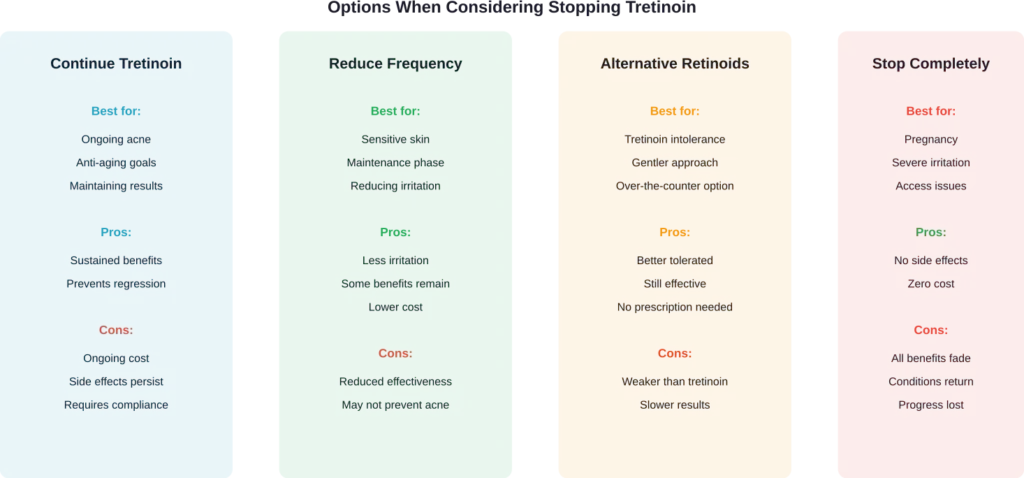
If you’re stopping tretinoin due to side effects rather than wanting to quit retinoids entirely, consider these alternatives.
Adapalene (Differin)
Adapalene is a third-generation retinoid available over-the-counter. It’s generally better tolerated than tretinoin with less irritation, though somewhat less potent.
It’s FDA-approved for acne treatment and can help maintain some of the benefits achieved with tretinoin.
Retinol
Over-the-counter retinol is weaker than prescription retinoids but still offers meaningful benefits for texture, fine lines, and mild acne. It converts to retinoic acid (the active form) in the skin but at lower concentrations than tretinoin delivers directly.
Retinol products cause less irritation and don’t require a prescription, making them accessible maintenance options.
Bakuchiol
This plant-derived ingredient has gained attention as a “natural retinol alternative.” While research is still emerging, some studies suggest it offers similar benefits with minimal irritation.
It’s worth noting that bakuchiol doesn’t work through the same mechanisms as retinoids, so calling it a true alternative oversimplifies the comparison.
Azelaic Acid
For acne and hyperpigmentation specifically, azelaic acid offers a non-retinoid approach. It has anti-inflammatory, antibacterial, and tyrosinase-inhibiting properties that address multiple acne-related concerns.
It won’t replicate tretinoin’s collagen-stimulating effects but can help maintain clear skin and even tone.
Will Your Skin Permanently Change?
This is one of the most common questions about stopping tretinoin—and the answer depends on what you mean by “permanent.”
The structural collagen that tretinoin helped build doesn’t instantly disappear when you stop. Collagen is relatively stable once formed. However, without continued stimulation, your skin won’t keep producing new collagen at elevated rates.
Natural collagen degradation continues with age and sun exposure. So while you don’t lose all the collagen gains immediately, you’ll gradually lose the advantage over time.
Your skin won’t become worse than it was before tretinoin. There’s no evidence that using and stopping tretinoin damages skin or creates dependency that makes your baseline skin condition deteriorate.
What you lose is the active management of underlying conditions—acne, accelerated aging, hyperpigmentation—that tretinoin was providing.
Real Experiences: What People Report After Stopping
Community discussions provide valuable insight into varied experiences with stopping tretinoin.
Individuals report varied timelines for skin changes after discontinuation, with some experiencing months of maintained clarity while others notice changes within weeks—returning oiliness, new breakouts, or rougher texture. These experiences tend to correlate with the severity of the original condition being treated.
A common theme across discussions is surprise at how long some benefits last. Many people expect immediate regression but find their skin maintains improvements longer than anticipated.
However, nearly everyone reports eventual return to baseline over the course of several months if they don’t resume treatment or switch to alternative retinoids.
When Stopping Tretinoin Makes Sense
Despite its benefits, tretinoin isn’t right for everyone indefinitely. Stopping makes sense in several situations:
- You’re pregnant, planning pregnancy, or breastfeeding
- Side effects significantly impact quality of life despite attempts to mitigate them
- Your specific treatment goals have been achieved and maintaining them isn’t a priority
- Cost or access barriers make continued use unsustainable
- You’ve found alternative approaches that work better for your skin
Tretinoin is a powerful tool, but it’s not the only path to healthy skin. The decision to continue or stop should align with your individual circumstances, goals, and skin’s response.
Frequently Asked Questions
Yes, you can stop tretinoin suddenly without dangerous withdrawal effects. However, gradually reducing frequency over several weeks may help your skin adjust more comfortably and minimize noticeable changes in texture or acne levels. Tapering also gives you insight into how your skin responds to reduced retinoid use.
Most benefits fade gradually over 3-6 months after discontinuation. Research on related retinoids shows sebum production can return to baseline within 20-30 weeks, though individual variation is significant. Some structural improvements like collagen may persist longer, while cell turnover effects reverse more quickly.
No, there’s no rebound effect that makes acne worse than your original baseline. Tretinoin doesn’t cure acne—it manages it while in use. When you stop, acne typically returns to the level it would be without treatment, not worse. The exception would be if stopping occurs during hormonal changes or other factors that worsen acne independently.
If you’re stopping tretinoin due to irritation rather than wanting to quit retinoids entirely, switching to over-the-counter retinol can help maintain some benefits with less irritation. Retinol is weaker than tretinoin but still effective for texture, mild acne, and fine lines. It’s a reasonable middle-ground approach.
Your skin may become less sensitive after stopping, potentially allowing you to reintroduce products that were too irritating while using tretinoin. However, maintaining consistent sun protection remains critical since UV damage continues regardless of tretinoin use. Consider adding gentle exfoliating acids or antioxidants to support skin health in tretinoin’s absence.
Yes, tretinoin can be restarted after a break. Your skin will likely go through another adjustment period similar to when you first started, potentially including initial dryness, peeling, or purging. Start with a lower frequency—perhaps 2-3 nights per week—and gradually increase as your skin reacclimates.
For ongoing conditions like acne or anti-aging goals, continuous use is generally more effective than cycling. The benefits of tretinoin are sustained through regular application. Cycling on and off means repeatedly losing and regaining progress. However, if side effects are problematic, reducing frequency to a sustainable maintenance schedule is preferable to completely stopping.
Making the Right Decision for Your Skin
Tretinoin represents one of dermatology’s most researched and effective topical treatments. Its ability to address acne, texture, pigmentation, and aging makes it genuinely valuable for many people.
But effectiveness doesn’t mean it’s mandatory forever.
The decision to continue or stop should factor in your original treatment goals, whether those have been achieved, how well you tolerate the medication, and what matters most for your skin health moving forward.
If you stop, understand that benefits will gradually reverse. That’s not failure—it’s simply how topical treatments work. They modify skin function while in use but don’t permanently reprogram your biology.
If you continue, know that long-term tretinoin use has decades of safety data supporting it when used appropriately with sun protection.
And if you’re unsure? Consult with a dermatology provider who can assess your specific situation and help determine the approach that best serves your skin health goals. There’s no universal right answer—only what works for your circumstances.
Whether you’re reducing frequency, transitioning to alternatives, or stopping completely, make the choice that aligns with your priorities and supports the skin you want to live in.