
Quick Summary: Swallowing semen is generally safe for most people, as it’s digested like food and poses minimal health risks. However, there’s a risk of sexually transmitted infections (STIs) during oral sex, and rare allergic reactions can occur. While semen contains small amounts of protein and minerals, it offers negligible nutritional value and minimal health benefits.
Oral sex is a common sexual activity, and questions about swallowing semen come up frequently. Many people wonder about the safety, health implications, and what actually happens when semen is ingested.
Let’s break down the facts based on medical research and clear up common misconceptions.
What Exactly Is Semen?
Semen is a complex bodily fluid produced by the male reproductive system. Understanding its composition helps clarify what happens when it’s ingested.
The fluid consists mostly of water, plasma, and mucus that acts as a lubricating substance. Sperm cells themselves make up only about 1-5% of the total volume. The rest comes from various glands including the prostate and seminal vesicles.
Here’s the thing though—semen isn’t just sperm swimming in water. It contains a mixture of enzymes, minerals, proteins, and other compounds designed to nourish and transport sperm cells.
The Components of Semen
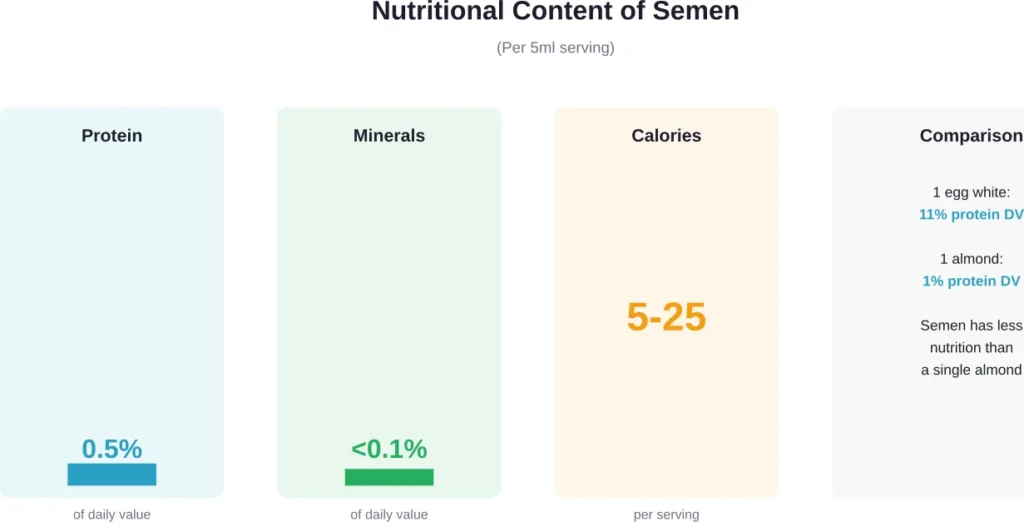
According to research, a typical 5-milliliter serving of semen contains approximately 0.5% of daily protein intake. That’s a minuscule amount—far less than a single egg or glass of milk provides.
Semen also contains trace amounts of minerals like calcium, magnesium, potassium, and zinc. However, these represent less than 0.1% of daily nutritional requirements. Other components include fructose (which provides energy for sperm), citric acid, and various enzymes.
The fluid is alkaline, which helps protect sperm cells from the acidic environment of the vagina during reproduction.
Is It Safe to Swallow Semen?
For most people, swallowing semen is safe. The digestive system processes it just like any other protein-containing fluid.
Once swallowed, semen travels through the esophagus to the stomach, where digestive acids break down the proteins and other components. The body then absorbs whatever nutrients are present and eliminates the rest through normal digestive processes.
Nothing unusual happens in the body—there’s no special biological reaction or transformation. It’s digested and processed like food.
That said, safety depends on a few critical factors that require attention.
STI Transmission Risk During Oral Sex
The most significant health concern with swallowing semen isn’t the fluid itself—it’s the risk of sexually transmitted infections.
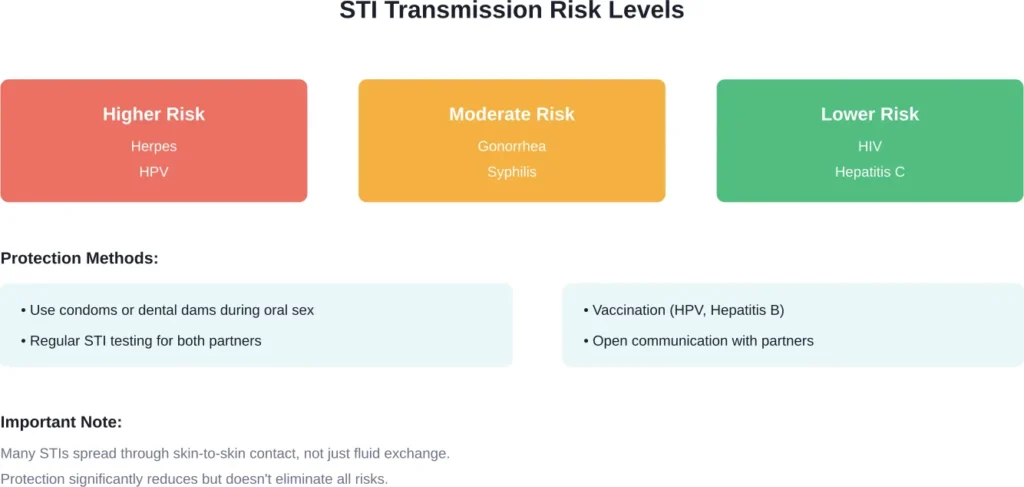
According to Planned Parenthood, several STIs can spread through oral sex, including:
- Herpes (most commonly transmitted through oral contact)
- Human papillomavirus (HPV)
- Gonorrhea
- Syphilis
- Chlamydia
- Hepatitis A and B
Some of these infections spread through skin-to-skin contact, while others transmit through sexual fluids like semen. HIV can also spread through oral sex, though the risk is lower than with vaginal or anal sex.
The CDC emphasizes that quality sexual and reproductive health services, including STI screening and prevention counseling, are important for supporting overall health and wellbeing.
Protection During Oral Sex
For safer oral sex, barriers like condoms can significantly reduce STI transmission risk. Dental dams—thin latex sheets—can cover the vulva or anus during oral contact.
Regular STI testing for both partners provides important information about sexual health status. Many STIs show no symptoms, so testing is the only reliable way to know.
Semen Allergy: A Rare But Real Condition
Some individuals experience allergic reactions to semen—a condition called seminal plasma hypersensitivity. While rare, it’s a legitimate medical concern.
Symptoms typically start within 30 minutes of contact and can include:
- Redness or rash at contact sites
- Burning or itching sensations
- Swelling
- Hives
- Difficulty breathing (in severe cases)
Reactions can last several hours or even days. The severity varies considerably between individuals.
Real talk: getting a rash after semen contact doesn’t automatically mean an allergy exists. Other factors like irritation from friction, reactions to lubricants, or sensitivity to other substances can cause similar symptoms.
Anyone experiencing consistent reactions should consult a healthcare provider. Allergists can perform testing to confirm semen allergy and discuss management options.
The Nutritional Value Question
Despite popular claims, semen offers virtually no nutritional benefits. The amounts of protein, vitamins, and minerals present are negligible.
Research from Columbia University’s health services notes that a 5-milliliter serving contains roughly 0.5% of daily protein intake. For context, this represents less protein than a single almond provides.
The mineral content is similarly minimal—less than 0.1% of daily value of minerals like calcium, chloride, magnesium, potassium, and sodium.
Calorie Content
Semen contains approximately 5-25 calories per ejaculation, depending on volume and concentration. This is roughly equivalent to a single grape or small piece of gum.
Claims about semen being a significant protein source or dietary supplement don’t hold up under scientific scrutiny. The quantities are simply too small to provide meaningful nutrition.
Debunking Health Benefit Claims
Various claims circulate about semen having health benefits—from mood enhancement to anti-aging properties. What does the evidence actually show?
A University at Albany study conducted by Psychology Professor Gordon Gallup found that females who engaged in sexual intercourse without condoms exhibited significantly lower depression scores than those who used condoms. However, this single study had methodological limitations and hasn’t been widely replicated in peer-reviewed research.
Claims about anti-aging effects, skin benefits, or immune system enhancement lack solid scientific backing. While semen does contain compounds like spermine (an antioxidant), the quantities present are too small to produce measurable health effects when ingested.
Some research has explored connections between semen quality and overall health markers. A Danish study found correlations between higher sperm counts and lower mortality rates in men, but this relates to male reproductive health—not to any benefits of ingesting semen.
Taste and Smell Variations
Semen taste and smell vary considerably between individuals and can change based on diet, hydration, and overall health.
Common taste descriptors include salty, bitter, sweet, or metallic. The alkaline pH contributes to a slightly bitter or bleach-like quality that some people notice.
Diet affects taste. Foods like fruits (especially pineapple and citrus), cinnamon, and parsley may produce sweeter or milder flavors. Meanwhile, alcohol, coffee, red meat, and certain vegetables like asparagus can intensify bitter or strong tastes.
Hydration plays a role too. Better-hydrated individuals typically produce more diluted semen with milder flavors.
Smell follows similar patterns, ranging from chlorine-like to musky or slightly sweet. Strong or foul odors might indicate infection or other health issues requiring medical attention.
Personal Choice and Communication
The decision to swallow semen is entirely personal. No one should feel pressured either way.
Healthy sexual relationships involve open communication about boundaries, preferences, and comfort levels. Partners should feel free to express what they’re comfortable with during sexual activity.
Some people prefer to spit rather than swallow, while others avoid oral contact with semen entirely. All approaches are valid—what matters is mutual respect and consent.
The CDC emphasizes that comprehensive sexual and reproductive health counseling supports informed decision-making about sexual behaviors and risk reduction.
When to Consult a Healthcare Provider
Seek medical advice if experiencing:
- Consistent allergic reactions after semen contact
- Unusual symptoms following oral sex
- Concerns about STI exposure
- Questions about sexual health or safety
Healthcare providers can offer STI testing, discuss prevention strategies, and address specific health concerns in a confidential setting.
According to the CDC, regular sexual health screenings are important components of overall healthcare, particularly for sexually active individuals.
Frequently Asked Questions
No, pregnancy cannot occur from swallowing semen. Pregnancy requires sperm to reach and fertilize an egg in the reproductive tract. When swallowed, semen enters the digestive system, not the reproductive system, making pregnancy impossible through this route.
No, swallowing semen doesn’t interfere with STI testing accuracy. However, if exposed to infected semen through oral contact, STIs can develop in the throat or mouth. Throat swabs may be necessary for comprehensive STI screening depending on sexual practices.
Semen is digested and eliminated like any other food, typically within 24-48 hours through normal digestive processes. The body breaks down proteins and other components in the stomach and intestines, absorbing minimal nutrients and eliminating the rest.
For most people, no. The main health concern is STI transmission, not the semen itself. However, individuals with semen allergies should avoid contact. Otherwise, no evidence suggests that swallowing semen causes long-term health issues when practicing safe sex with tested partners.
Composition varies slightly based on diet, health, and genetics, but nutritional differences are negligible. All semen contains similar basic components—mostly water, with trace amounts of protein, minerals, and enzymes. These variations don’t produce meaningful nutritional differences.
Wait at least 30-60 minutes before brushing teeth after oral sex. Brushing immediately can create small cuts or abrasions in gum tissue, potentially increasing infection risk if exposed to STIs. Rinsing with water is fine immediately after.
Yes, semen allergy can be partner-specific in some cases. The proteins that trigger allergic reactions vary between individuals. Some people react to one partner’s semen while tolerating another’s, though many with semen allergies react to all partners.
The Bottom Line
Swallowing semen is generally safe for most people and simply gets digested like food. The fluid itself poses minimal health risks.
But here’s what actually matters: STI transmission risk during oral sex is real and significant. Protection methods like condoms reduce this risk considerably. Regular testing and open communication with partners are essential components of sexual health.
The nutritional claims don’t hold up—semen contains negligible amounts of protein and minerals that provide no meaningful dietary benefits. Rare allergic reactions can occur and require medical attention.
Ultimately, the choice to swallow is personal. What’s most important is practicing safer sex, getting regular STI screenings, and maintaining honest communication with partners about boundaries and preferences. Prioritize sexual health and mutual respect in all intimate encounters.