
Quick Summary: Taking creatine without working out is safe and can still provide benefits like improved brain function, cellular energy support, and potential neuroprotective effects. However, the muscle-building and performance-enhancing benefits creatine is famous for won’t occur without exercise stimulus. Most people naturally store creatine at only about 70% capacity, so supplementation can increase stores even in sedentary individuals, though the body will naturally regulate excess amounts.
Creatine has earned its reputation as one of the most researched and effective supplements in the fitness world. Athletes swear by it. Bodybuilders consider it essential. But here’s a question that doesn’t get asked enough: what actually happens if you take creatine but skip the gym entirely?
The short answer? Your body won’t just flush it out as wasted money. Creatine works at the cellular level, and those cells exist whether someone lifts weights or sits at a desk all day.
Most people fill their natural creatine stores to only about 70% capacity through diet alone. That gap exists for everyone, not just athletes. And while the muscle-pumping benefits won’t materialize without resistance training, other physiological effects still occur.
Understanding Creatine Beyond the Gym
Creatine is a naturally occurring compound found primarily in muscle tissue and the brain. The body produces it from amino acids, and people also get it from meat and fish. But here’s the thing: most individuals maintain creatine stores well below maximum capacity through normal dietary intake.
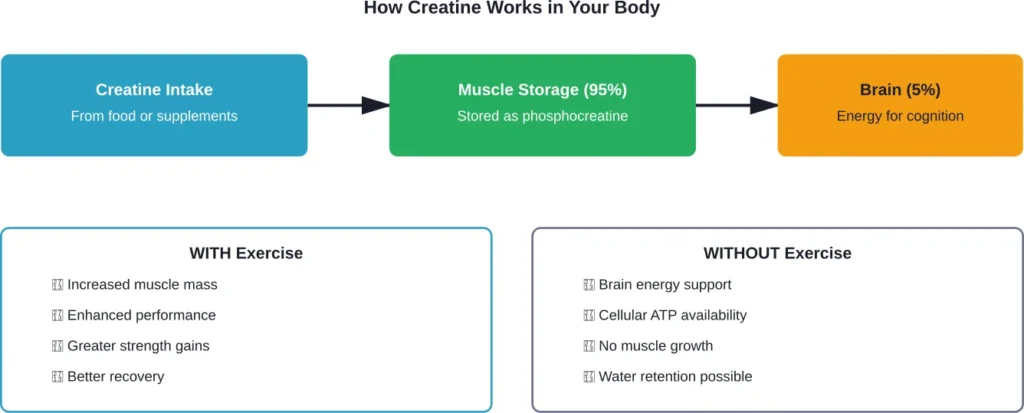
According to research published in Nutrients, approximately 95% of the body’s creatine is stored in skeletal muscle, with approximately 40% in free form and 60% as phosphocreatine. The remaining 5% is distributed throughout other tissues, including the brain, where it plays a crucial role in energy metabolism.
Once ingested, creatine travels through the bloodstream to high-energy tissues. There, it gets phosphorylated by the enzyme creatine kinase to form phosphocreatine, which serves as a rapid energy reserve for ATP resynthesis. This process happens whether someone exercises or not.
The Energy Currency System
Think of ATP as the body’s energy currency. Every cellular process requires it. Phosphocreatine acts like a quick-access savings account, ready to replenish ATP during high-energy demands.
In athletes, this system shines during explosive movements: sprints, heavy lifts, jumping. But cellular energy demands don’t stop at the gym. The brain uses significant ATP for neurotransmitter synthesis, ion pump maintenance, and signal transmission. These processes continue around the clock.
What Actually Happens When You Supplement Without Exercise
So someone decides to take creatine but keeps their sedentary routine. What unfolds inside the body?
Creatine Stores Increase
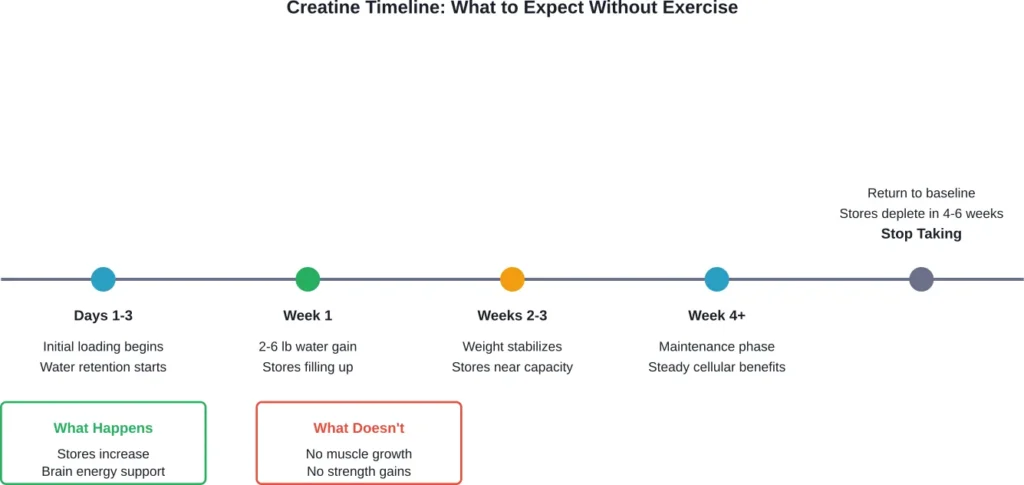
First, muscle and brain creatine stores begin to saturate. Research shows supplementation can increase resting creatine levels by approximately 20% in omnivores. For vegetarians and vegans, the increase can be even more dramatic since their baseline stores tend to be lower.
This happens regardless of exercise. The body doesn’t refuse to store creatine just because someone isn’t lifting weights. Cellular transporters recognize creatine in the bloodstream and actively shuttle it into tissues.
Initial Water Weight Gain
One of the first noticeable effects is typically water retention. Creatine is osmotically active, meaning it pulls water into muscle cells. This isn’t fat gain or edema—it’s intracellular hydration.
Most people experience a 2-6 pound increase during the first week of supplementation. This weight gain stabilizes as stores reach capacity, typically within 2-3 weeks. The water retention occurs whether someone exercises or not, though active individuals may notice it less due to overall body composition changes.
No Muscle Hypertrophy
Here’s where expectations need adjustment. Creatine doesn’t build muscle by itself. It creates conditions that support muscle growth when combined with resistance training stimulus.
According to a systematic review and meta-analysis in the Journal of the International Society of Sports Nutrition, creatine supplementation without training showed minimal effects on lean body mass, with the meta-analysis finding creatine increased body mass by 0.86 kg on average. The muscle-building magic requires the training stimulus—progressive overload, mechanical tension, and metabolic stress that exercise provides.
Without that stimulus, muscle protein synthesis doesn’t ramp up. The creatine sits there, ready to support high-intensity work that never comes.
Potential Cognitive Benefits
This is where things get interesting for non-athletes. The brain contains creatine kinase and uses the phosphocreatine system just like muscles do. Emerging research suggests creatine supplementation may support cognitive function, particularly during mentally demanding tasks or sleep deprivation.
Studies examining creatine in sedentary populations have found potential benefits for memory, processing speed, and overall cognitive performance. Research published in Nutrients highlights that creatine supplementation beyond athletics shows promise for brain health, particularly in populations with naturally lower creatine stores such as vegetarians and older adults.
Who Might Benefit From Creatine Without Exercise
While athletes get the most dramatic results, certain populations may still derive value from creatine supplementation even without structured training.
Vegetarians and Vegans
Since creatine is found primarily in animal products, people following plant-based diets typically have significantly lower creatine stores than omnivores. For these individuals, supplementation can significantly boost brain and muscle creatine levels, potentially supporting cognitive function and general cellular energy metabolism.
Older Adults
Research examining creatine supplementation in clinical populations suggests potential benefits for age-related muscle loss and cognitive decline. According to research on creatine use in cachexia and wasting conditions, supplementation may help attenuate muscle loss even in sedentary individuals facing age-related decline.
That said, combining creatine with resistance training produces far superior results in older adults compared to supplementation alone.
Individuals With Neurological Concerns
Some research has explored creatine’s neuroprotective properties. Studies suggest it may support brain health in conditions affecting energy metabolism, though this research is still evolving and shouldn’t be interpreted as medical advice.
| Population | Baseline Creatine Stores | Potential Benefits Without Exercise |
|---|---|---|
| Omnivores | ~70% of maximum | Modest cognitive support, cellular energy |
| Vegetarians/Vegans | Significantly lower than omnivores | Significant store increase, brain energy boost |
| Older Adults (60+) | Declining with age | Potential muscle preservation, cognitive support |
| Athletes | Variable, often 70-90% | Limited benefits without training stimulus |
Safety Considerations for Sedentary Supplementation
One common concern: is it safe to take creatine without working out? The research overwhelmingly suggests yes, for most people.
Kidney Function Myths
Perhaps the most persistent myth about creatine involves kidney damage. This concern stems from the fact that creatine supplementation increases creatinine levels—a waste product measured in kidney function tests.
But here’s the crucial distinction: elevated creatinine from creatine supplementation is a benign increase in a metabolic byproduct, not a sign of kidney dysfunction. A 2025 systematic review and meta-analysis in BMC Nephrology examining creatine supplementation on kidney function found creatine was associated with a small but statistically significant increase in serum creatinine levels. The authors clarify this increase reflects creatine metabolism rather than kidney dysfunction.
According to the same 2025 systematic review in BMC Nephrology, creatine supplementation was associated with a small but statistically significant increase in serum creatinine levels, though this reflects creatine metabolism rather than kidney dysfunction. The body processes creatinine through normal pathways.
Liver Health
Another common question involves liver function. Research examining creatine consumption in 5,957 participants found no association between dietary creatine intake and liver fibrosis. The liver processes creatine as part of normal metabolism without adverse effects in healthy individuals.
Hydration and Water Balance
The water retention effect of creatine raises questions about hydration status. Generally speaking, the intracellular water increase from creatine doesn’t cause dehydration. However, maintaining adequate fluid intake remains important.
The body’s natural thirst mechanisms typically adjust to accommodate creatine’s osmotic effects. Still, drinking sufficient water throughout the day supports optimal creatine function and general health.
Who Should Avoid Creatine
While safe for most people, certain individuals should exercise caution or avoid creatine supplementation:
- People with pre-existing kidney disease
- Individuals taking medications that affect kidney function
- Those with a history of kidney stones
- Pregnant or breastfeeding women (due to insufficient research, not known harm)
Anyone with medical concerns should consult a healthcare provider before starting supplementation.
Dosing Strategies Without Training
If someone decides to supplement without working out, how much should they take?
Standard Dosing Recommendations
The typical protocol involves two phases:
Loading Phase (Optional): 20 grams per day split into 4 doses for 5-7 days. This rapidly saturates muscle stores but isn’t necessary for long-term results.
Maintenance Phase: 3-5 grams per day indefinitely. This maintains elevated stores once achieved.
For sedentary individuals, the loading phase offers minimal advantage. A maintenance dose from day one works perfectly fine—it just takes 3-4 weeks to fully saturate stores instead of one week.
Type of Creatine Matters
Creatine monohydrate remains the gold standard. It’s the most researched form, most cost-effective, and most proven for efficacy. According to research in Nutrients, while various forms of creatine exist, creatine monohydrate consistently demonstrates the best absorption and effectiveness across diverse populations.
Other forms—creatine hydrochloride, buffered creatine, creatine ethyl ester—offer no proven advantages despite marketing claims and higher costs.
Timing Considerations
For athletes, creatine timing around workouts might matter. For sedentary individuals? Take it whenever convenient. Morning with breakfast, evening with dinner, midday with lunch—consistency matters more than specific timing.
The Reality Check: Missing the Main Benefits
Let’s be clear about what’s left on the table by skipping exercise.
Creatine’s most dramatic and well-documented benefits require training stimulus. The research on creatine supplementation protocols shows that combining creatine with resistance training produces significantly greater improvements in body composition, strength, and muscle mass compared to supplementation alone.
Without exercise:
- Muscle mass won’t increase beyond water retention
- Strength gains won’t occur
- Athletic performance improvements won’t manifest
- The metabolic benefits of increased muscle tissue won’t develop
The cellular machinery is ready to work, but it needs the stimulus that only exercise provides.
Cost-Benefit Analysis
Creatine monohydrate is relatively inexpensive—often less than $20 for a three-month supply. So financial waste isn’t a major concern.
But the opportunity cost exists. Someone taking creatine while sedentary is missing out on compound benefits. Exercise amplifies creatine’s effects exponentially. Even modest resistance training two to three times per week would unlock benefits that supplementation alone cannot provide.
| Benefit | With Exercise | Without Exercise |
|---|---|---|
| Increased muscle creatine stores | Yes | Yes |
| Muscle mass gains | Significant | None (only water) |
| Strength improvements | Substantial | None |
| Power output increases | Variable improvements | None |
| Brain energy support | Yes | Yes |
| Cognitive benefits | Possible | Possible |
| Water retention | 2-6 lbs | 2-6 lbs |
Common Misconceptions Addressed
Several myths persist about taking creatine without exercise. Time to clear them up.
Myth: Creatine Without Exercise Causes Fat Gain
Real talk: creatine doesn’t cause fat accumulation. The weight gain from creatine is intracellular water, not adipose tissue. Research examining creatine supplementation on body composition consistently shows increases in lean mass (which includes water) but not fat mass.
If someone gains fat while taking creatine, it’s from excess calorie intake, not the supplement itself.
Myth: Excess Creatine Gets Stored as Fat
Creatine isn’t converted to fat. The body either stores it in muscle and brain tissue (up to maximum capacity) or excretes excess amounts. The body spontaneously and irreversibly degrades excess creatine into creatinine at a rate of approximately 2% per day, which is then excreted through urine. Once stores saturate, additional supplementation simply goes to waste—literally.
Myth: Stopping Creatine Causes Muscle Loss
When someone stops taking creatine, their stores gradually return to baseline levels over 4-6 weeks. The water retention decreases, which shows up as weight loss on the scale.
But if someone didn’t build actual muscle tissue (which requires training), there’s no muscle to lose. The body simply returns to its previous state.
Making an Informed Decision
So should someone take creatine without working out?
The honest answer depends on goals and circumstances.
For someone genuinely unable to exercise due to injury, disability, or temporary circumstances but interested in potential cognitive benefits or maintaining creatine stores—supplementation might offer modest value, particularly for vegetarians or older adults.
For someone who simply doesn’t feel like exercising but wants supplement shortcuts to fitness goals—creatine won’t deliver. The muscle-building, strength-enhancing, performance-boosting benefits require work.
Here’s a more productive approach: use creatine as intended—to support a training program. Even basic resistance training twice per week, combined with creatine, produces far superior results to supplementation alone.
Better Alternatives for Sedentary Individuals
If exercise isn’t currently in the cards but overall health is the goal, several supplements and lifestyle interventions offer more bang for the buck in sedentary populations:
- Vitamin D supplementation if deficient
- Omega-3 fatty acids for cardiovascular and brain health
- Magnesium for numerous metabolic processes
- Quality sleep optimization
- Stress management techniques
- Dietary improvements focusing on whole foods
These interventions provide meaningful health benefits regardless of exercise status.
The Bottom Line on Creatine Without Exercise
Taking creatine without working out won’t harm most healthy individuals. It will increase muscle and brain creatine stores. It might provide modest cognitive benefits and cellular energy support.
But it won’t build muscle, increase strength, or deliver the performance benefits creatine is famous for. Those require the training stimulus that exercise provides.
The body will store what it can use and excrete the rest. No magic muscle gains appear. No dramatic transformations occur. Just elevated creatine stores waiting for demands that never come.
For the small subset of people with specific circumstances—vegetarians seeking cognitive support, older adults unable to train, individuals with certain neurological concerns—there might be justification for supplementation without exercise.
For everyone else, creatine works best as part of a comprehensive approach that includes resistance training. That’s where the supplement’s true potential emerges.
The research is clear: creatine supplementation is safe, effective, and well-studied. But like any tool, it works best when used as intended. A hammer sitting in a toolbox doesn’t build anything. Neither does creatine sitting in muscle cells without the stimulus to put it to work.
Frequently Asked Questions
Yes, most people gain 2-6 pounds during the first week of creatine supplementation due to increased water retention in muscle cells. This occurs regardless of exercise. However, this is water weight, not muscle or fat. Without training, no actual muscle tissue growth occurs beyond this initial water retention.
Research consistently shows creatine is safe for healthy individuals, whether they exercise or not. Studies examining kidney and liver function in sedentary people taking creatine found no adverse effects. However, people with pre-existing kidney disease or those taking certain medications should consult a healthcare provider first.
Emerging research suggests creatine may support cognitive function, particularly in populations with lower baseline stores like vegetarians. The brain uses the phosphocreatine system for energy production just like muscles do. However, research on cognitive benefits is less extensive than research on athletic performance, and results vary among individuals.
The standard maintenance dose of 3-5 grams per day works for sedentary individuals. A loading phase isn’t necessary—simply start with the maintenance dose and stores will saturate over 3-4 weeks. Taking more than 5 grams daily without exercise offers no additional benefit since the body will excrete excess amounts once stores saturate.
Creatine causes intracellular water retention in muscle tissue, not the subcutaneous water retention that causes visible bloating. Most people don’t feel bloated from creatine supplementation. The water weight increase happens inside muscle cells, which can make muscles appear slightly fuller but doesn’t cause the uncomfortable bloating sensation associated with digestive issues or subcutaneous water retention.
When supplementation stops, creatine stores gradually return to baseline levels over 4-6 weeks. The water retention decreases, resulting in loss of the initial 2-6 pounds gained. Since no actual muscle tissue was built without exercise, no muscle is lost. The body simply returns to its pre-supplementation state.
For sedentary individuals focused on general health rather than athletic performance, supplements like vitamin D (if deficient), omega-3 fatty acids, and magnesium typically offer more meaningful benefits. These support cardiovascular health, brain function, and metabolic processes regardless of exercise status. That said, creatine isn’t harmful for sedentary people—it’s just underutilized without training stimulus.